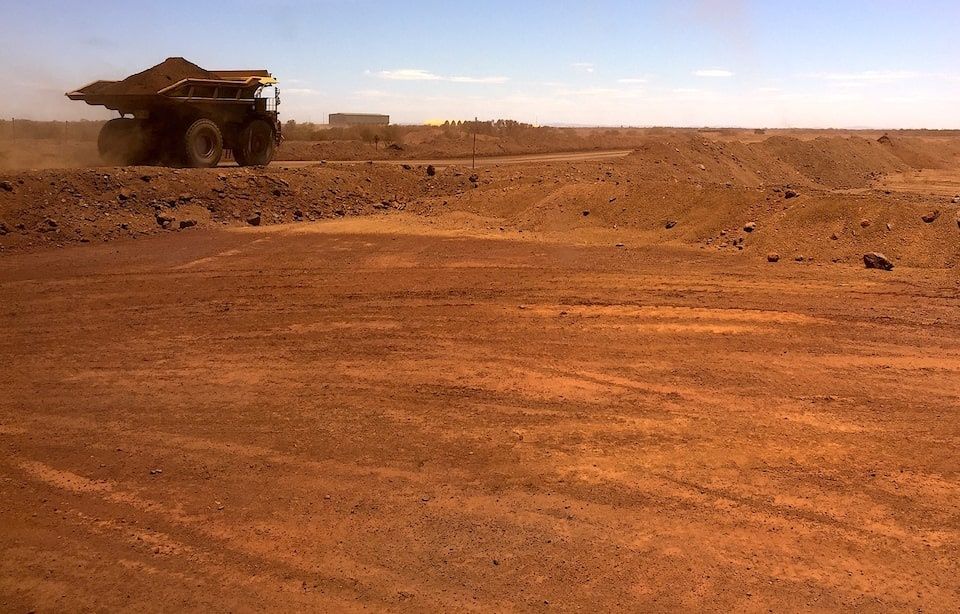
Scientists at Edith Cowan University in Western Australia have made a potentially significant discovery regarding natural hydrogen generation from the state's abundant iron ore reserves, opening new possibilities for developing an environmentally sustainable energy resource. The research team determined that magnetite, a magnetic iron oxide mineral found beneath Western Australia's distinctive red soils, spontaneously produces hydrogen gas when subjected to hot water in subterranean conditions. This finding, published in the International Journal of Hydrogen Energy, represents a meaningful step toward understanding how hydrogen occurs naturally underground and the geological requirements for maintaining its production over extended periods.
The mechanism identified by ECU's School of Engineering researchers hinges on a straightforward chemical interaction. When water penetrates deep into the Earth's crust where temperatures reach extreme levels, it encounters magnetite deposits and triggers a reaction that releases hydrogen gas as a byproduct. What makes this discovery particularly relevant to Western Australia is the state's geological endowment: WA possesses some of the planet's largest banded iron formations, ancient mineral-rich rock layers that could theoretically serve as vast natural hydrogen repositories. The concentration of these formations in WA means the region may be exceptionally well-positioned to exploit this emerging energy source if commercial viability can be established.
To validate their hypothesis, the ECU team conducted controlled laboratory experiments designed to mirror conditions deep beneath the Earth's surface. They subjected magnetite mineral samples to temperatures of 200 degrees Celsius while maintaining elevated pressure throughout a 60-day observation period. This extended experimental timeframe allowed researchers to observe hydrogen production patterns and gather data on production rates and consistency. The results confirmed that magnetite does indeed generate hydrogen under these replicated geological conditions, providing experimental evidence to support the theoretical model of natural hydrogen formation.
A critical insight emerging from the research concerns the variables that determine hydrogen production efficiency. The scientists found that the mere presence of magnetite alone does not guarantee significant hydrogen yields. Instead, production levels depend substantially on the accessibility of water to fresh mineral surfaces within the rock matrix. This accessibility is governed by the geological structure of the formations—specifically the presence of fractures, natural pores, and permeable pathways that allow water to circulate and continuously encounter virgin magnetite surfaces. In essence, the geometry and porosity of the rock formations become as important as mineral composition in determining productivity.
This discovery carries substantial implications for the global energy transition, particularly for resource-rich nations seeking alternatives to fossil fuels. Natural hydrogen—as opposed to hydrogen manufactured through energy-intensive industrial processes—represents a genuinely clean energy option if extraction methods can be developed responsibly. For Southeast Asia and the Asia-Pacific region more broadly, the findings suggest that previously overlooked geological assets may hold energy security solutions. Countries with significant iron ore deposits, including several in the region, might benefit from similar geological surveys to assess their own natural hydrogen potential.
The ECU team's suggestion that injecting solutions into banded iron formations could substantially amplify hydrogen production introduces a management dimension to the discovery. Rather than relying solely on naturally occurring water-rock interactions, deliberate intervention could potentially accelerate and intensify hydrogen generation, though such approaches would require careful environmental assessment. This technological pathway—if proven viable and scaled—could transform extensive but previously marginal mineral deposits into productive energy assets.
Western Australia's position as a global mining powerhouse makes this discovery strategically significant. The state already dominates international iron ore markets, and the discovery of natural hydrogen potential within the same geological formations could create additional value from existing mining infrastructure and knowledge systems. Developing natural hydrogen resources would not represent a complete departure from traditional mining practices but rather an evolution that leverages existing expertise in deep drilling, geological mapping, and subsurface resource extraction.
The international context matters considerably here. Many developed economies are aggressively pursuing hydrogen as a cornerstone of their net-zero emissions strategies, with some projecting hydrogen could represent a significant portion of future energy consumption. Currently, most hydrogen is produced through steam reforming of natural gas, a process that generates substantial carbon emissions. Natural hydrogen, if it can be extracted reliably and economically, offers a fundamentally different pathway that sidesteps these emissions entirely. This technological transition could reshape global energy markets and competitive advantages.
For Malaysia and other ASEAN nations, the broader significance lies in recognizing that energy security and climate commitments need not rely exclusively on renewable technologies like solar and wind. The discovery suggests that unconventional sources warrant serious investigation, particularly in regions with distinctive geology. Malaysia's own mineral endowments and underground geology deserve similar scrutiny from research institutions and energy planners. Collaborative research initiatives between Southeast Asian nations and Australian institutions could accelerate understanding of regional hydrogen potential and accelerate the transition toward lower-carbon energy systems across the region.

