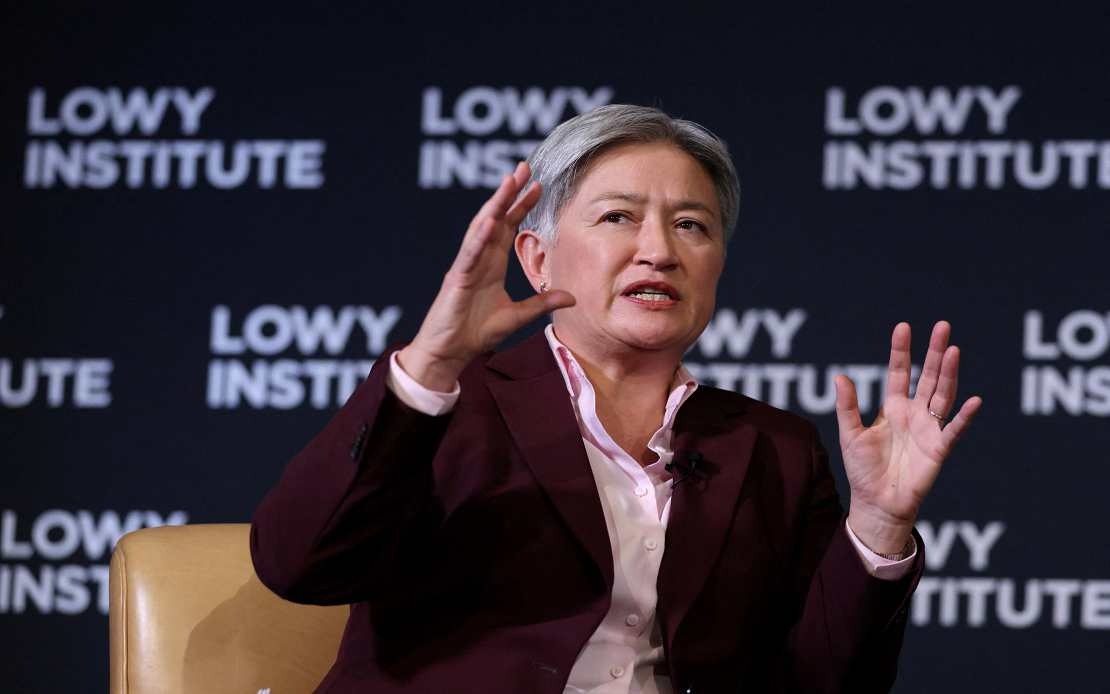
Australia's Foreign Affairs Minister Penny Wong has delivered a forceful rebuke to monocultural advocates, warning that such ideological pursuits fundamentally undermine the nation's economic resilience and geopolitical standing. Speaking at the prestigious Lowy Institute in Sydney on Friday, Wong framed the push towards cultural uniformity not merely as misguided policy but as a strategic liability that would diminish Australia's competitive advantages in an interconnected world.
Wong's intervention directly addressed Senator Pauline Hanson of the right-wing One Nation party, who declared in June that Australia should restructure itself as a monocultural society. The Foreign Minister characterised such aspirations as a "melancholic fantasy," positioning them as nostalgic yearning for a past that never genuinely existed. Her language was deliberately provocative, signalling the government's determination to vigorously contest the rising populist narrative that has captured growing sections of the Australian electorate.
The substance of Wong's argument centred on the practical consequences of isolation. She contended that abandoning multicultural identity would represent a self-imposed retreat from global engagement, severing the diplomatic relationships, trading partnerships, and collaborative opportunities that constitute Australia's contemporary strength. This framing transforms the debate from abstract cultural values into concrete economic and strategic calculations—a rhetorical move designed to resonate with voters concerned about prosperity and national competitiveness rather than cultural ideology alone.
One Nation's resurgence presents a formidable political challenge to the incumbent Labour government and the opposition Coalition alike. Recent polling from YouGov Australia conducted in July reveals that support for Hanson's party has surged to 26 percent of voters intending to vote One Nation at the next general election scheduled for 2028, a dramatic increase from the 6.4 percent the party actually secured at the 2025 election. This quadrupling of support in polling terms indicates not merely protest voting but potentially a structural shift in the Australian political landscape that traditional parties cannot ignore.
The electoral terrain has shifted noticeably against both major parties. The governing Labour administration, which received 34.5 percent of votes in 2025, now commands support from only 28 percent of voters according to the same July poll. The conservative Coalition has fared even worse, plummeting from 31.8 percent to 20 percent. These substantial declines suggest that One Nation is successfully capturing disillusioned voters from across the political spectrum, rather than merely peeling support from a single traditional party.
One Nation's policy agenda extends far beyond cultural nationalism into areas with direct economic implications. The party has committed to curtailing immigration flows, reducing foreign aid expenditure, and withdrawing Australia from multilateral institutions should it secure power. These pledges appeal to voters anxious about rapid demographic change and economic competition, yet they fundamentally contradict the interdependent architecture of modern Australian prosperity. For Malaysia and other Southeast Asian trading partners, such a withdrawal would disrupt established commercial relationships and regional stability.
Community sentiment regarding immigration appears aligned with One Nation's messaging, at least superficially. The Lowy Institute's annual poll for 2026, released in June, disclosed that 55 percent of Australians believe the total migrant intake is excessive, representing an uptick from 53 percent in 2025 and 48 percent in 2024. This three-percentage-point annual rise suggests consolidating anxiety about immigration, though the polling question itself does not distinguish between concerns about immigration levels and hostility towards immigrants themselves—a crucial distinction that populists deliberately blur.
For Malaysia and the broader Southeast Asian region, the Australian political shift carries tangible implications. Australia remains a crucial economic partner and regional security player whose policies affect trade flows, student exchanges, and diplomatic coordination. A One Nation government pursuing isolationist policies would reorient the regional balance, potentially affecting ASEAN's engagement with major powers and the stability of Indo-Pacific arrangements. Malaysian business interests with Australian operations, educational institutions reliant on Australian partnerships, and diplomatic initiatives requiring Australian cooperation would all face disruption.
Wong's intervention represents more than a rhetorical counter to Hanson; it constitutes the government's opening salvo in what promises to be a substantial ideological contest over Australia's identity and strategic orientation during the lead-up to 2028. The Foreign Minister's emphasis on multicultural Australia as a source of strength rather than weakness attempts to reframe the narrative away from cultural anxiety towards rational assessment of national interest. Whether such arguments can shift polling trajectories remains uncertain, particularly given the apparent durability of voter sentiment favouring reduced immigration.
The underlying tension reflects a broader democratic challenge facing mature economies: reconciling legitimate community concerns about rapid social change with evidence-based policy and strategic necessity. Wong's argument that monoculturalism weakens Australia rather than strengthens it challenges voters to think beyond immediate anxieties about demographic transformation towards longer-term competitiveness. Yet populist movements globally have demonstrated considerable resilience against such rationalist counter-arguments, instead harnessing emotional appeals about authenticity and belonging that transcend cost-benefit analyses.
Australia's political evolution through 2026 and towards the 2028 election will reveal whether established parties can successfully contest the populist surge or whether One Nation consolidates its gains into genuine parliamentary power. For regional observers in Malaysia and across Southeast Asia, the outcome matters considerably, determining whether Australia remains a reliably engaged regional partner or pivots towards a more inward-focused posture that could reshape alignments in one of the world's most economically vital regions.

