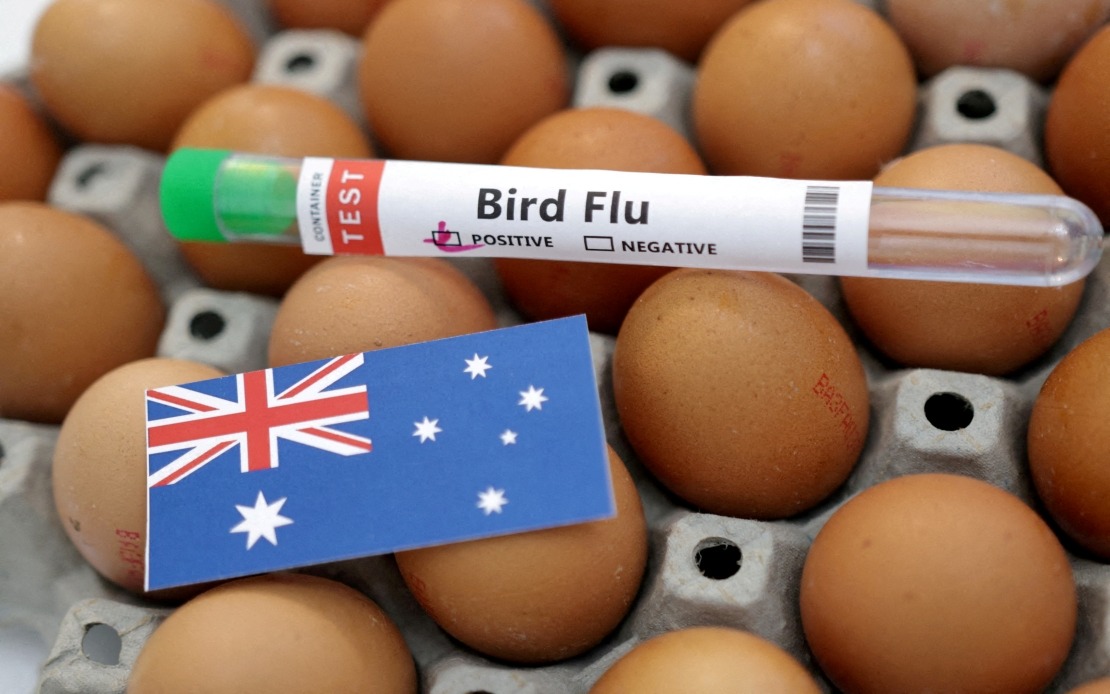
Australia faces a rapidly escalating bird flu crisis as confirmed and presumed cases of H5N1 have climbed past 200, marking a dramatic surge since late July. The federal Department of Agriculture, Fisheries and Forestry reported 203 cases as of Saturday, reflecting a 290 per cent increase from just 52 infections recorded at the end of the previous month. The acceleration underscores the speed at which the highly pathogenic strain has spread across the continent, raising alarm bells for both wildlife managers and the agricultural sector.
The southeastern state of Victoria has taken centre stage in the government's emergency response, announcing sweeping new biosecurity protocols designed to shield commercial poultry operations from the deadly pathogen. Announced on Friday, the measures require all poultry producers along Victoria's south coast—encompassing the Melbourne region—with flocks of at least 50 birds to house their animals indoors for a minimum of 14 days. Agricultural Minister Michaela Settle framed the intervention as a precautionary step intended to erect barriers between wild bird populations and the domestic poultry industry, where an outbreak could trigger massive economic losses and potentially spread beyond Australia's borders.
South Australia remains the epicentre of the outbreak, accounting for nearly three-quarters of all detected infections. The state has recorded 147 cases to date, with 28 new confirmations emerging on Saturday alone. Notably, all 28 newly identified cases in South Australia involved wild seabirds, a pattern that has dominated the outbreak since its emergence. This concentration in wild populations suggests the virus is circulating through migratory bird corridors and coastal habitats, though the threat of spillover into domesticated poultry remains the paramount concern for authorities managing Australia's substantial egg and meat production industries.
Victoria holds the distinction of being the second-most affected jurisdiction, with 43 confirmed cases recorded across the state. A significant cluster surfaced near the South Australian border in Victoria's west, where 36 birds tested positive after being discovered on Thursday and Friday. The geographic clustering suggests H5N1 is moving across state lines through wildlife movement patterns, complicating containment efforts that typically rely on geographical quarantine zones. The discovery of infections so close to the border between two major agricultural regions has prompted urgent coordination between state and federal authorities to prevent further cross-border transmission.
The timing of Victoria's indoor housing mandate reflects growing anxiety within government circles about the trajectory of the outbreak. With cases roughly tripling over a single month, epidemiological modelling suggests the potential for exponential growth unless human intervention disrupts transmission pathways. By requiring confinement indoors, authorities aim to eliminate direct contact between domestic birds and wild populations, a critical vector for H5N1 transmission. The 14-day initial period represents a compromise between biosecurity imperatives and the operational constraints facing farmers, many of whom operate free-range or outdoor production systems that now face temporary operational disruption.
For Southeast Asian observers, particularly Malaysia, the Australian outbreak carries significant implications. As a region heavily dependent on poultry imports and integrated into regional supply chains, any escalation of H5N1 in Australia could disrupt trade flows and trigger additional import restrictions. Malaysia has experienced its own periodic avian influenza challenges, and the Australian experience provides a cautionary example of how rapidly the disease can spread once established in wild bird populations. The outbreak also underscores the interconnectedness of biosecurity threats across the Indo-Pacific region, where migratory birds respect no borders and viral mutations can emerge and circulate with alarming speed.
The shift from detecting H5N1 exclusively in wild birds to implementing urgent preventive measures for commercial flocks marks a critical juncture in Australia's outbreak response. Should the virus breach commercial poultry operations, the consequences would extend far beyond public health. An outbreak in intensive farming environments could necessitate mass culling of infected flocks, trigger export bans that would reverberate through regional poultry markets, and impose substantial financial costs on producers already contending with inflationary pressures and supply chain volatility. The Victorian government's proactive stance reflects recognition of this escalation risk.
The epidemiological pattern observed in Australia—with wild seabirds serving as the primary reservoir—mirrors global H5N1 dynamics but unfolds within Australia's unique ecological context. The continent's coastal wetlands and marine bird congregations provide ideal environments for the virus to persist and circulate, particularly during migration seasons when birds aggregate in large numbers. South Australia's heavy case load reflects the concentration of seabird populations in coastal areas, where surveillance capacity has been heightened following initial detections. However, the emergence of cases near state borders suggests the virus is beginning to penetrate inland regions, though primarily through wild bird movements rather than human-mediated transmission.
Victoria's 14-day confinement requirement represents a measured but nonetheless significant intervention in agricultural operations. Farmers must transition rapidly to indoor housing systems, a transition that creates logistical and welfare challenges for birds accustomed to outdoor access. Feed and water management systems must be reconfigured, ventilation capacity verified, and biosecurity protocols implemented to prevent secondary transmission pathways. For smaller producers operating with limited infrastructure flexibility, the measure imposes immediate compliance burdens, though the alternative of potential H5N1 establishment in commercial flocks poses far greater existential risks to their operations.
Federal and state authorities have evidently concluded that the outbreak trajectory justifies decisive preventive action before the disease becomes established in poultry populations. Once H5N1 gains foothold in commercial settings, eradication becomes exponentially more difficult and costly. The 290 per cent surge in cases over August alone suggests the outbreak has entered an acceleration phase that may not stabilize without intervention. Victoria's indoor housing mandate essentially gambles that two weeks of confinement will suffice to reduce transmission risk to manageable levels, though this timeline remains uncertain given the unpredictability of wild bird movements and viral transmission dynamics.
Looking forward, sustained surveillance of wild bird populations remains critical to tracking the outbreak's progression. Both Victoria and South Australia have expanded monitoring efforts, particularly in coastal and wetland habitats where seabirds congregate. Genetic sequencing of detected viruses will provide insights into whether the outbreak stems from a single introduction event or multiple spillover incidents, knowledge that could inform longer-term prevention strategies. For Australia's agricultural sector and its regional trading partners, the coming weeks will determine whether current containment measures prove sufficient or whether more stringent restrictions become necessary as the outbreak unfolds across the continent.

