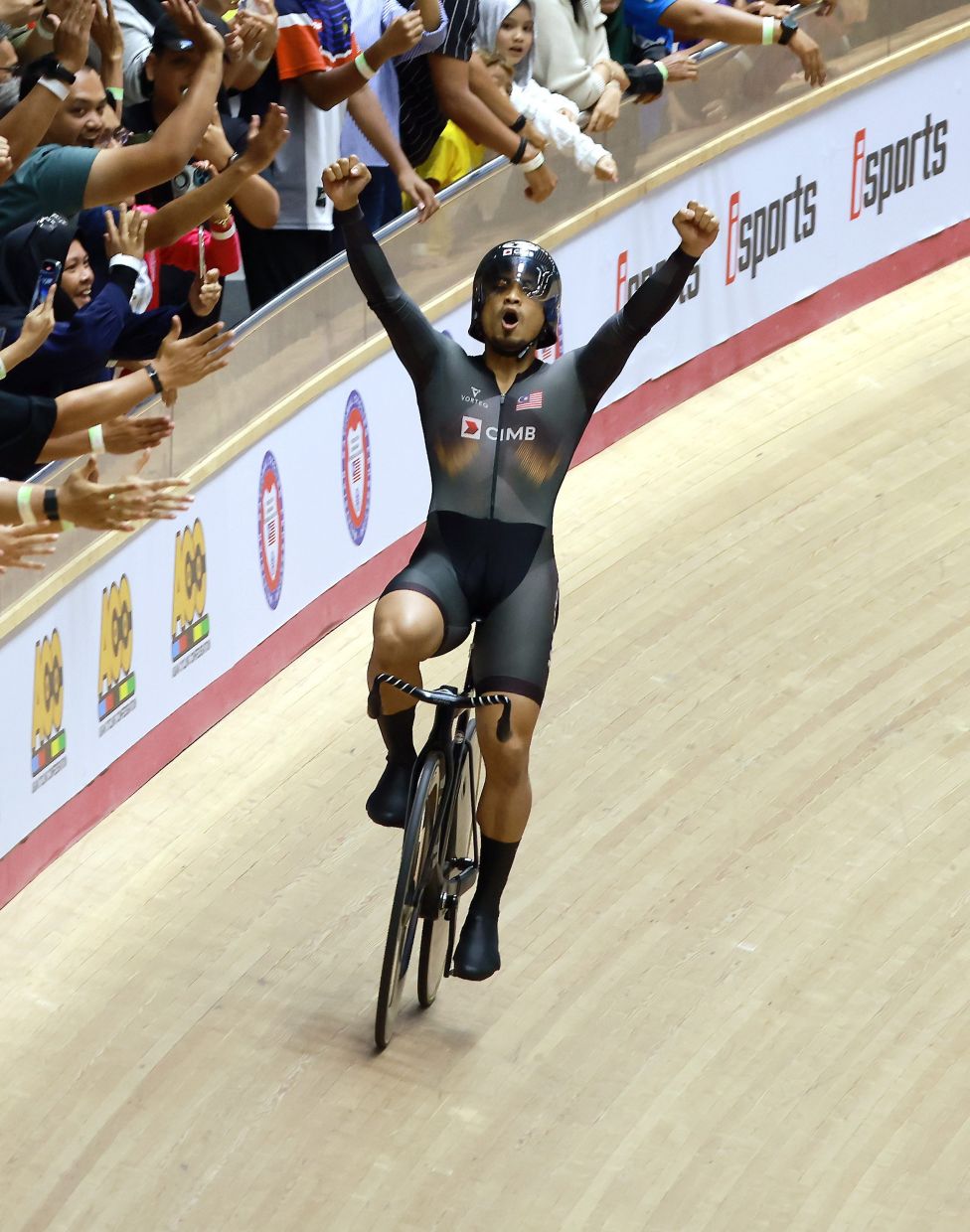
Veteran track cyclist Azizulhasni Awang's emotional ordeal came to an end on Merdeka Day when he received formal confirmation from the National Sports Council and Youth and Sports Ministry that his Olympic dreams remain alive. The 38-year-old, who had endured agonising uncertainty for weeks while awaiting a definitive decision on his future, could not hold back tears upon opening the confirmation email at the velodrome during his first training session following a week-long hiatus. His raw emotional response captured the immense psychological toll of the protracted waiting period and underscored how profoundly the administrative ambiguity had affected his capacity to train effectively.
Azizul's public plea for clarity had created significant ripples across Malaysian sporting circles and broader public discourse. The legendary keirin world champion had made no secret of his desire to retire from professional cycling, yet remained willing to extend his career exclusively to pursue Los Angeles qualification provided the authorities committed to backing his campaign. His repeated assertions that he needed firm assurance before investing further years in gruelling training and competition reflected not mere indecision but a principled stand about the fundamental respect owed to athletes who have devoted their lives to representing the nation. The Malaysian National Cycling Federation earlier confirmed that both the NSC and ministry had pledged the necessary institutional and financial support for Azizul's qualification bid.
The prolonged silence from government sports authorities had gradually morphed into a politically sensitive issue, with public opinion crystallising strongly behind the accomplished cyclist. Social media campaigns and widespread commentary highlighted what many perceived as bureaucratic insensitivity towards a national sporting icon who had delivered multiple medals and prestige for Malaysia across decades of international competition. Youth and Sports Minister Dr Taufiq Johari and the NSC faced mounting criticism for what observers characterised as unreasonable delays in providing a straightforward answer to a straightforward question. The groundswell of public backing proved decisive in forcing the authorities to act, demonstrating how citizen engagement can sometimes cut through governmental inertia.
Azizul's gratitude towards the Malaysian public revealed the emotional scaffolding that had sustained him through the ordeal. He explicitly stated that he had neither requested nor orchestrated the public support campaign, yet felt profoundly moved by the thousands of messages, comments, and expressions of solidarity from Malaysians across the country. This spontaneous mobilisation reflected deep admiration for his decades-long commitment to sporting excellence and a recognition that his case represented something larger than one individual's career continuation—it touched upon broader questions about how the nation treats its aging sporting heroes and whether administrative processes adequately respect athletes' need for clarity and certainty.
The timing of the confirmation on Malaysia's National Day carried symbolic significance that Azizul himself appeared to appreciate fully. Merdeka Day traditionally occasions reflection upon national achievements and collective identity, making the announcement doubly resonant as validation of a Malaysian athlete's continued pursuit of international glory. Azizul's readiness to serve his country remained undimmed despite the uncertainties he had navigated, suggesting that patriotic commitment had sustained him through months of personal anguish. His promise to deliver his absolute best performance for Malaysia and its citizens reflected the values-driven mentality that has characterised his career.
The psychological dimensions of Azizul's struggle merit consideration within the context of athlete welfare and mental health in Malaysian sports administration. He had described the preceding week as emotionally barren, unable to summon the mental engagement necessary for effective training despite physically returning to the velodrome. This disconnect between body and mind illustrated how profoundly uncertainties about institutional support can erode athletic performance capacity at the mental level. Competitive cyclists, particularly those approaching the twilight of their careers, require psychological steadiness and confidence in organisational backing to maintain the rigorous focus essential for Olympic qualification campaigns spanning multiple years.
From a broader Southeast Asian perspective, Azizul's experience raises questions about how the region's sports federations balance athlete career longevity with institutional resource allocation. Malaysia has benefited tremendously from retaining experienced competitors who can mentor younger athletes while continuing to generate medals at major competitions. The decision to continue supporting Azizul potentially yields multiple dividends: it maintains Malaysia's keirin competitiveness, acknowledges the contributions of aging athletic veterans, and provides the psychological stability necessary for sustained peak performance. Other regional sports bodies may observe this situation and recalibrate their own policies regarding veteran athlete retention and succession planning.
The confirmation also signals something significant about governance receptiveness to public opinion within Malaysia's sports establishment. The administrative machinery responded when public pressure mounted sufficiently, suggesting that citizen engagement and social media advocacy can prove effective in addressing what many viewed as institutional negligence. However, the necessity of such public mobilisation to obtain a straightforward answer about athlete support raises separate questions about whether standard decision-making processes in sports administration adequately prioritise athlete interests or require external pressure to function properly. The ideal scenario would involve swift, decisive administration that anticipates and addresses such matters proactively.
Looking toward Los Angeles 2028, Azizul now faces the concrete challenge of translating institutional commitment into Olympic qualification and competitive success. The uncertainty phase has concluded, but the demanding qualification campaign lies ahead. At 38 years old, he must sustain world-class competitive form across multiple international competitions while managing the physical demands of elite cycling. The public support that sustained him through administrative ambiguity will surely provide psychological reinforcement during the intensely competitive qualification phase. Malaysian cycling enthusiasts will follow his progression toward Los Angeles with heightened interest, recognising that his participation at the Games would represent not merely individual achievement but validation of his tenacity and the institutions' ultimate willingness to support their aging sporting champions through their final campaigns.

