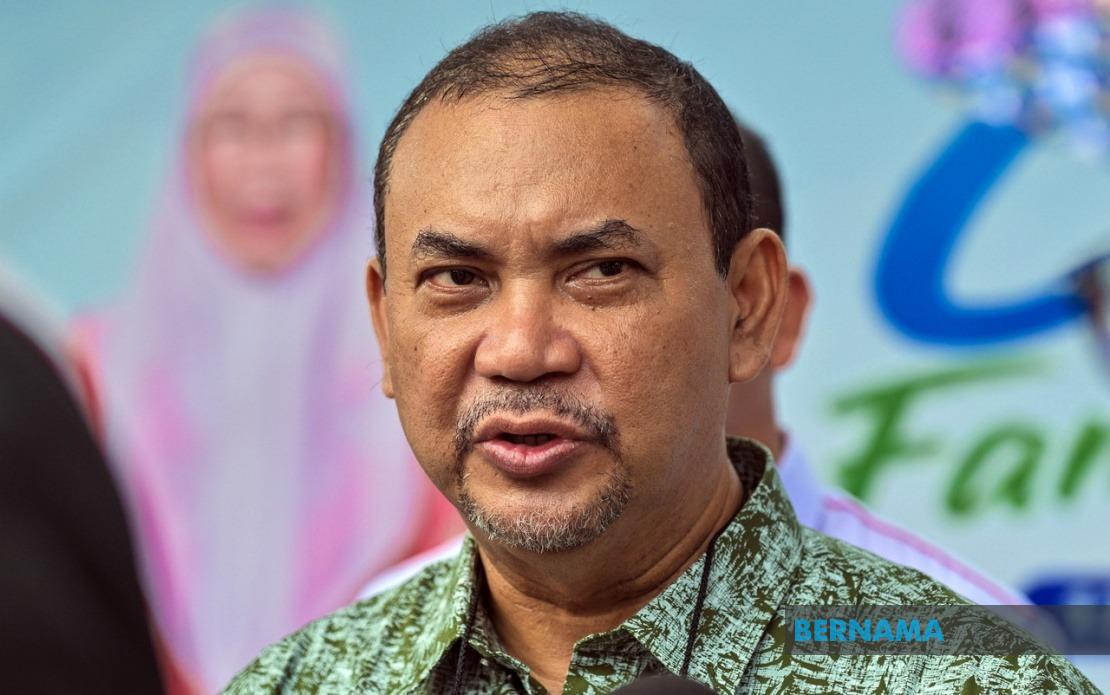
Prime Minister Datuk Seri Anwar Ibrahim's appointment of Datuk Azman Abidin as Ampang Parliamentary Constituency Coordinator signals a renewed administrative approach to managing constituent services in one of Selangor's most populous electoral divisions. The move reflects a broader effort to professionalise the delivery chain for government assistance programmes at the constituency level, moving away from ad-hoc distributions towards a system underpinned by clear protocols and measurable outcomes.
Azman, who also serves as the Prime Minister's Political Secretary, has provided detailed commitments regarding how welfare support will be channelled to residents. His pledge emphasises that assistance delivery will operate through formalised structures rather than informal networks, a significant shift in how many Malaysian constituencies have traditionally managed social welfare matters. By anchoring the process within the Prime Minister's office, the arrangement creates a direct line of accountability that extends from constituent applications to the highest echelons of government.
The implementation framework outlined involves active coordination with the Implementation Coordination Unit (ICU) under the Prime Minister's Department. This institutional arrangement ensures that welfare initiatives do not operate in silos but instead feed into a broader governmental ecosystem designed to monitor programme effectiveness across different agencies. The ICU's involvement suggests that Ampang's welfare delivery will be benchmarked against performance metrics and integration standards applied elsewhere in the federal system.
Residents seeking welfare assistance have been invited to submit applications directly to the Office of the Prime Minister's Political Secretary, a departure from conventional constituency office processes. This centralisation has both practical and symbolic implications. Practically, it consolidates the coordination function and reduces the risk of applications becoming lost within fragmented bureaucratic structures. Symbolically, it signals that welfare matters in Ampang carry elevated importance within the Prime Minister's portfolio, potentially accelerating decision-making timelines.
The commitment extends beyond mere administrative efficiency to encompass collaborative governance at the local level. Azman has specifically pledged coordination with assemblymen representing different state constituencies within the Ampang parliamentary division, acknowledging that effective welfare delivery requires bridging the federal-state governance nexus. Malaysia's federal structure often creates overlapping jurisdictions that can impede service delivery; this explicit coordination commitment attempts to surmount such obstacles.
Community leaders and relevant stakeholder organisations are also integrated into the delivery mechanism. This inclusive approach recognises that formal government channels operate most effectively when complemented by ground-level community networks that understand local contexts, cultural nuances, and specific vulnerabilities within constituencies. In diverse areas like Ampang, which encompasses urban centres, suburban developments, and pockets of lower-income settlements, such granular knowledge proves invaluable for ensuring assistance reaches its intended beneficiaries.
The appointment comes at a time when Malaysian constituencies increasingly face pressure to demonstrate tangible improvements in residents' quality of life. The Ampang parliamentary division, which comprises multiple state seats and encompasses rapidly urbanising areas, presents both opportunities and challenges for welfare administration. Population growth, demographic shifts, and economic vulnerabilities require welfare frameworks capable of scaling responsively. Azman's emphasis on professionalism, integrity, and accountability addresses public concerns about the efficiency and impartiality of assistance distribution—longstanding issues that have occasionally marred constituency-level welfare administration across the country.
For residents in Ampang, the restructured approach could translate into shorter processing times for assistance applications, clearer criteria for eligibility determination, and greater transparency regarding fund allocation. The formalisation of processes typically reduces opportunities for political patronage or nepotistic distribution, creating more equitable systems particularly beneficial to marginalised groups who may lack political connections. This meritocratic shift aligns with broader governance reform agendas that Prime Minister Anwar Ibrahim has championed since assuming office.
The effectiveness of this initiative will ultimately depend on execution. Departmental coordination mechanisms often falter when implementation capacity lags behind policy ambitions, or when agencies prioritise their own mandates over cross-agency objectives. The success of Azman's framework will hinge upon whether the Implementation Coordination Unit possesses sufficient authority to enforce compliance among participating agencies, whether budget allocations adequately support the enlarged administrative apparatus, and whether political pressures subsequently compromise the integrity standards outlined in initial commitments.
For other Malaysian constituencies observing this arrangement, the Ampang model potentially offers a blueprint for restructuring welfare delivery at the parliamentary level. Should it prove successful, constituencies nationwide might adopt similar frameworks anchoring welfare coordination within federal political secretariats. This would represent significant institutional evolution in how Malaysia manages constituent services, consolidating what have historically been fragmented, locally-managed operations into nationally-coordinated systems subject to consistent performance evaluation.
The timing of this appointment also carries political significance within Selangor politics, where Ampang represents a strategically important electoral division. Demonstrable improvements in welfare delivery could strengthen the ruling coalition's standing among constituents, particularly lower-income voters prioritising material benefits alongside other policy considerations. Conversely, implementation shortcomings could become focal points for opposition criticism regarding governance competence.
Moving forward, residents wishing to access assistance programmes should familiarise themselves with the new submission procedures and ensure applications are directed to the appropriate office. Community organisations and elected representatives at both state and federal levels would benefit from engaging proactively with Azman's office to align their own initiatives with the broader coordination framework, creating synergies rather than duplicative efforts.

