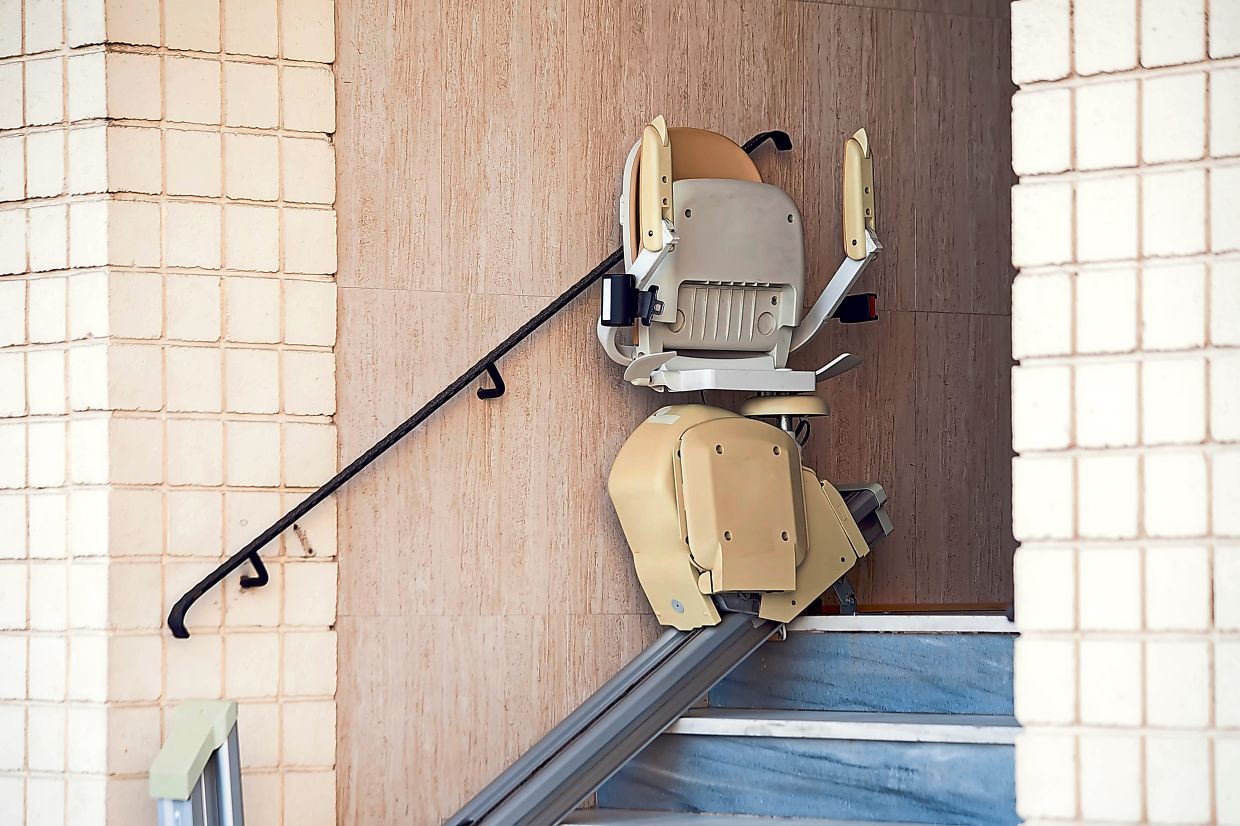
A neighbourhood dispute in Shanghai over installing a stairlift in a shared staircase has drawn international attention, yet the underlying tensions it reveals are far closer to home for Malaysia. The case centred on a resident's request to install mobility equipment for an elderly parent in a common area of an apartment building. Neighbours objected, citing concerns that the stairlift could block evacuation routes and compromise emergency safety. What began as a local disagreement escalated into national headlines, forcing a reckoning with questions about disability rights, property management and public safety—issues that Malaysian policymakers and building managers must soon address as the country transitions towards an ageing society.
Malaysia is projected to become an ageing nation by 2030, a demographic shift that will dramatically increase demand for home modifications enabling elderly residents to maintain independence and mobility. For those living in apartments and condominiums, however, installing accessibility aids like stairlifts presents a fundamentally different challenge than renovating a private bathroom. Unlike works confined within a single unit, a stairlift typically attaches to a shared staircase, converting what might seem like a personal accessibility need into a question of managing common property that affects every resident in the building.
The crux of the problem lies in how Malaysian law treats shared spaces within stratified developments. The Strata Management Act 2013 establishes that staircases, corridors, lift lobbies and similar facilities belong collectively to all parcel owners and are administered by the joint management body or management corporation on their behalf. This means any proposal to install or modify equipment on common property cannot be unilaterally decided by an individual resident, regardless of whether the modification serves accessibility purposes. The shared ownership model exists for practical reasons—it ensures that common areas remain functional and safe for all occupants while clarifying responsibility for maintenance, insurance and repairs. Even seemingly minor changes can create cascading complications across these domains.
Yet this legal framework sits uneasily alongside Malaysia's Persons with Disabilities Act 2008, which commits the nation to creating an inclusive society by promoting equal access to public facilities, amenities, services and buildings. The Act explicitly supports removing daily barriers that prevent disabled individuals from moving freely through their environments. However, the legislation stops short of granting disabled residents an automatic right to alter common property within privately managed strata developments. Instead, it coexists alongside building management laws without clear hierarchy or integration. This gap means that accessibility needs and strata management obligations are often treated as competing interests rather than complementary values requiring balanced solutions.
The safety dimension adds further complexity. Malaysia's Uniform Building By-Laws mandate that staircases serving as emergency escape routes must maintain specified clear widths throughout their length, including at landings. Regulations permit only handrails to project into this space, and only by up to 80mm. While the by-laws do not explicitly mention stairlifts, they make abundantly clear that evacuation routes must remain safe and unobstructed. A stairlift installation would not necessarily be prohibited outright, but its approval hinges on a critical question: would it reduce the staircase width below the minimum required for that particular building's occupancy, or otherwise impede emergency evacuation? Since required widths vary according to building design and occupancy levels, each proposal demands individual assessment of its actual impact on fire safety.
Modern stairlifts are engineered to fold flush against the wall when not in use, theoretically minimising obstruction. However, building managers must still evaluate whether sufficient clearance persists during an evacuation, whether the equipment meets relevant safety standards, and critically, how it would function during a power failure or fire when mechanical systems cannot be relied upon. These concerns extend far beyond initial installation. Questions of ongoing responsibility inevitably arise: who maintains and inspects the equipment, who repairs faults, and who is liable if the stairlift contributes to an accident or obstructs emergency access? These liability issues are not hypothetical—they directly affect insurance coverage and the building's legal exposure.
For Malaysian management bodies, approval of accessibility modifications carries implications that ripple throughout the entire community. Every decision sets precedent for future applications, establishes operational responsibilities that may burden the building's administrative structure, and shapes expectations among other residents. A decision to approve one resident's stairlift request naturally invites similar applications from other disabled or elderly residents, potentially creating a series of modifications across the staircase that cumulatively alter its character and safety profile. This interconnectedness explains why such requests require far more careful deliberation than a simple yes or no answer to an individual's need.
The challenge for Malaysia's building management sector is developing frameworks that genuinely balance these competing interests rather than defaulting to blanket refusals of accessibility modifications. Singapore's approach offers partial guidance, but Malaysian law and building practices have distinct characteristics requiring locally tailored solutions. One possibility involves establishing clear criteria within building by-laws for evaluating accessibility modification requests, incorporating explicit consideration of disability rights alongside fire safety requirements. Another involves mandating that management corporations demonstrate, through technical assessment, that a proposed modification would actually impede evacuation—rather than rejecting it on grounds of mere suspicion or discomfort.
The gap in Malaysia's Persons with Disabilities Act becomes particularly acute when considering that older residents with mobility impairments are not necessarily registered with the disability agency and may not self-identify as disabled. An elderly resident struggling to climb stairs faces genuine safety risks—both from falls caused by immobility and from inability to evacuate if mobility limitations prevent rapid descent. Dismissing accessibility modifications without substantive safety analysis thus creates a false choice between two types of safety: preventing falls through accessibility versus maintaining evacuation routes. Proper analysis might reveal that in many cases, well-designed stairlifts pose minimal actual risk to escape routes.
The Shanghai incident also underscores how neighbours' objections to accessibility modifications sometimes reflect legitimate safety concerns but other times reflect less defensible anxieties about property values, aesthetic preferences or simple inconvenience. Malaysian law and practice should distinguish clearly between these categories. An objection based on demonstrated obstruction of required clear widths differs fundamentally from an objection based on dislike of the equipment's appearance or vague unease about disabled persons in common spaces. Building authorities and management corporations should require objectors to articulate specific safety or functional grounds for opposition, rather than entertaining generalized concerns.
As Malaysia's population ages, the trajectory is clear: more residents will require mobility aids, and disputes over their installation in shared spaces will multiply. The current legal landscape—fragmented across disability rights legislation, strata management law and building codes—provides insufficient guidance for resolving these conflicts equitably and safely. Policymakers should consider whether the Strata Management Act requires amendment to explicitly address accessibility modifications, whether the Persons with Disabilities Act should be strengthened to establish clearer rights in residential settings, and whether the Uniform Building By-Laws need supplementary guidance on assessing stairlifts and similar equipment.
The Shanghai case demonstrates that ignoring this issue until disputes become public relations disasters is suboptimal. Malaysia has opportunity to develop proactive solutions that protect both accessibility rights and genuine safety concerns. Such solutions might include technical standards for stairlift installation in different building contexts, guidance for management corporations on evaluating modification requests, mediation processes for disputes, and explicit acknowledgment that accessibility and safety are not mutually exclusive values but complementary ones. Without such frameworks, Malaysia risks either blocking legitimate accessibility modifications on safety grounds that do not withstand scrutiny, or alternatively, approving modifications without adequate consideration of actual risks. The middle path—careful, evidence-based assessment of individual proposals—remains the most defensible and inclusive approach as the nation prepares for demographic change.

