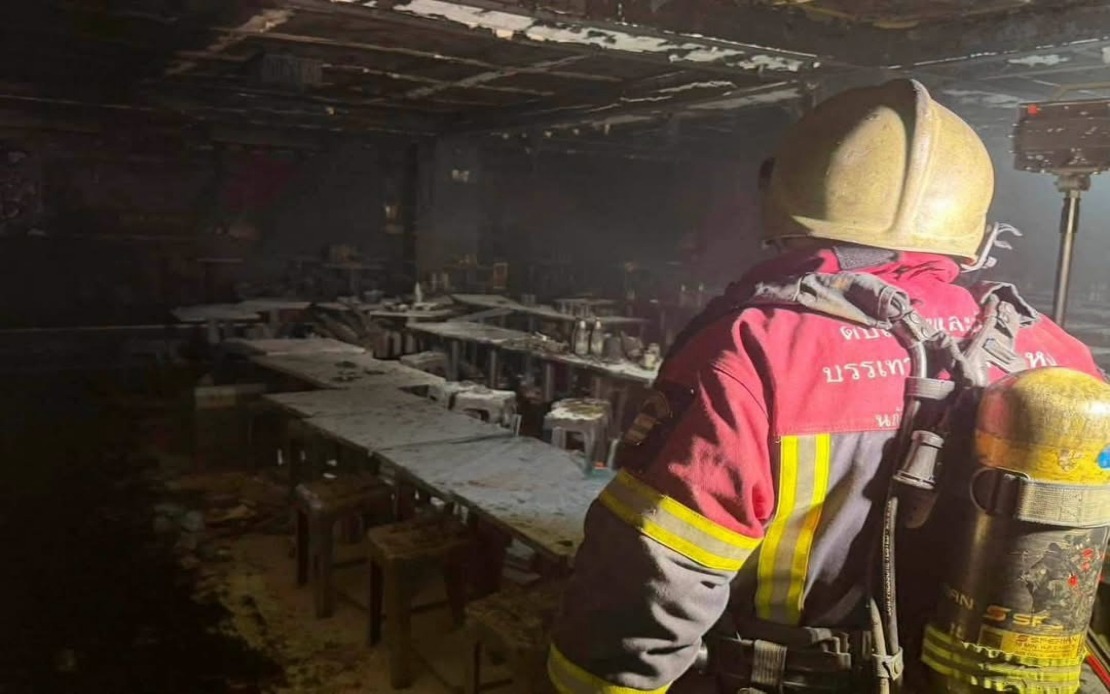
A catastrophic fire swept through a bar in Bangkok's Lat Phrao neighbourhood in Chatuchak district during the early hours of Monday morning, claiming the lives of at least 27 people and leaving 18 others injured. The incident represents one of the most serious fire disasters to strike Thailand's capital in recent years, prompting immediate intervention from senior government officials and triggering a comprehensive investigation into the circumstances that allowed the blaze to claim so many lives.
Bangkok Governor Chadchart Sittipunt arrived at the scene shortly before 2.40 am and oversaw the immediate response efforts. The cause of the fire, which erupted after midnight, remains the focus of ongoing investigation by police and forensic specialists. The Bangkok Metropolitan Administration has assumed control of the site to conduct detailed forensic analysis aimed at pinpointing how the fire originated and what factors contributed to its rapid and devastating spread throughout the establishment.
Among the confirmed fatalities, the victim profile reveals nine men and 18 women, with the gender disparity reflecting the nature of the venue and the clientele present at the time. The injured comprise a range of severity levels: eight individuals face critical conditions, seven sustained moderate injuries, and three sustained minor wounds. Medical personnel continue working to stabilise the critically injured while conducting formal identification procedures on the deceased.
Initial observations made by investigators paint a troubling picture of how the fire developed. Chadchart noted that flames advanced with remarkable speed through the ceiling area of the bar, suggesting either a structural vulnerability or the presence of highly flammable materials in the upper reaches of the building. Paradoxically, many plastic furnishings on the ground floor remained largely intact, indicating that the fire's most destructive energy concentrated overhead rather than spreading uniformly through the space.
A musician who was performing inside the venue at the moment the fire ignited provided crucial eyewitness testimony that sheds light on the sequence of events. According to accounts relayed by Prime Minister Anutin Charnvirakul, who visited the scene to receive briefings from officials, the performer reported that flames originated from the electrical switchboard. What followed was a catastrophic chain reaction—explosions occurred, creating a fiery and smoke-filled environment that forced patrons to flee in panic. The speed of this deterioration left many occupants with minimal time to locate and utilise escape routes.
The emergency exit situation has emerged as a critical focus of the investigation. Chadchart disclosed that preliminary reports indicate several victims were discovered near an emergency exit positioned on the left side of the building. Most troublingly, evidence suggests that obstruction or barriers may have been present at this exit, potentially preventing patrons from reaching safety. The governor cautioned against premature conclusions, emphasising that thorough investigation is required before determining whether blocked exits directly contributed to the death toll.
The speed at which smoke filled the establishment likely played a decisive role in the fatalities. Authorities believe most victims succumbed to smoke inhalation rather than direct burns, though definitive cause-of-death determinations await completion of the forensic examination process. This pattern underscores a tragic reality: occupants may have attempted escape but became disoriented or incapacitated by toxic fumes before reaching exits, a scenario that would have been compounded by any obstructions or unclear exit signage.
Bangkok's municipal authorities are now conducting a comprehensive audit of the bar's operational licensing and safety compliance record. The inspection will specifically evaluate the adequacy and condition of emergency exits, the visibility and functionality of exit signage, and whether evacuation routes contained any form of obstruction. This systematic review reflects growing concerns about whether establishments across the city are maintaining proper safety standards or whether the bar in question represented a broader pattern of negligent practices in the hospitality sector.
The incident carries sobering implications for venue safety throughout Southeast Asia. Bangkok, as a major tourism and entertainment hub, attracts thousands of international and domestic patrons nightly to its bars and nightclubs. The discovery that emergency exits may have been obstructed raises uncomfortable questions about oversight mechanisms and enforcement of safety regulations. Neighbouring countries including Malaysia, which also hosts numerous entertainment venues of comparable scale and design, may feel compelled to undertake their own safety audits to prevent similar tragedies.
Prime Minister Anutin's rapid arrival at the scene and his engagement with witnesses demonstrates the severity with which Thailand's highest levels of government regard this incident. His presence signals that accountability mechanisms will be activated and that findings from the investigation will likely result in policy and enforcement changes. The decision to probe the electrical switchboard as the potential ignition source may ultimately lead to broader requirements for improved electrical safety standards and more rigorous maintenance inspections across licensed venues.
As victim identification continues and the investigation deepens, families of the deceased face the agonising process of confirming losses and obtaining official documentation. Governor Chadchart has urged relatives to monitor official coordination channels for updates, recognising that the multi-agency response will require time to process information and deliver findings. The coming days will reveal whether this tragedy stemmed from a singular critical failure or from a constellation of preventable oversights that converged with devastating consequences.
The broader narrative emerging from this disaster suggests that rapid urbanisation and the expansion of entertainment districts may have outpaced the development of corresponding safety infrastructure and regulatory vigilance. Whether through inadequate exit design, poor maintenance, obstruction of safety equipment, or insufficient enforcement of codes, the fire in Chatuchak district represents a failure of the systems meant to protect public safety. For Malaysia and other nations in the region, the incident serves as an urgent reminder that prosperity in the hospitality and entertainment sectors must not come at the expense of the fundamental safeguards that protect human life.

