Bangladesh's government has lodged a strong diplomatic protest against India following the decision to allow exiled former Prime Minister Sheikh Hasina to conduct a live media briefing from New Delhi. The Ministry of Foreign Affairs in Dhaka issued a statement on Wednesday night expressing deep dissatisfaction with what it characterised as a deliberate disregard for concerns it had previously raised with Indian authorities about the potential damage such an event could inflict on the nascent rapprochement between the two South Asian nations.
The Bangladeshi government's response carries particular weight given the delicate state of India-Bangladesh relations following the dramatic political upheaval in Dhaka last August. Sheikh Hasina, who wielded considerable influence during her 15-year tenure as prime minister, fled to India after a student-led uprising forced her from power. Since then, a special tribunal in Bangladesh has convicted her in absentia of crimes against humanity, sentencing her to death for her role in a brutal security crackdown against protesters. The tribunal's decision underscores the gravity with which Bangladesh views Hasina's actions during the final months of her administration.
Dhaka's displeasure extends beyond mere protocol violations. Officials characterise the broadcasting of Hasina's remarks from Indian territory as fundamentally disrespectful to Bangladesh's sovereignty and an affront to the memory of those who lost their lives during the uprising. By providing Hasina with a public platform to make allegations against the Bangladeshi state and its people, India has, in Dhaka's assessment, actively contributed to reopening wounds that the new government had hoped would heal through constructive bilateral engagement. The foreign ministry's statement emphasised that such actions run counter to the spirit of normalisation that both nations ostensibly seek to cultivate.
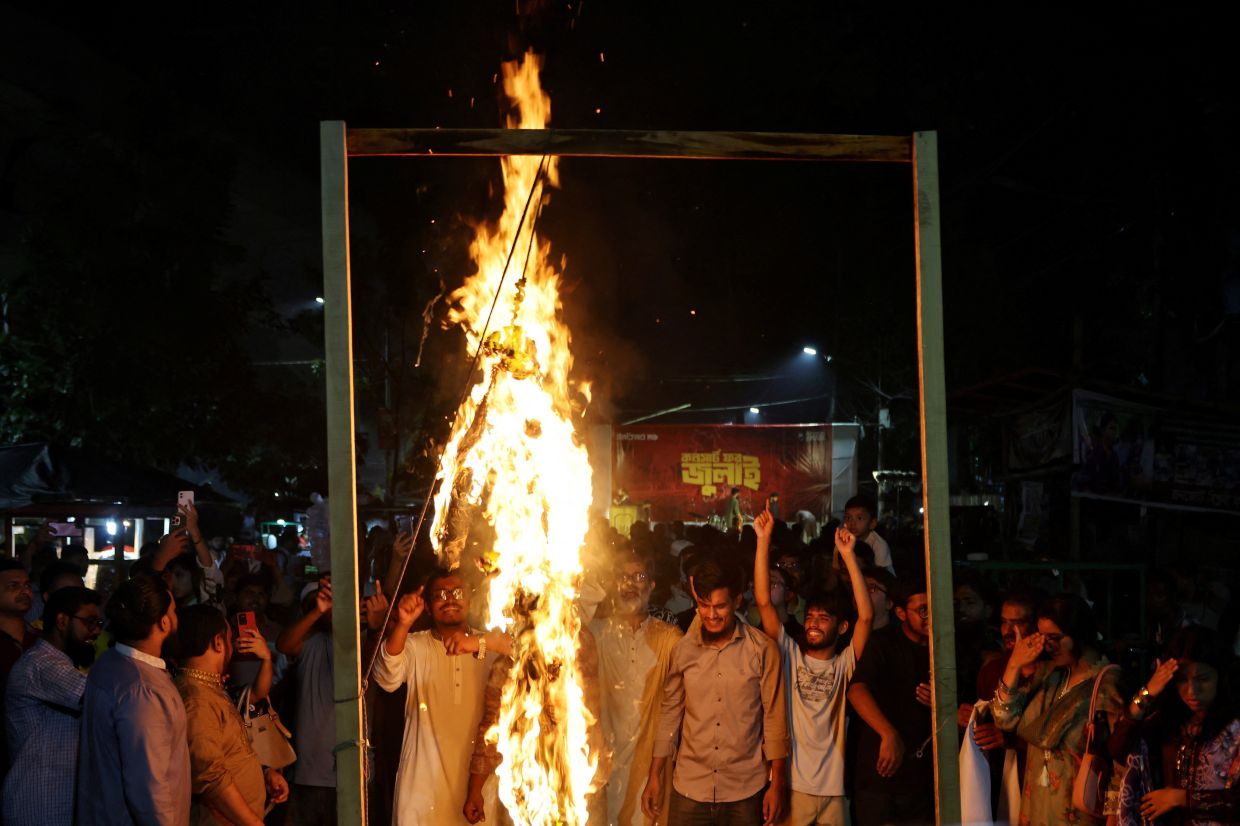
Sheikh Hasina's timing appears strategically calculated. She held her virtual press conference on Wednesday, coinciding with the second anniversary of her forced departure from Bangladesh. During the briefing, she reaffirmed her determination to return to power, remarks that carry considerable symbolic and political weight in Bangladesh's intensely polarised domestic environment. For the interim government in Dhaka, which has been working to consolidate its legitimacy and rebuild public institutions damaged during the turmoil, Hasina's continued prominence and defiant messaging from Indian soil represents a persistent challenge to its authority.
India's role in sheltering Hasina has been a persistent source of friction ever since her arrival in Delhi. The Indian government maintained exceptionally close ties with her administration during its tenure, both at the political and strategic levels. New Delhi's traditional preference for strong, stable partners in its immediate neighbourhood meant that the loss of a long-standing ally in Dhaka created genuine concerns about India's regional influence and its ability to shape outcomes in South Asia. However, recognising the irreversibility of the political change in Bangladesh, Indian policymakers have attempted to recalibrate relations with the country's new leadership under Prime Minister Tarique Rahman.
New Delhi has publicly maintained that it bore no responsibility for orchestrating Hasina's media event. Randhir Jaiswal, spokesperson for India's Ministry of External Affairs, issued a statement on Tuesday asserting that the government possessed no involvement whatsoever in facilitating the briefing and explicitly noted that it neither endorses nor associates itself with any positions Hasina may have articulated during the forum. Such clarifications, however, appear insufficient to assuage Bangladeshi concerns, particularly given the reality that Hasina resides on Indian territory and conducted the event from New Delhi.
The diplomatic friction arrives at a particularly consequential moment for bilateral relations. Prime Minister Tarique Rahman is scheduled to visit India in September to participate in the BRICS leaders' summit, where he will attend in his capacity as chair of BIMSTEC, the seven-nation Bay of Bengal economic and technical cooperation organisation. This forthcoming visit was intended to signal Bangladesh's commitment to strengthening ties with India and to demonstrate the new government's willingness to engage constructively with its largest neighbour. The Hasina incident threatens to cast a shadow over these carefully planned overtures, potentially complicating what should have been a routine diplomatic engagement.
Bangladesh's frustration is compounded by what it perceives as India's non-cooperation on the question of Hasina's legal accountability. Dhaka has repeatedly invoked a 2013 extradition treaty between the two nations, formally requesting that India extradite the former prime minister to face justice for her crimes. According to Bangladesh's account, these entreaties have gone unanswered, leaving the country in a position where it cannot bring a convicted criminal to trial despite possessing both legal grounds and bilateral mechanisms through which such a transfer could be facilitated. The refusal or delay in responding to extradition requests adds another layer of grievance to Bangladeshi perceptions of Indian intransigence.
For observers of South Asian geopolitics, this episode illuminates the enduring structural challenges that complicate relations between India and its smaller neighbours. Bangladesh's new leadership faces considerable domestic pressure to assert its independence and resist what segments of Bangladeshi society perceive as Indian hegemonic behaviour. By hosting Hasina and providing her a platform, India inadvertently feeds narratives within Bangladesh about external interference and undue Indian influence over the country's internal affairs. Whether intentionally or not, New Delhi's actions contradict its stated objective of building productive ties with Rahman's government.
The incident also reflects deeper anxieties within Bangladesh about regional power dynamics. The country has been deliberately cultivating diplomatic relationships with multiple global players, including recent high-level visits to Malaysia and China since Rahman's election in February 2026. This diversification of Bangladesh's international engagement represents a conscious effort to reduce overdependence on any single neighbour, particularly India. Bangladeshi policymakers are signalling that while cooperation with India remains important, Bangladesh will not permit itself to be treated as a subordinate client state.
Moving forward, both governments face pressure to manage this crisis without allowing it to derail the broader reset process. India's immediate challenge involves demonstrating to Bangladeshi leaders that it can respect their sovereignty and domestic political priorities, even when doing so requires managing the presence and activities of a former ally. Bangladesh, for its part, must balance its legitimate grievances against the practical reality that meaningful regional cooperation requires some degree of accommodation and pragmatism. Whether this latest confrontation becomes merely a speed bump in the normalisation process or a harbinger of deeper structural problems remains to be seen.

