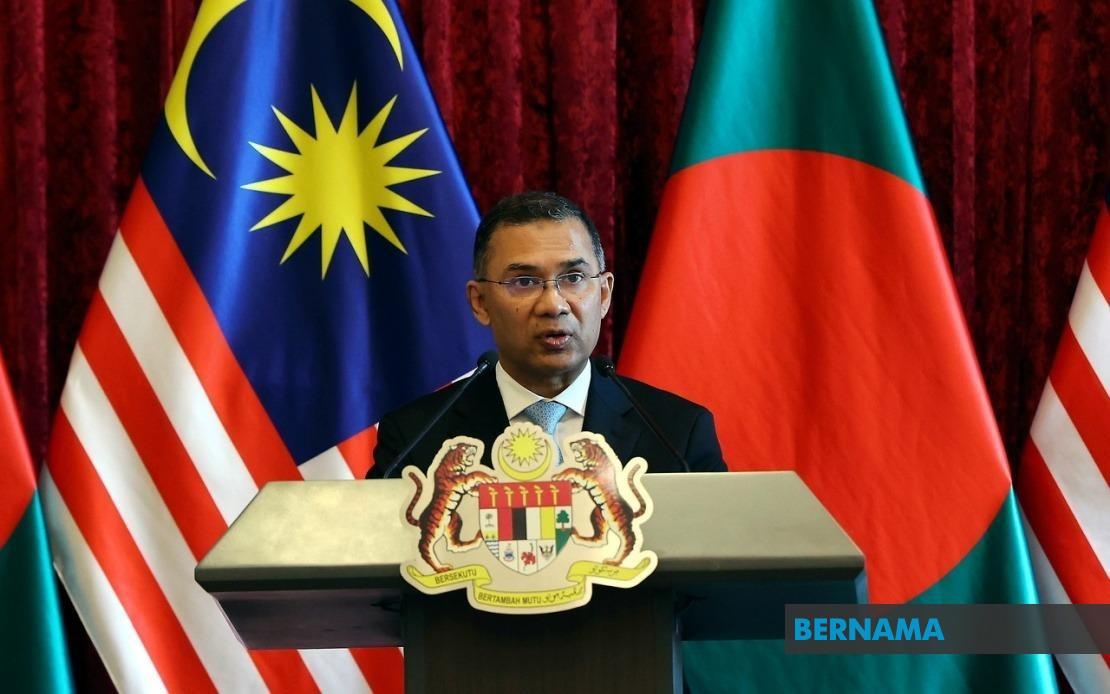
Bangladesh and Malaysia have deepened their diplomatic and economic relationship following Prime Minister Tarique Rahman's visit to the neighbouring country in June, according to Bangladesh's Health and Family Welfare Minister Sardar Mohammad Sakhawat Hossain. Speaking at a forum in Dhaka on Saturday evening organised by the Bangladesh-Malaysia Chamber of Commerce and Industry, the minister underscored the significance of the high-level engagement in reinforcing bonds between the two nations.
The ministerial remarks highlight the strategic importance both countries place on their bilateral partnership, which the Bangladesh government sees as rooted in a foundation of mutual confidence and shared interests. Sakhawat's comments came during an event deliberately titled "Towards a Stronger Bangladesh-Malaysia Partnership", suggesting both governments view this relationship as an evolving engagement that requires continued attention and nurturing. The timing of such declarations, coming months after the Prime Minister's visit, demonstrates how both nations are seeking to translate diplomatic courtesy into concrete cooperation frameworks.
Central to the Bangladesh government's vision for deeper ties is the expansion of commercial interaction between the business communities of both countries. The minister specifically highlighted that vigorous engagement between Bangladeshi and Malaysian traders and entrepreneurs forms a cornerstone of the relationship, signalling that economic ties are expected to drive the partnership forward. This focus on business-to-business connections reflects a broader regional trend in Southeast Asia where commercial integration often precedes or accompanies political cooperation.
Sakhawat made a pointed appeal to Malaysia to significantly increase its import volumes from Bangladesh, indicating that the current trade balance may not fully reflect Bangladesh's export potential. This request carries particular weight given Bangladesh's large manufacturing sector and competitive advantage in labour-intensive industries such as textiles, garments, and light engineering. For Malaysian importers and distributors, Bangladesh represents a nearby source of cost-effective goods, potentially offering alternatives to sourcing from more distant suppliers or countries with higher labour costs.
The event in Dhaka drew participation from Malaysia's diplomatic representation in Bangladesh, with Malaysian High Commissioner to Bangladesh Mohd Shuhuda Othman attending the gathering. The presence of the High Commissioner at a business-focused forum signals Malaysia's commitment to supporting private sector engagement with Bangladesh. Additionally, Mohammad Fazlul Haque, administrator of the Federation of Bangladesh Chambers of Commerce and Industry, was present, ensuring representation from Bangladesh's organized business community and reflecting the inclusive nature of the bilateral economic dialogue.
For Malaysian readers and business stakeholders, the development carries relevance as it suggests Bangladesh remains an important economic partner in the region. Bangladesh's rapid economic growth, driven by its garment exports, remittances, and emerging manufacturing sectors, positions it as an increasingly significant market for Malaysian services, technology, and investments. Moreover, the emphasis on strengthening ties reflects broader Southeast Asian integration efforts, where Bangladesh, as part of ASEAN-adjacent relationships, plays a strategic role in Malaysia's regional connectivity objectives.
The mutual trust framework that Sakhawat emphasized serves as the foundation upon which specific economic agreements and trade arrangements can be built. Unlike relationships built primarily on transactional interests, one rooted in confidence and reliability tends to prove more resilient during periods of global economic volatility or political shifts. This characterization suggests that both governments view their partnership as having strategic longevity beyond immediate commercial advantage.
Prime Minister Tarique Rahman's June visit to Malaysia, though not extensively detailed in the minister's remarks, clearly served important purposes in agenda-setting and relationship recalibration. Such high-level visits typically result in bilateral agreements on trade facilitation, investment promotion, labour cooperation, and cultural exchanges. The fact that Bangladeshi officials are now publicly building on that visit's momentum indicates the delegation achieved sufficient progress to warrant follow-up engagement at various governmental and private sector levels.
The call for increased Malaysian imports from Bangladesh also touches on development and employment considerations within Bangladesh. As a labour-intensive exporting nation, Bangladesh's economic growth depends significantly on market access in neighbouring and distant countries. Malaysia's substantial purchasing power and position as a developed economy within the region make it an attractive destination for Bangladeshi exports. Conversely, from Malaysia's perspective, supporting Bangladesh's export aspirations through increased imports can contribute to regional stability and prosperity.
Looking forward, the trajectory suggested by ministerial statements and the convening of business forum events indicates that both nations are moving toward institutionalizing their partnership through regular dialogue mechanisms and structured trade initiatives. Such approaches typically involve joint commissions, sector-specific working groups, and regular high-level consultations. For Malaysian businesses seeking expansion in South Asia, Bangladesh offers proximity, an English-speaking labour force, and growing consumer demand, while Bangladeshi exporters see Malaysia as a gateway to ASEAN markets and a source of technology and capital investment.

