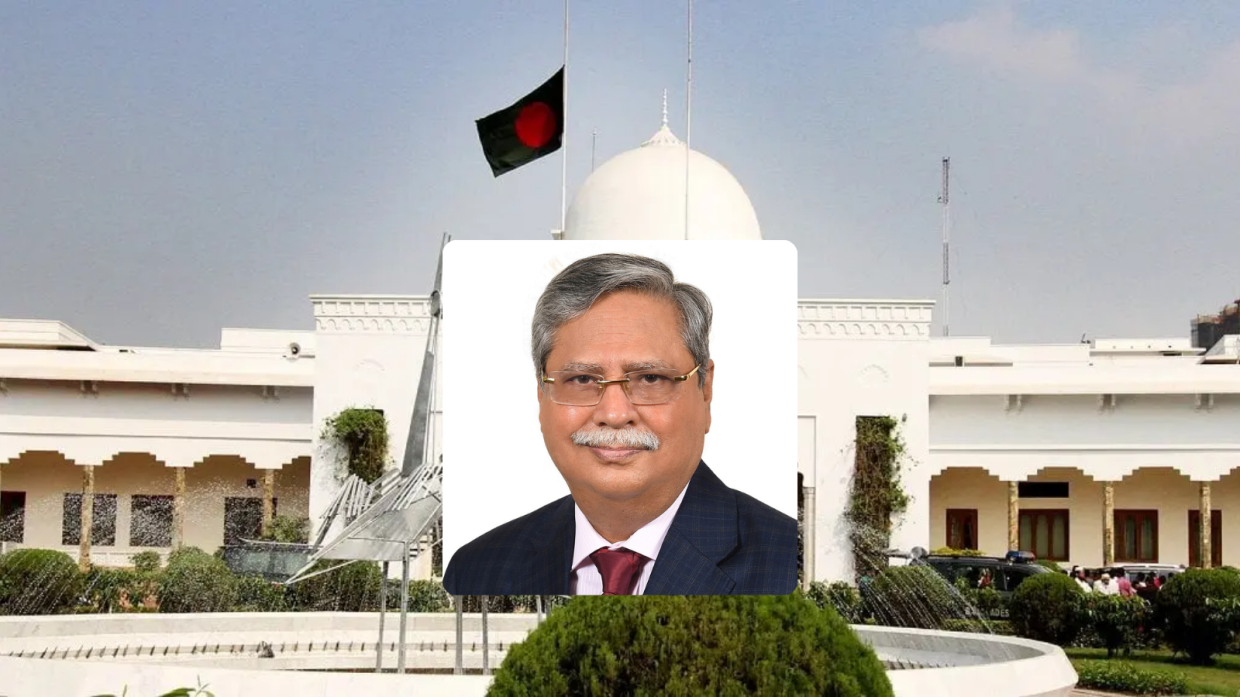
Bangladesh's President Mohammed Shahabuddin appears headed towards resignation, marking a significant political shift in the South Asian nation as the new government seeks to erase institutional remnants of the previous order. According to multiple sources with knowledge of the situation, the departure could materialise within days, with suggestions that a formal announcement might come by late July. If confirmed, Shahabuddin's exit would represent the final removal of a top constitutional official who remained in position following the July 2024 mass uprising that fundamentally reshuffled Bangladesh's political landscape.
Shahabuddin assumed the presidency on April 24, 2023, under the previous administration, and has become an increasingly uncomfortable figure for the current BNP-led government that took office after February elections. The timing of his likely resignation reveals deeper complications in Bangladesh's transition, where officials are grappling with questions of continuity and rupture. Rather than representing a simple leadership change, his departure underscores an ideological determination to cleanse state institutions of personnel associated with the preceding era.
The immediate catalyst for the resignation pressure involves an alleged phone conversation between Shahabuddin and exiled former Prime Minister Sheikh Hasina in May. During a medical visit to London, the president spoke with Hasina, who has remained in India since fleeing Bangladesh last July and now faces a death sentence in absentia. Intelligence agencies reportedly intercepted knowledge of this exchange, and a message was subsequently relayed to Shahabuddin suggesting he should resign. However, senior Bangladesh Nationalist Party (BNP) leaders insist the phone call represents only part of a more intricate political calculation rather than the sole reason for expected resignation.
Hasher tensions emerged following Hasina's July announcement that she and senior Awami League figures intended to return from Indian exile around December and formally surrender to authorities. This audacious declaration has rattled Bangladesh's new political establishment, which remains viscerally opposed to the Awami League and wary of any institutional foothold the former ruling party might retain. The government's concerns extend beyond Hasina's potential return to encompass ongoing attempts by Awami League operatives inside Bangladesh to quietly reorganise their fractured party structure, creating what officials perceive as a destabilising threat.
The BNP leadership views Shahabuddin's resignation as conveying an unambiguous signal of governmental resolve. A senior BNP official explained that the president's departure would demonstrate the administration's vigilance against activities capable of undermining law and order. This framing reveals how thoroughly security considerations have become intertwined with institutional politics. Prime Minister Tarique Rahman reinforced this hardline posture on July 17 during a Cabinet session, issuing explicit directives to intensify measures against the Awami League, Bangladesh Chhatra League, Jubo League, and affiliated organisations, suggesting that institutional housekeeping remains a priority.
For Malaysian and regional observers, Bangladesh's institutional contortions illustrate the complexity of navigating post-uprising transitions. The psychological weight of July 2024's upheaval continues shaping every major governmental decision, creating an environment where symbolic acts carry disproportionate significance. Removing a president who predates the uprising serves purposes beyond administrative necessity, functioning as a reassurance to constituencies that the new order possesses genuine commitment to substantive change rather than cosmetic adjustments.
Shahabuddin's own positioning has grown increasingly precarious through apparent mixed signals about his future. In December 2025, he indicated intentions to step down mid-term following the February elections, claiming he felt humiliated by the interim government under Muhammad Yunus. However, subsequent statements proved more equivocal. In a February newspaper interview, he suggested willingness to remain if the government desired his continued service, or to resign voluntarily if officials preferred his departure. This conditional positioning left him vulnerable to governmental pressure, unable to claim principled independence or demonstrate loyalty sufficiently credible to protect his tenure.
Government sources have grown increasingly candid about their dissatisfaction with Shahabuddin's conduct. Highly placed officials expressed displeasure at reports suggesting the president attempted to resurrect old political contacts, interpreting such actions as inappropriate and potentially destabilising. The overarching sentiment crystallises in an official observation that maintaining a pre-uprising figure in the country's paramount constitutional position no longer represents sound governance. This assessment reflects how thoroughly the July 2024 uprising has reordered political calculations, rendering continuity with the ancien régime not merely undesirable but actively dangerous to governmental legitimacy.
Constitutional mechanics dictate that upon presidential resignation, the speaker of Parliament assumes acting president duties pending election of a successor. This procedural framework ensures governmental continuity while permitting selection of a figure deemed more acceptable to current power structures. No consensus yet exists regarding potential candidates or optimal timing for choosing Shahabuddin's replacement, suggesting that current discussions focus primarily on effecting his departure rather than managing the succession itself.
A source closely connected to Bangabhaban, the presidential residence, suggested that formal resignation decisions could materialise within forty-eight hours of reporting time. The source noted Shahabuddin's scheduled July 29 meeting with non-resident ambassadors from four countries, raising questions about whether the president might resign before, during, or after this diplomatic engagement. Such timing calculations highlight how heavily political theatre factors into institutional transitions, with resignation announcements potentially leveraging diplomatic moments for heightened symbolic effect.
For Southeast Asian states monitoring Bangladesh's political evolution, these developments underscore how post-conflict institutional transitions often involve settling scores and establishing ideological purity rather than pursuing streamlined governance. The resignation question exemplifies how security concerns and historical grievances can overwhelm conventional considerations of executive competence or constitutional propriety. Malaysia and other regional democracies maintain stakes in Bangladesh's institutional stability, making the trajectory of these constitutional adjustments worthy of close observation as the nation navigates its complex post-uprising realignment.
The broader implication extends beyond presidential succession to encompass fundamental questions about how thoroughly societies can purge institutional memory while maintaining governmental functionality. Bangladesh's determination to remove all constitutional holdovers from the pre-July era reflects a political psychology still processing the trauma of mass uprising, where symbolic cleansing satisfies psychological imperatives even when practical governance concerns might counsel alternative approaches.

