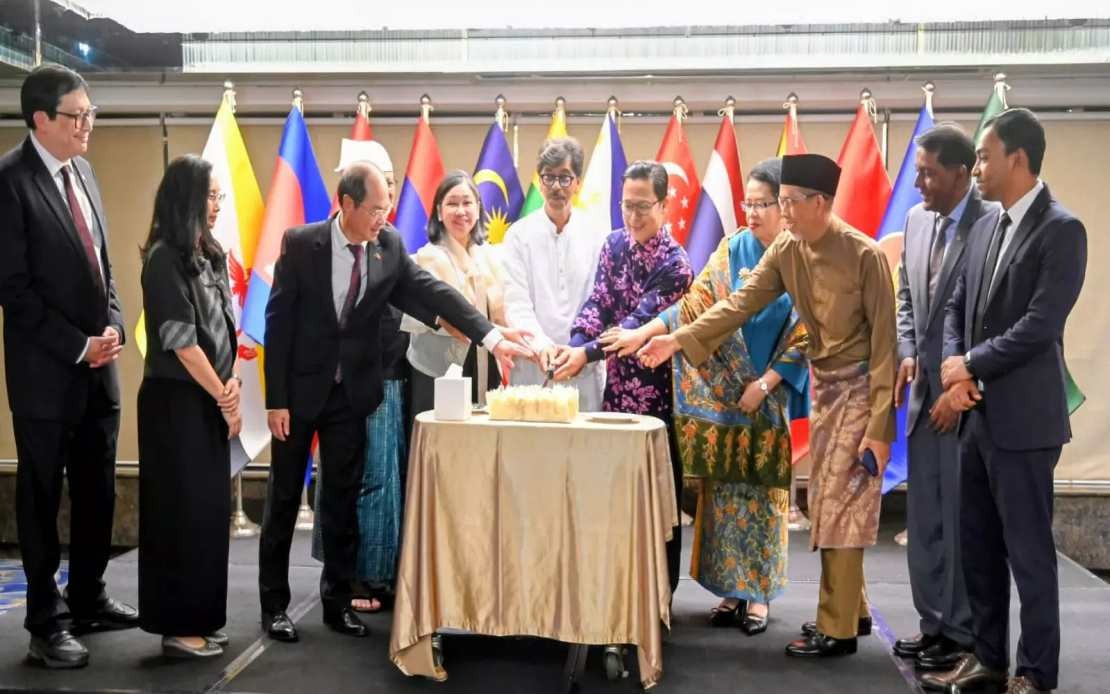
Bangladesh is signalling its ambition to deepen engagement with Southeast Asia by pursuing formal institutional recognition within ASEAN's partnership framework. At a reception marking the bloc's 59th anniversary, the country's Fisheries, Livestock and Agriculture Minister Mohammed Aminur Rashid emphasised the government's commitment to elevating relations with all 11 ASEAN member states, framing the partnership as rooted in shared history, culture and mutual economic interest.
The announcement comes at a pivotal moment for Bangladesh, which is recalibrating its foreign policy priorities under Prime Minister Tarique Rahman's administration. Rashid underscored that the Prime Minister selected Malaysia for his inaugural official foreign visit—a deliberate diplomatic choice signalling the centrality of ASEAN engagement to Dhaka's regional strategy. This sequencing of high-level visits carries symbolic weight, as it demonstrates Bangladesh's intention to prioritise Southeast Asian relationships and suggests confidence in deepening Malaysia ties as a gateway to broader ASEAN integration.
Bangladesh's formal application for Sectoral Dialogue Partner status represents a significant escalation from its current standing. Currently, Bangladesh maintains lower-tier engagement mechanisms with ASEAN, but SDP designation would create institutional channels for regular consultations and joint initiatives across specific economic and social sectors. Such status typically requires demonstrated capacity and complementary interests, positioning Bangladesh among a select group of countries with structured dialogue relationships. The move reflects Dhaka's recognition that informal engagement alone cannot sustain the deepening cooperation required by contemporary regional challenges and opportunities.
The government is simultaneously developing concrete sectoral cooperation frameworks to substantiate its ASEAN partnership ambitions. A US$1 million Bangladesh-ASEAN Cooperation Project on Fisheries and Aquaculture, administered by Rashid's ministry, represents tangible collaboration in a domain where Bangladesh possesses significant expertise and export potential. This initiative aligns with ASEAN's Blue Economy priorities and creates practical mechanisms for knowledge transfer, capacity building and market integration. Fish and seafood constitute major export commodities for Bangladesh, making regional cooperation on sustainable fisheries management and value-chain development particularly strategic.
Beyond fisheries, Bangladesh is cultivating partnerships across multiple sectors that reflect economic diversification and soft power objectives. Planned initiatives in tourism, information and communications technology, and cultural exchange are designed to address different constituencies within ASEAN and demonstrate multifaceted commitment to the region. Tourism collaboration taps into Bangladesh's rich historical sites and cultural attractions, while ICT cooperation appeals to the region's digital economy ambitions. These sectoral initiatives create multiple entry points for integration, reducing reliance on any single relationship and building broader stakeholder buy-in across ASEAN governments and private sectors.
The curated nature of the anniversary reception—featuring traditional Bangladeshi cuisine incorporating products like Kalijira rice biryani and dishes showcasing Black Bengal Goat, a Geographical Indication product—underscores how cultural diplomacy reinforces economic partnership narratives. By highlighting indigenous products with international recognition, Bangladesh strategically positioned agricultural exports as components of its regional value proposition. This approach addresses an often-overlooked dimension of ASEAN engagement: the role of culinary and cultural symbols in building people-to-people connections that support formal diplomatic initiatives.
Rashid's appeal to ASEAN envoys to support Bangladesh's SDP bid reflects the necessity of active diplomatic engagement with individual member states to secure consensus. ASEAN's consensus-based decision-making means that Bangladesh cannot rely solely on formal applications; sustained bilateral outreach to each member nation, particularly through capitals and diplomatic missions, proves essential. The gathering of ASEAN heads of mission—including Malaysian High Commissioner Mohammad Shuhada Othman and Philippine Ambassador Neena Padilla Cinglet—provided a concentrated forum for Bangladesh to articulate its case and gauge diplomatic receptivity.
For Malaysian readers and businesses, Bangladesh's push for closer ASEAN integration carries specific implications. Malaysia, as ASEAN chair in 2024 and a historically influential member state, likely influences perceptions of Bangladesh's candidacy. The Prime Minister's selection of Malaysia for his first foreign visit suggests Dhaka views the bilateral relationship as foundational to its broader regional strategy. Enhanced Bangladesh-ASEAN cooperation creates opportunities for Malaysian firms in sectors including fisheries processing, ICT infrastructure, tourism services and agricultural trade.
The regional context underscores why Bangladesh is pursuing this repositioning now. Southeast Asia faces mounting challenges—supply chain disruptions, climate change impacts on agriculture, digital infrastructure gaps—that demand expanded cooperation networks. Bangladesh's geographic position as a South Asian nation with deep historical ties to Southeast Asia potentially bridges regional divides and expands ASEAN's perspectives on critical issues. Sectoral Dialogue Partner status would formalise Bangladesh's voice in regional forums addressing these transnational challenges.
Bangladesh's application also reflects recognition of ASEAN's institutional strength and track record. As Rashid noted, ASEAN stands among the world's most successful regional organisations, and formal association with the bloc confers legitimacy and market access. For Bangladesh, SDP status would enhance credibility in regional economic frameworks, potentially facilitating smoother participation in ASEAN-led arrangements and trade negotiations. The designation signals to international investors that Bangladesh maintains structured, institutionalised relationships within a geopolitically stable and economically dynamic region.
The path toward securing SDP status remains uncertain, requiring sustained diplomatic effort and demonstrated capacity to contribute meaningfully to ASEAN priorities. Bangladesh must navigate potential reservations from member states while building compelling cases for sectoral cooperation that address each country's specific interests. Success depends not merely on formal applications but on Bangladesh's ability to position itself as a valuable partner offering complementary capabilities, market opportunities and strategic perspectives that enhance ASEAN's collective influence.

