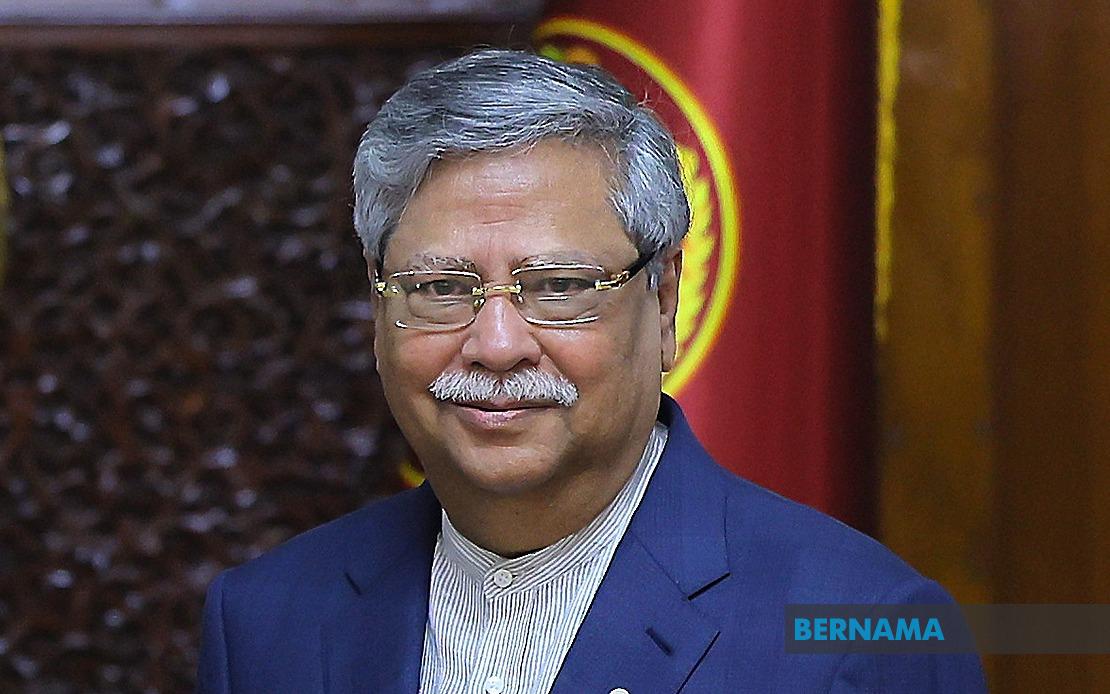
Bangladesh will hold a presidential election when parliament reconvenes in September, according to Law Minister Md Asaduzzaman, establishing a formal timeline for filling the vacancy left by Mohammed Shahabuddin Chuppu's recent resignation. The constitutional requirement mandates that a presidential election must occur within 90 days of the incumbent stepping down, setting clear procedural boundaries for the transition process.
Speaker Hafiz Uddin Ahmad assumed the presidential duties on July 15 when Shahabuddin formally submitted his resignation letter, which the speaker attributed to serious health concerns. The Parliament Secretariat publicly confirmed this transition in accordance with Bangladesh's constitutional framework, ensuring institutional continuity during the interim period. Press secretary to the president Md Sarwar Alam verified the resignation, underscoring the gravity of the health issues prompting the decision.
The parliamentary calendar provides the operational context for this constitutional requirement. The second session of parliament concluded on July 15, and constitutional rules dictate that the third session must commence no later than September 14—a two-month window that aligns with the 90-day deadline for the presidential election. This scheduling creates both temporal certainty and administrative clarity for Bangladesh's political institutions as they prepare for the electoral process.
Under Bangladesh's constitutional structure, the presidential election process differs fundamentally from many other democracies. Members of parliament themselves constitute the electoral body, meaning that the presidential vote remains exclusively a legislative matter rather than a direct popular election. This arrangement concentrates the selection power within the representative assembly, reflecting the parliamentary system's character where the legislature plays the dominant role in executive appointments.
The composition of parliament fundamentally shapes expectations regarding the presidential outcome. Prime Minister Tarique Rahman's Bangladesh Nationalist Party maintains a commanding majority in the legislative chamber, positioning the party to decisively influence the election result. Political analysts widely anticipate that the BNP's nominee will secure the presidency, given the coalition's numerical strength and established parliamentary procedures that typically align with party discipline on major constitutional votes.
This electoral scenario illustrates the interconnection between parliamentary majorities and executive appointments in Bangladesh's governance structure. Unlike systems where presidents operate as independently elected executives with separate mandates, Bangladesh's model ties the presidency more closely to parliamentary arithmetic. The ruling coalition's dominance effectively pre-determines the likely outcome, though formal procedures must still be followed to maintain constitutional legitimacy.
The resignation itself marks a significant development in Bangladesh's recent political evolution. The country has navigated substantial institutional transitions in recent years, and the orderly succession process reflects established constitutional practices. The health-based rationale for Shahabuddin's departure underscores how unpredictable circumstances can trigger leadership transitions even within stable institutional frameworks.
For Malaysian and Southeast Asian observers, Bangladesh's presidential transition offers insights into how neighbouring democracies manage executive succession. The reliance on parliamentary selection mechanisms and the transparent constitutional timeline demonstrate institutional maturity despite the region's sometimes turbulent political history. Bangladesh's commitment to following constitutional procedures, even when outcomes appear predetermined, reinforces the importance of procedural regularity in maintaining democratic legitimacy.
The September timeline also accommodates the practical requirements of legislative scheduling and party coordination. With parliament needing to reconvene within the two-month window anyway, the presidential election naturally integrates into the regular parliamentary calendar rather than requiring emergency sessions. This efficiency suggests that Bangladesh's institutional frameworks have evolved to accommodate major constitutional events within normal operational rhythms.
The transition period under Speaker Hafiz Uddin Ahmad's temporary authority will likely remain uneventful, as the speaker's role focuses on ceremonial and constitutional functions while substantive executive authority rests with Prime Minister Tarique Rahman. This division of responsibilities ensures governmental continuity without creating power vacuums or institutional confusion during the interim months before the permanent presidential election.
Looking ahead, the September election will formalize what political observers already anticipate as the BNP's choice for the presidency. The election itself will likely proceed smoothly given the party's parliamentary dominance and established voting procedures. The outcome will cement the ruling coalition's control over both executive branches—prime ministerial and presidential—consolidating its authority during this phase of Bangladesh's political development.

