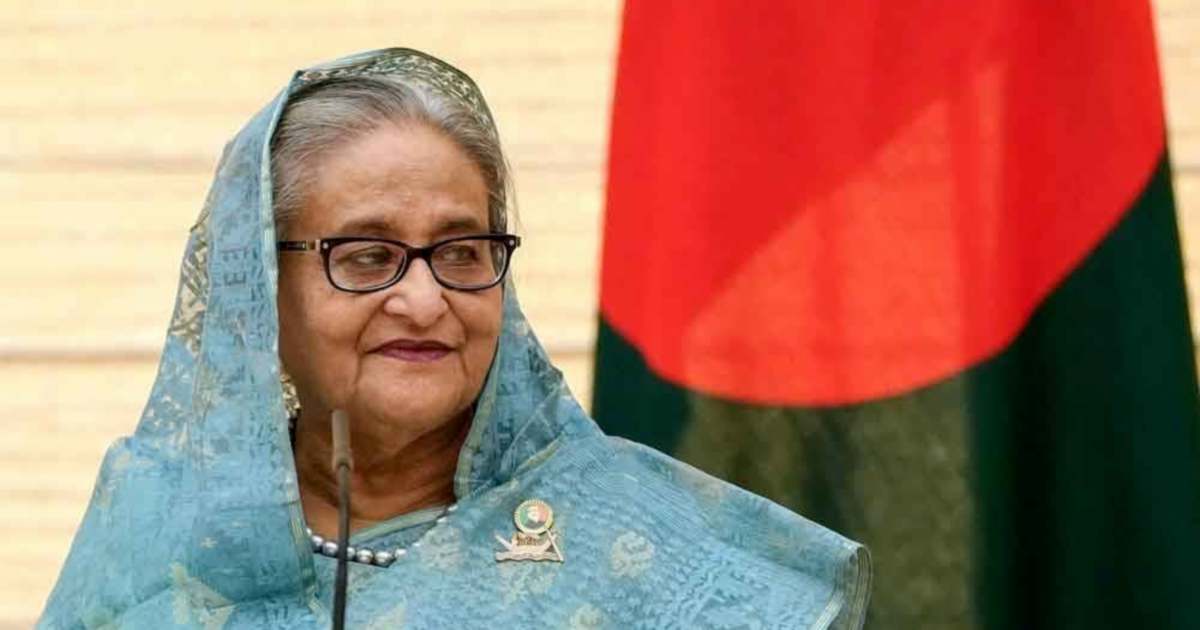
Sheikh Hasina, who was forced from office following widespread civil unrest, has broken her public silence with a defiant statement asserting she will come back to Bangladesh before the year ends, despite facing capital punishment in absentia. The former premier's declaration marks a significant escalation in Bangladesh's turbulent political standoff, signalling her unwillingness to remain in self-imposed exile indefinitely and suggesting she views her return as inevitable regardless of the legal jeopardy.
The death sentence Hasina rejects was rendered through legal proceedings conducted in her physical absence, a procedural reality that fundamentally undermines its legitimacy in the eyes of international observers and opposition figures alike. She characterises the conviction as not merely unjust but as a weaponisation of the judiciary—a tool deployed by the current political establishment to neutralise her influence and prevent her eventual political rehabilitation. Such accusations resonate within a broader context of judicial politicisation that has plagued South Asian democracies, where transitional governments often employ the courts to entrench their power.
The circumstances surrounding Hasina's departure and the subsequent legal action against her reveal the fractured state of Bangladeshi democracy and the cyclical pattern of political upheaval that has defined the nation since independence. Her administration's final months were marked by escalating protests, security force violence, and a groundswell of public anger over economic hardship and allegations of governmental repression. The transition that followed her ouster has yet to establish clear pathways toward genuine democratic renewal, instead deepening concerns about vengeance politics taking precedence over institutional reform.
For Malaysia and the broader Southeast Asian region, Bangladesh's political instability carries tangible implications. The nation serves as a crucial trading partner, with bilateral commerce and labour migration flows connecting it to economies throughout the region. Prolonged political uncertainty, particularly involving high-stakes confrontations between exile and incumbent power structures, risks deterring foreign investment and complicating regional diplomatic engagement. Malaysian policymakers and business communities have vested interests in Bangladesh achieving durable political stabilisation.
Hashina's vow to return despite the capital charge demonstrates either supreme confidence in her political base or perhaps a calculated assessment that the death sentence carries insufficient international weight to permanently exclude her from the political arena. Her statement also implicitly challenges the legitimacy of the current administration by suggesting their legal instruments lack genuine authority. This rhetorical positioning may energise her supporters, who view her as a victim of systematic persecution rather than a justly condemned figure.
The constitutional questions she raises deserve scrutiny. If proceedings conducted without the defendant's presence or adequate legal representation preceded the conviction, serious doubts about procedural fairness arise, concerns that extend beyond partisan considerations. International human rights organisations have historically flagged concerns about Bangladesh's adherence to due process standards, lending credibility to Hasina's constitutional arguments even among neutral observers. These issues matter not merely for her personal fate but for the trajectory of the Bangladeshi state's commitment to rule of law.
Historically, Bangladeshi politics has demonstrated a troubling tendency toward cycles of retribution. Each transition of power has frequently involved prosecutions of predecessor governments, creating incentives for political contestants to entrench themselves rather than accept electoral defeat. Hasina's statement, rather than representing anomalous defiance, continues this disheartening pattern. Her determination to return and contest the charges directly reflects a political culture in which losers seldom accept permanent exile, ultimately stalling the nation's democratic maturation.
The international diplomatic dimensions warrant consideration as well. Hasina maintains significant relationships across South Asia and beyond, and foreign governments will face pressure to determine how they treat a returning former premier facing domestic capital charges. These decisions could either affirm Bangladesh's judicial sovereignty or implicitly question its legitimacy—either way, creating diplomatic complications for neighbouring nations. Malaysia and other ASEAN members may ultimately need to navigate this delicate terrain.
Hashina's vow also reflects broader questions about exile as a political tool and its sustainability. Extended stays abroad, particularly for high-profile political figures, eventually become untenable for those with deep roots, family commitments, and substantial domestic support bases. Her return timeline—asserted as imminent rather than indefinite—suggests she believes either the death sentence will ultimately prove unenforceable or that sufficient political circumstances will shift to permit her homecoming with reduced legal exposure.
The implications for Bangladesh's democratic future remain uncertain and troubling. Rather than facilitating genuine reckoning with past governance failures or establishing mechanisms for peaceful power transfer, the current trajectory points toward perpetuation of vindictive cycles. Hasina's defiant stance, while understandable from a personal perspective, unfortunately reinforces rather than breaks this destructive pattern, suggesting that Bangladesh's political class remains trapped in confrontational zero-sum competition rather than advancing toward institutionalised democratic norms that regional and international observers hope to see.

