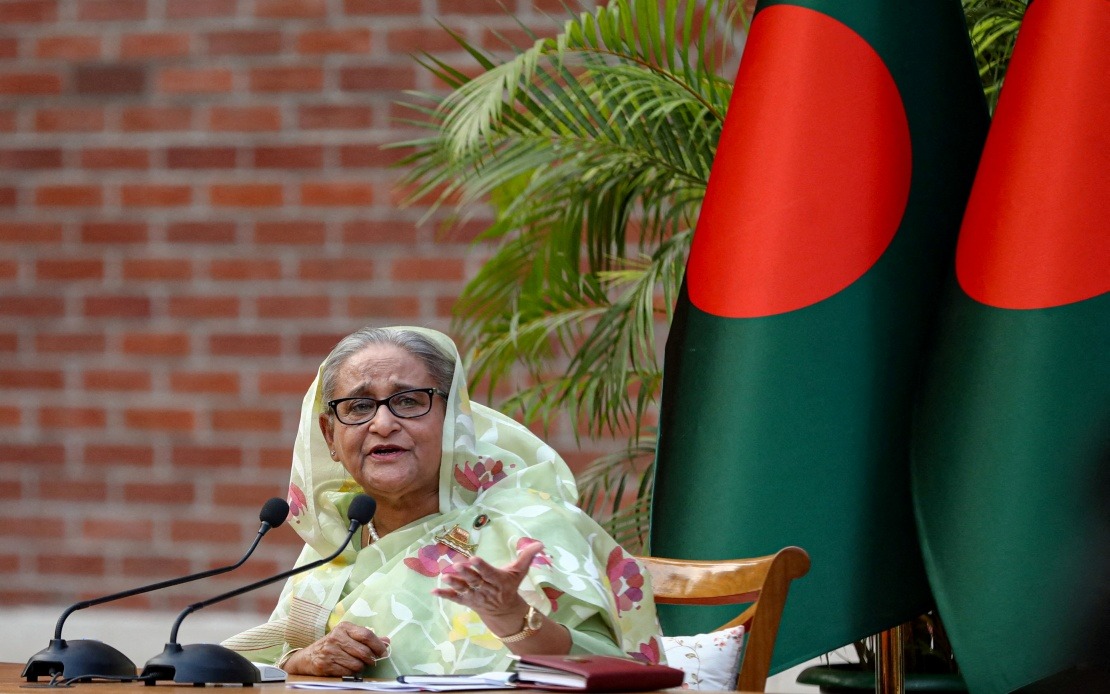
Sheikh Hasina, the 78-year-old former Prime Minister of Bangladesh, has publicly committed to returning to her homeland and facing the judicial system, notwithstanding the severe consequences she may encounter. In recent remarks to Kyodo News, Hasina acknowledged the gravity of her situation with stark candour, recognizing that imprisonment or capital punishment awaited her upon return. She characterised the conviction against her—handed down by Bangladesh's war crimes tribunal in November 2025—as fundamentally driven by political considerations rather than judicial impartiality, a position that underscores the deepening polarization within Bangladeshi politics.
Hasina's flight from Bangladesh in August 2024 followed escalating civil unrest that stemmed from a constitutional court decision to reinstate a 30 percent quota system benefiting descendants of the 1971 independence war. What began as student-led agitation over employment opportunities transformed into a broader movement challenging Hasina's Awami League government. As security personnel intervened against demonstrators, the situation spiralled into violence, with the United Nations documenting approximately 1,400 fatalities, predominantly from gunshot wounds inflicted by state forces. Hasina has consistently denied authorizing lethal force, instead contending that opposition elements manipulated the narrative to undermine her administration.
The conviction handed down against Hasina covers crimes against humanity stemming directly from the 2024 crackdown. Her trial proceeded without her presence in Bangladesh, a procedural reality that has drawn international scrutiny. Human Rights Watch, while affirming that accountability for governmental abuses remains essential, has expressed reservations about the validity of in absentia proceedings. This concern reflects broader anxieties within the international human rights community regarding whether Bangladesh's transitional justice mechanisms can deliver credible outcomes that satisfy both victims and international observers. The tribunal's decision represents a pivotal moment in post-Hasina Bangladesh, signalling the new authorities' determination to establish legal accountability for the previous regime.
India currently hosts Hasina, having provided asylum following her departure from Bangladesh. New Delhi has formally received an extradition request from Dhaka, and India's Ministry of External Affairs indicated it is evaluating the matter within the context of applicable legal frameworks and bilateral judicial processes. This situation places India in a delicate diplomatic position, as extraditing a former democratically elected leader raises thorny questions about principles of political asylum and the reliability of judicial processes in requesting nations. Malaysia and other ASEAN members are observing these developments closely, given the precedent they may establish regarding how regional governments handle displaced political figures and the balance between neighbourhood cooperation and protection of individuals facing potentially politicized prosecutions.
Since Hasina's departure, Bangladesh has undergone significant political transformation. Following her flight, an interim administration was established under Muhammad Yunus, the Nobel Peace Prize-winning microfinance pioneer, who assumed the role of chief adviser at the suggestion of student protest leaders. A general election in February 2026 resulted in victory for the opposition Bangladesh Nationalist Party, whose leader Tarique Rahman subsequently became Prime Minister. The new government has moved decisively against Hasina's political legacy, banning all activities associated with the Awami League since May 2025. These developments illustrate how rapidly Bangladesh's political landscape has reconfigured in the post-Hasina era.
Hasina's historical significance within Bangladeshi politics cannot be understated. As the daughter of Sheikh Mujibur Rahman, the nation's founding father, her political journey has spanned multiple decades and multiple tenures. Her lengthy tenure as Prime Minister—encompassing five separate periods of office from 1996 to 2001 and again from 2009 until her August 2024 departure—shaped Bangladesh's development trajectory significantly. During her tenure, her government had to manage serious security challenges, including the July 2016 militant attack on the Holey Artisan Bakery in Dhaka, which claimed twenty hostages from multiple nationalities and heightened concerns about extremism in Bangladesh.
Hasina's assertion regarding external forensic examination of deaths during the 2024 unrest suggests she views independent international investigation as validating her version of events. This appeal to third-party expertise reflects her recognition that domestic institutions may lack credibility in the eyes of critics and international observers. Her willingness to submit to external scrutiny, at least rhetorically, indicates a calculation that such examination would exonerate her from direct culpability for the security forces' actions. However, this position remains disputed by those who argue that political responsibility for institutional violence extends beyond direct orders to encompass the command climate that enabled such operations.
The regional implications of Bangladesh's ongoing political upheaval extend well beyond the country's borders. Malaysia and neighbouring Southeast Asian nations have substantial investments and development partnerships with Bangladesh, including significant populations of diaspora members and business communities. Any continued instability or erosion of rule of law in Dhaka creates uncertainties that affect these relationships. Japan, in particular, maintains deep development cooperation with Bangladesh, including major infrastructure initiatives, and has expressed concern about governance and stability. The assassination of the 2016 Holey Artisan victims, who included Japanese nationals working on development projects, remains a traumatic memory that underlies Tokyo's engagement calculus with Dhaka.
Hasina's recent statements emphasize her vision for Bangladesh's future trajectory, arguing that national recovery requires both accountability and reconciliation but not amnesty. She contends that the coming decade represents a critical window for Bangladesh's renewal, contingent upon the restoration of democratic governance and genuine popular participation in decision-making. This framing attempts to position her not as defending her record unconditionally but as advocating for Bangladesh's broader developmental interests. Her invocation of Japan's enduring investment in Bangladesh development, mentioned explicitly in her remarks, appears calibrated to appeal to international stakeholders who might constrain any potential extradition decision through diplomatic channels.
The question of whether Hasina will ultimately return remains unresolved and fraught with complexity. Her rhetorical commitment to facing the courts must be weighed against the tangible risks she confronts, including the death sentence already imposed. India's stance on the extradition request will prove decisive, though any decision carries significant diplomatic consequences regardless of outcome. Should India refuse extradition, it would affirm its traditional policy of providing political asylum but risk straining relations with Bangladesh's current government. Should New Delhi comply, it would demonstrate a willingness to prioritize judicial cooperation but potentially undermine its appeal as a refuge for political figures fleeing neighbouring jurisdictions.
The trajectory of Hasina's case will ultimately serve as a template for how South Asia handles post-conflict accountability and the reintegration of displaced political leaders. Whether Bangladesh's judicial mechanisms can deliver justice perceived as legitimate by international observers remains an open question. For Malaysia and the broader Southeast Asian community, the developments unfolding in Bangladesh carry implications for how regional governments approach governance transitions, the rule of law, and the delicate balance between accountability and political stability that defines contemporary Asian politics.

