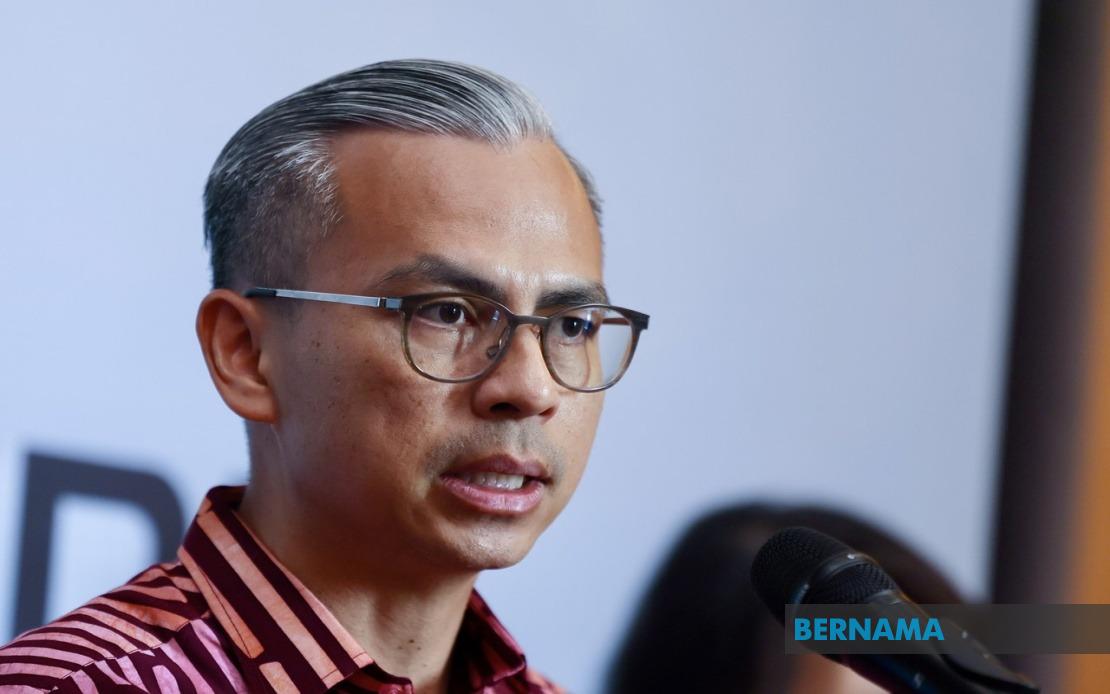
Bank customers continuing to face RM1 charges for interbank cash withdrawals should immediately escalate complaints to Bank Negara Malaysia, according to Communications Minister Datuk Fahmi Fadzil, signalling the regulator's readiness to pursue enforcement action against non-compliant financial institutions. Speaking at the Communications Ministry's weekly press briefing here, Fahmi emphasised that any lender failing to honour the newly implemented fee waiver faces potential regulatory consequences, underscoring the government's commitment to reducing friction in the nation's banking ecosystem.
The RM1 ATM fee waiver, which took effect this week, represents a significant development in Malaysia's ongoing push to enhance financial accessibility and reduce transaction costs for ordinary Malaysians. The initiative reflects broader policy objectives under the MADANI Government to ease the burden on consumers navigating daily banking operations. However, the implementation has revealed important nuances that customers must understand to fully benefit from the relief measure, with Fahmi taking the initiative to clarify misconceptions circulating on social media platforms.
Central to the minister's explanation is a critical distinction: the fee waiver applies exclusively to automated teller machines that are directly owned and operated by banks participating in Malaysia's shared ATM network. This distinction matters considerably for Malaysian consumers, as it determines whether they can withdraw cash without incurring charges when accessing machines outside their own bank's network. Fahmi stressed that customers should carefully identify the logos displayed on machines to ascertain whether they fall within the waiver's scope, highlighting that visual identification remains the most reliable method for distinguishing eligible from ineligible ATMs.
The waiver currently encompasses approximately 84 per cent of all bank-owned automated teller machines nationwide, translating to nearly 16,000 machines across the country. This substantial coverage means that the vast majority of transactions—particularly those conducted through Malaysia's major banking institutions—should proceed without the RM1 interbank withdrawal fee. For most Malaysians conducting routine banking activities, the waiver should provide immediate and tangible savings, particularly for frequent users who previously incurred multiple charges monthly.
The remaining 16 per cent of ATMs operate under distinctly different commercial frameworks. These machines are owned and managed by private non-bank companies that have entered separate business arrangements unrelated to the bank-led shared network. Fahmi clarified that these third-party operators remain entitled to continue charging the RM1 fee, as they operate outside the regulatory framework governing traditional bank ATM services. This distinction is crucial for preventing customer confusion and managing expectations regarding which machines qualify for fee exemption.
Fahmi, speaking as the MADANI Government's official spokesperson, seized on the ATM waiver announcement as evidence of the administration's customer-centric policy orientation. The initiative reflects deliberate choices to prioritise consumer welfare and reduce the cumulative costs of banking services, particularly benefiting middle and lower-income Malaysians who rely heavily on cash transactions. By positioning the government as actively monitoring compliance and prepared to penalise violators, Fahmi reinforced the seriousness with which regulators view the waiver's implementation.
The Association of Banks in Malaysia and the Malaysian Islamic Banking and Financial Institutions Association are preparing a comprehensive joint statement to furnish additional implementation particulars. This coordinated messaging from industry bodies suggests alignment between financial regulators and banking institutions regarding the waiver's execution, reducing the likelihood of isolated non-compliance incidents. The forthcoming industry statement should provide customers with more detailed guidance regarding transaction limits, account eligibility criteria, and other operational parameters governing the fee waiver.
Educating customers to report violations represents a pragmatic enforcement strategy, effectively deputising Malaysia's banking public as monitors of regulatory compliance. By encouraging direct complaints to Bank Negara Malaysia, the government creates multiple pressure points encouraging institutional adherence to the new fee regime. Customers encountering persistent charges face a straightforward escalation pathway, while banks receive unmistakable signals that regulatory oversight will be active and responsive.
In a separate development signalling Malaysia's continued appeal to technology-sector investors, Fahmi announced an international financial technology company's establishment of a Global Development Centre at Tun Razak Exchange. The centre, representing the company's inaugural global investment of this scale, will focus on cultivating digital talent and advancing capabilities in Agentic AI. The announcement reflects confidence in Malaysia's technological infrastructure and political environment among sophisticated foreign investors evaluating regional headquarters locations.
Fahmi characterised the technology investment as validation of the MADANI Government's economic policies and Malaysia's institutional stability. The decision by a major fintech player to establish regional operations here suggests that Malaysia's combination of regulatory clarity, political predictability, and technological talent availability appeals to discerning corporate investors. Such positioning helps explain Malaysia's continuing attractiveness for financial services and technology sector investment despite regional competition from Singapore and other regional hubs.
The convergence of these two policy announcements—addressing immediate consumer pain points through the ATM fee waiver while simultaneously attracting high-value technology investment—illustrates the government's dual-track approach to economic management. Domestically, policymakers address tangible grievances affecting ordinary Malaysians, whilst simultaneously projecting Malaysia as a sophisticated destination for cutting-edge financial technology development. This combination of populist consumer measures and elite investor attraction reflects the strategic calculations underlying MADANI governance.

