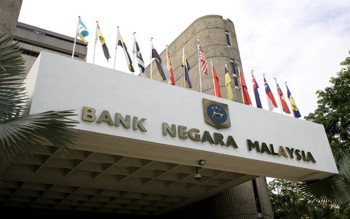
Bank Negara Malaysia has underscored that its engagement with Lembaga Tabung Haji represents a core component of its financial stability mandate enshrined in the Central Bank of Malaysia Act 2009. The central bank's involvement extends beyond the traditional purview of banking supervision, reflecting the interconnected nature of Malaysia's financial architecture and the systemic significance of major non-bank institutions.
The monetary authority's authority to advise TH derives directly from its mandate to identify, monitor, and mitigate emerging risks to the stability of the overall financial system. This surveillance function encompasses entities that, while not under BNM's direct regulatory supervision, possess substantial linkages to the broader financial ecosystem. TH's role as a major institutional investor and its status as a trusted financial intermediary for millions of Muslim Malaysians seeking to accumulate savings for pilgrimage purposes create precisely such interconnections that warrant central bank attention.
Under the institutional framework established by the Central Bank of Malaysia Act 2009, the Financial Stability Executive Committee serves as the operational mechanism through which BNM executes this mandate. The FSEC is empowered to conduct ongoing surveillance of the financial landscape and, where warranted, to issue recommendations or guidance to significant non-bank financial institutions. This structure reflects international best practices in macroprudential oversight, which emphasize the importance of systemic risk monitoring beyond individual institution regulation.
BNM's approach to TH demonstrates the nuanced regulatory philosophy required in an era where financial stability depends not merely on the soundness of individual banks but on the resilience of entire financial networks. Even institutions operating outside the banking perimeter can pose systemic risks if their failure would generate substantial shockwaves across the financial system or undermine confidence in related institutions. The central bank's advisory capacity therefore functions as an early warning mechanism and a means of coordinating preventive measures before problems escalate into crises.
The central bank has previously taken concrete action based on this mandate, having issued five warning letters to TH's leadership and the relevant minister addressing a persistent and troubling gap between the pilgrimage fund's assets and liabilities. These communications were not mere suggestions but expressions of serious central bank concern about the institution's financial trajectory. The warnings demonstrated BNM's willingness to exercise its advisory authority openly and formally when circumstances demanded.
BNM's interventions appear vindicated by subsequent scrutiny from other government institutions. The Auditor-General's office issued its own reprimand in the 2017 Financial Statements Report, effectively validating the concerns that BNM had earlier flagged. This convergence of institutional concern underscores the legitimate basis for the central bank's engagement with TH and suggests that BNM's early warnings may have reflected genuine structural vulnerabilities within the pilgrim fund.
The establishment of the Royal Commission of Inquiry into TH in 2021, with commissioners formally appointed in January 2022, represented a significant escalation in official scrutiny. The RCI's eventual report, presented to the Yang di-Pertuan Agong in August 2022, embodied the government's acknowledgment that TH's troubles extended beyond ordinary financial management issues. The timing and formation of the RCI effectively validated the concerns that BNM had articulated during the earlier warning period.
For Malaysian readers and investors, understanding BNM's role is essential to grasping how the central bank operates in a complex financial environment. The monetary authority's mandate extends well beyond setting interest rates or managing the ringgit's value. It encompasses a broader stewardship role that includes anticipating systemic risks and encouraging sound practices across the financial landscape. TH's prominence—with millions of Malaysian contributors depending on it for their pilgrimage savings—makes it precisely the kind of institution that merits such attention.
The case also illustrates the importance of institutional coordination in financial oversight. BNM's warnings, combined with the Auditor-General's independent findings and ultimately the RCI's comprehensive investigation, created multiple layers of scrutiny that collectively illuminated problems that might otherwise have remained hidden. This multi-institutional approach reflects a mature understanding that financial stability depends on various oversight bodies functioning in concert, each bringing distinct perspectives and mandates.
Looking forward, the experience with TH suggests that central banks in Southeast Asia and beyond must maintain capacity to engage with non-banking financial institutions, particularly those with significant public participation or systemic importance. As financial systems grow more complex and as institutions increasingly operate across traditional regulatory boundaries, the ability to coordinate advice and monitoring becomes increasingly vital. BNM's articulation of its role provides a clear intellectual foundation for such engagement, grounded in statute and justified by the imperatives of financial stability.

