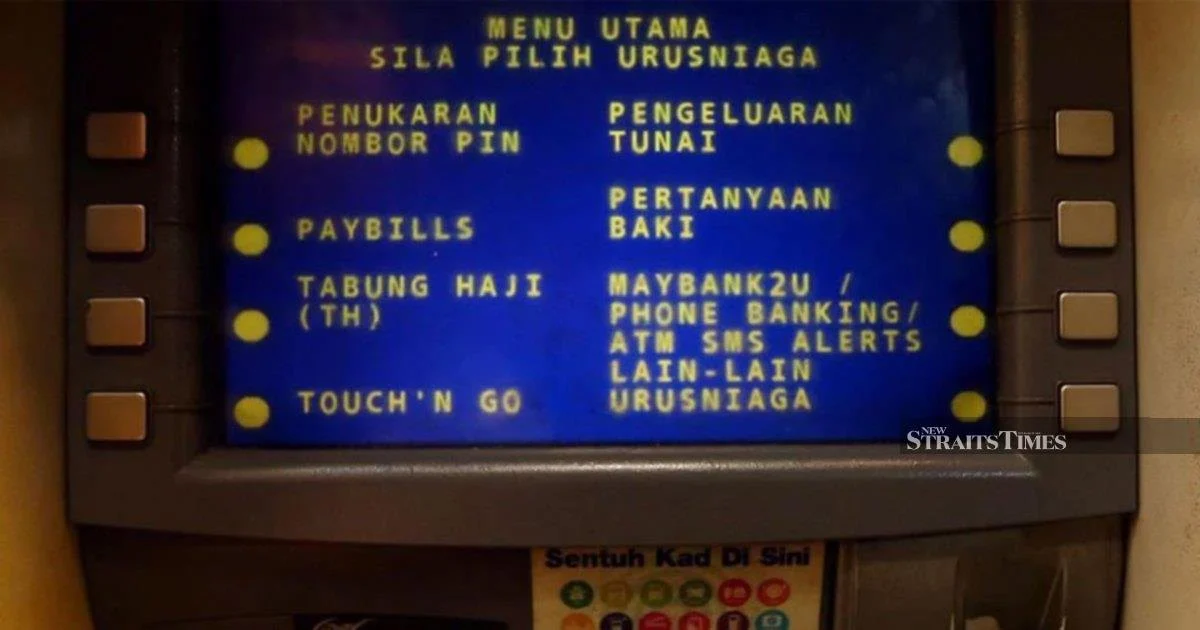
Bank Negara Malaysia has called on the public to report any instances where they continue to incur charges of RM1 when making withdrawals from automated teller machines operated by their own financial institution, according to a statement made by Communications Minister Datuk Fahmi Fadzil. The directive indicates that customers encountering such charges may be victims of incorrect billing practices that deviate from established protocols governing ATM usage across the Malaysian banking system.
The interbank withdrawal fee framework, which was restructured in recent years to encourage digital banking adoption and reduce cash transaction reliance, typically mandates that customers should not pay charges when accessing machines belonging to their own banks. The emergence of complaints regarding unexpected RM1 deductions suggests that some banking institutions may not have fully aligned their ATM systems with these regulatory expectations, or that technical glitches are triggering erroneous billing.
For Malaysian consumers, this issue touches on a fundamental aspect of their banking experience. The ATM network represents one of the most frequently used financial services, with millions of transactions occurring daily across the country's urban and rural areas. Many ordinary customers may not immediately recognise that they have been incorrectly charged, particularly if they withdraw from multiple machines or banks throughout the day. Over time, these seemingly minor charges accumulate into significant losses for affected individuals.
The regulatory environment governing ATM fees has evolved considerably over the past decade. Bank Negara Malaysia has implemented various measures aimed at improving financial inclusion and reducing friction in basic banking operations. The push to eliminate charges on own-bank ATM withdrawals forms part of this broader agenda, reflecting the central bank's conviction that customers should be able to access their own funds without incurring unnecessary fees. This principle underscores the distinction between interbank charges, which may apply when using another institution's machine, and intra-bank charges, which should theoretically be absorbed by the operating bank.
The Communications Minister's public appeal for reporting suggests that Bank Negara Malaysia intends to conduct an investigation into which institutions may be in breach of these guidelines. By encouraging customers to lodge complaints, the regulator can gather data on the prevalence and nature of the problem, potentially identifying systematic issues within particular banks' technology infrastructure or training gaps among branch staff and call centre personnel responsible for handling customer inquiries.
From a consumer protection perspective, this situation highlights the importance of financial literacy and awareness. Many Malaysian banking customers may simply accept ATM charges without questioning their validity, assuming that banks operate legitimately within their own interest. However, as this incident demonstrates, customers must remain vigilant and verify their transaction receipts. Those who notice unexpected charges should not hesitate to contact their banks for clarification or escalate their concerns to Bank Negara Malaysia's consumer complaint mechanisms.
The digital banking transition occurring across Southeast Asia presents both opportunities and challenges for regulatory oversight. As financial institutions upgrade their systems and migrate customers toward online and mobile banking channels, ATM networks remain critical infrastructure for those who prefer or require cash-based transactions. Ensuring that these machines operate correctly and transparently becomes increasingly important as banks attempt to phase out cash usage. Any technical failures or deliberate overcharging undermines the public's confidence in banking systems and could potentially slow the adoption of alternative payment methods.
For businesses and consumers relying on cash for daily operations, unwarranted ATM charges represent a hidden cost that erodes profit margins and purchasing power. Small traders, market vendors, and service providers who regularly withdraw cash in modest amounts may be particularly affected. These cumulative charges can represent a disproportionate burden on low-income populations who depend on cash transactions and cannot easily access alternative banking services or payment technologies.
Bank Negara Malaysia's decision to actively invite consumer reports demonstrates a commitment to enforcing compliance with existing regulations. The central bank possesses the authority to impose financial penalties on institutions found to be in violation of ATM fee guidelines, though the threshold for triggering enforcement actions typically requires documented evidence of systematic non-compliance rather than isolated incidents. By gathering consumer testimonies, the regulator can establish patterns that justify administrative action.
The broader implications for the Malaysian financial sector concern institutional governance and the alignment of profit-seeking behaviour with regulatory obligations. Financial institutions benefit from clear, uniform standards that prevent competitive disadvantages arising from different banks' interpretations of fee structures. When some banks correctly implement guidelines while others do not, market confidence erodes and customers develop mistrust toward the entire system. Transparent communication from Bank Negara Malaysia to all licensed banks reiterating these requirements would be prudent.
Moving forward, customers should document any questionable ATM charges by retaining transaction receipts and taking screenshots of their account statements. Those experiencing persistent issues should contact their bank's customer service department in writing, creating a paper trail that strengthens their case when lodging formal complaints with Bank Negara Malaysia if the bank fails to resolve the matter satisfactorily. The regulator's complaint portal and hotline provide mechanisms for this reporting process.

