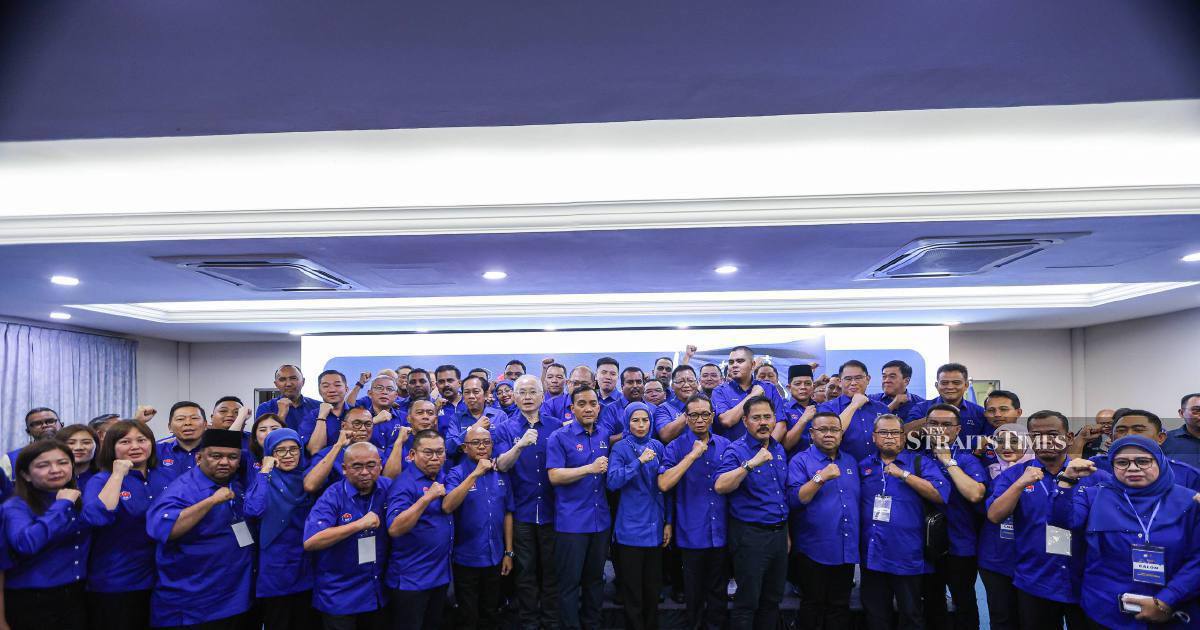
Barisan Nasional has formally unveiled its complete roster of 56 candidates vying for seats in the Johor state election scheduled for July 11, signalling the coalition's full mobilisation ahead of one of Malaysia's most politically significant contests. The announcement, made in Johor Baru, represents a crucial milestone as the deadline for candidate registration approaches and campaigning enters a more intense phase.
The composition of BN's candidate line-up carries substantial implications for the political landscape in Johor, traditionally a powerhouse state for the coalition and home to significant Malay-Muslim, Chinese, and Indian communities. Johor has historically served as a political barometer for national trends, with state elections frequently offering indicators of broader shifts in Malaysian voter sentiment. The choice of candidates across the 56 contested seats reflects BN's strategic positioning within the state and signals how the coalition intends to defend its traditional strongholds whilst attempting to regain ground lost in recent electoral cycles.
The timing of the July 11 election follows a pattern of state elections gradually returning to Malaysia's electoral calendar after the two-year suspension implemented during the Covid-19 pandemic. Johor's election represents a significant test for BN, particularly given the coalition's mixed performance in recent state polls and parliamentary elections. The unveiling of the full candidate roster demonstrates that the coalition has concluded its internal deliberations regarding seat allocation among its component parties and settled any contested nominations that may have emerged during the selection process.
Candidate selection processes within BN typically involve negotiations among its major component parties, including Umno, MCA, and MIC, with each party receiving allocations reflecting both historical representation and electoral calculations regarding seat competitiveness. The fact that all 56 candidates are now confirmed suggests these internal discussions have concluded, though the balance of seat distribution among parties carries political significance regarding which communities BN prioritises in different constituencies. Such dynamics become particularly pronounced in Johor, where urban and rural divisions, as well as demographic variations, require carefully calibrated candidate strategies.
The election contest will determine control of the Johor state assembly for the next five years and will test whether BN can maintain its dominant position in a state where it has governed continuously. Recent electoral trends have shown increasing competitiveness in traditionally safe seats, with opposition coalitions proving capable of mobilising support even in BN heartlands. The scale of BN's candidate slate confirms the coalition is contesting virtually all available seats, reflecting confidence in its organisational machinery and ground presence, though it simultaneously exposes the coalition to potential losses across multiple constituencies should voter sentiment shift significantly.
Johor's electorate comprises approximately 2.7 million registered voters distributed across predominantly Malay-Muslim areas alongside significant concentrations of Chinese voters in urban centres and Indian communities in plantation regions. This demographic composition requires BN to maintain its traditional coalition between Umno, which relies primarily on Malay-Muslim support, and MCA and MIC, which seek to represent Chinese and Indian interests respectively. The candidate profiles and backgrounds announced in BN's roster will determine whether the coalition successfully projects unity and addresses concerns across these diverse communities or whether weaknesses in representation could be exploited by opposition parties.
The Malaysian Democratic Reform Alliance (Pakatan Harapan) and Perikatan Nasional represent the primary opposition forces contending against BN in Johor. Both coalitions have demonstrated varying capacity to challenge BN dominance across different regions of the state, with rural areas remaining strongly influenced by Umno's traditional networks while urban constituencies have become increasingly contested. The unveiling of BN's candidates provides clarity regarding the competitive matchups voters will face and enables opposition coalitions to finalise their own strategic responses and campaign positioning.
From a regional perspective, Johor's election holds relevance for understanding political dynamics across Southeast Asia, particularly given Malaysia's role as a significant democracy in the region and the state's economic importance as a major trading partner with Singapore and gateway to the Southern Economic Corridor. The electoral outcome could influence investor confidence and regional perceptions of Malaysia's political stability during a period when economic growth and development remain paramount concerns for the government and business communities throughout Southeast Asia.
The campaign period ahead will test not only BN's traditional strengths in organisation and resource mobilisation but also its capacity to address contemporary voter concerns regarding cost of living, employment opportunities, and governance effectiveness. The 56 candidates now formally endorsed by the coalition will become the face of BN's campaign across Johor's constituencies, with their individual credibility, track records, and connections to local communities significantly influencing voting behaviour in their respective areas.
Voter engagement during the coming weeks will be crucial in determining turnout and constituency-level outcomes. Historical patterns indicate that BN performs more strongly in areas with higher turnout, whilst opposition parties have demonstrated capacity to mobilise support through targeted campaigns in specific constituencies. The presence of a full slate of 56 candidates provides BN with comprehensive coverage across the state but also creates organisational demands in coordinating campaign activities and ensuring consistent messaging across diverse constituencies with varying economic conditions, demographic profiles, and historical political leanings.
As the July 11 election approaches, BN's candidate announcement transitions the Johor contest from organisational preparation to active electoral competition. The coalition's formal presentation of its complete roster represents a significant procedural step that will enable campaign activities to accelerate and voter engagement to intensify across the state. The specific outcomes of individual constituency races will ultimately determine whether BN successfully consolidates its traditional dominance in Johor or whether opposition advances in recent years translate into significant seat gains that reshape the state's political direction.