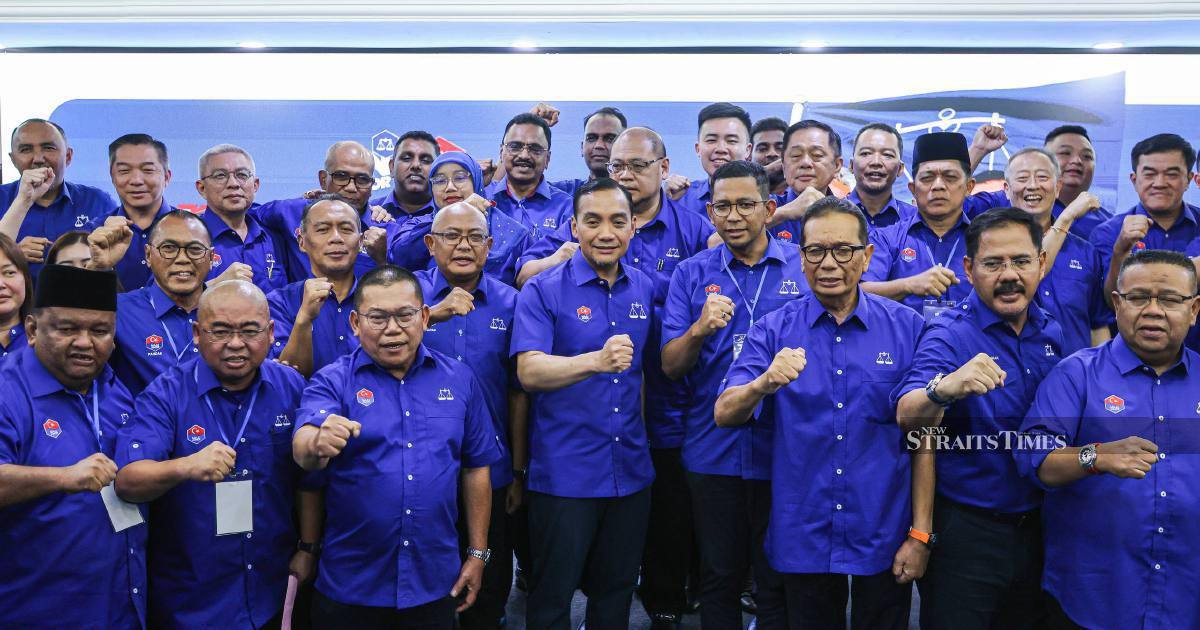
Barisan Nasional's leadership in Johor has drawn a clear political line, categorically refusing to entertain coalition partnerships with rival parties following the state election. The announcement marks a significant shift in BN's electoral strategy, signalling confidence in its ability to secure an outright majority while simultaneously closing the door on potential post-election negotiations that have historically characterised Malaysian politics.
The coalition has made explicit that its commitment to single-party governance remains absolute and beyond further discussion. This unusually rigid stance contrasts sharply with the fluid political arrangements that have defined recent years in Malaysia, where coalition flexibility and power-sharing deals have become commonplace across state and federal levels. BN's determination to govern alone if it wins reflects internal party dynamics and electoral calculations specific to Johor's political landscape.
For Malaysian voters and observers, this development carries substantial implications for how Johor would be administered following the election. A BN-only government would eliminate post-election coalition negotiations that might otherwise reshape the state's governance priorities or ministerial positions. This clarity could influence voter behaviour, as constituents would know precisely which party would assume responsibility for implementing policies without the complications of coalition compromise.
The historical context matters significantly here. Malaysia's political system has witnessed increasingly complex coalition arrangements at both state and federal levels, with parties frequently shifting alliances to secure power. Johor has been a BN stronghold for decades, though recent electoral performances across Malaysia have demonstrated that voter preferences remain unpredictable. BN's unequivocal stance suggests internal polling or strategic analysis indicates sufficient confidence in securing a majority through its own candidates.
This position also reflects broader factional considerations within BN itself. The coalition comprises UMNO, MCA, and MIC, among other component parties, and any coalition arrangement with external parties could theoretically affect power distribution among these traditional partners. By committing to solo governance, BN leadership preempts potential internal disputes about sharing ministerial posts or influence with parties outside the established coalition structure.
Regional political dynamics further contextualise this announcement. Johor's significance as a major economic and population centre makes its governance crucial for national stability. A decisive BN victory pursued through independent governance might strengthen the coalition's position at federal level and provide momentum for upcoming national political developments. Conversely, any electoral setback would force BN to confront the inadequacy of its support base in the state.
The statement also carries implications for opposition parties contesting the Johor election. If BN truly commits to solo governance regardless of circumstances, opposition parties lose any incentive to negotiate potential post-election arrangements that might award them ministerial positions or influence. This could either energise opposition consolidation or create strategic uncertainty about their realistic prospects in government formation.
Under Malaysia's constitutional framework, BN's commitment to sole governance requires actual legislative majority rather than merely winning the largest number of seats. This distinction proves crucial, as Malaysian electoral mathematics sometimes produce situations where no single party or coalition holds an absolute majority. BN's rigidity in refusing coalition partnerships means it must achieve sufficient seat numbers to govern without requiring external support—a mathematically demanding requirement in multi-candidate constituencies.
The timing of this announcement ahead of the election appears designed to project organisational strength and internal unity. Political parties often communicate such positions to demonstrate decisiveness and eliminate doubts about potential post-election compromises that might suggest weakness or desperation for power. For voters concerned about governmental stability and clear lines of accountability, BN's stance offers straightforward expectations about how post-election governance would function.
International observers and foreign investors monitoring Malaysian political stability likely view such clear statements favourably, as they reduce uncertainty about governance transitions. Johor's position as a hub for international business and investment makes political predictability valuable. A clear commitment to BN sole governance, if executed, provides the stability-seeking assurance that post-election transitions would occur swiftly without prolonged coalition negotiations.
Yet BN's absolute rejection of coalition partnerships warrants scrutiny regarding its realism and flexibility should electoral outcomes diverge from current expectations. Malaysian politics frequently demonstrates that pre-election positioning does not always survive post-election realities. Should BN fall short of a majority despite this announcement, the contradiction between stated principles and political necessity would pose significant challenges to the party's credibility and leadership standing.
The broader lesson for Malaysian democracy involves the tension between electoral clarity and political pragmatism. Voters deserve understanding of which parties might govern and under what arrangements, yet rigid pre-election commitments sometimes constrain democratic flexibility when circumstances shift. BN's Johor strategy represents a particular approach to this enduring tension, prioritising clear communication and internal solidarity over the adaptive coalition-building that has characterised recent Malaysian politics.