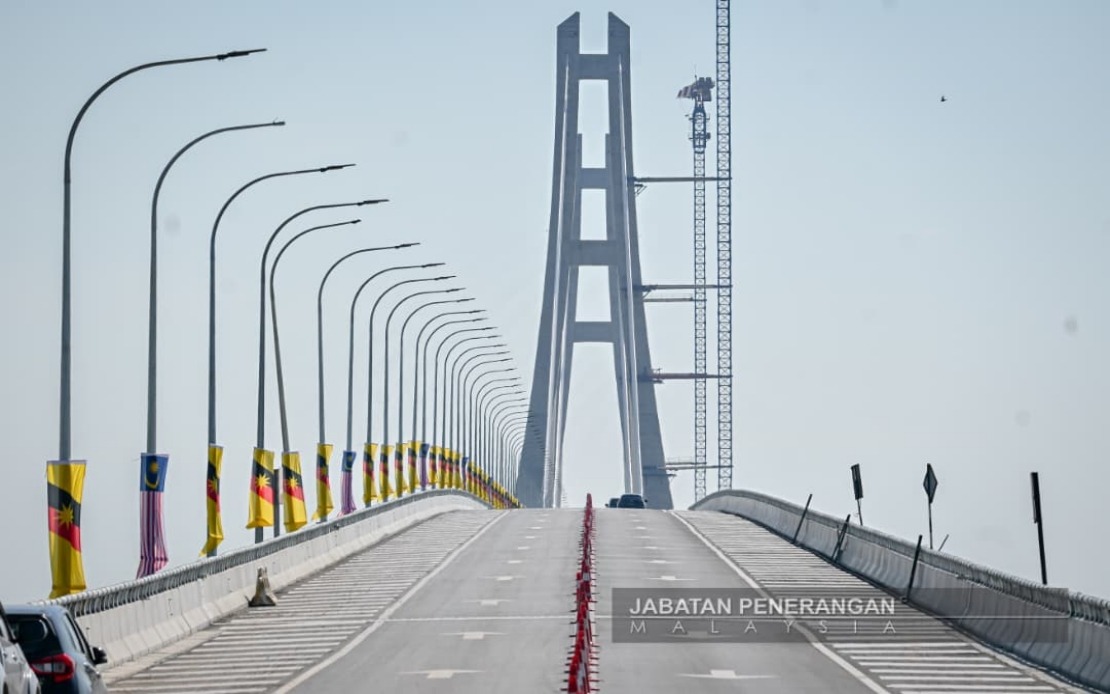
Sarawak's long-awaited Batang Lupar 1 Bridge has officially opened, positioning itself as a transformative infrastructure project that promises to reshape development patterns across the state's coastal region. Spanning 4.844 kilometres at a cost of RM848.75 million, the bridge now connects previously isolated communities in Sebuyau, Betong, Sri Aman and Samarahan—areas that for decades relied heavily on ferry services fraught with operational challenges and safety concerns.
Premier Tan Sri Abang Johari Tun Openg described the opening as a historic moment, acknowledging that the bridge fulfills a long-standing community need expressed repeatedly through elected representatives over the years. The coastal corridor has experienced persistent connectivity difficulties, particularly at the Batang Lupar River mouth where strong tidal movements and adverse weather created dangerous crossing conditions. Ferry services frequently faced disruptions, and historical incidents underscored the inherent risks of water-based transport in these challenging maritime conditions.
The bridge forms a critical segment of the broader Sarawak Second Trunk Road initiative, an ambitious RM3.21 billion coastal road development programme designed to modernize transportation infrastructure across the state. When fully completed by 2030, this coastal network will fundamentally alter regional geography by reducing the distance between Kuching and Sibu from 396 kilometres to 252 kilometres—a remarkable 144-kilometre reduction that translates to substantially shorter travel times and improved logistics efficiency for commercial operations.
Deputy Premier Datuk Amar Douglas Uggah Embas, who oversees infrastructure and port development portfolios, emphasized that the bridge eliminates the chronic inefficiencies inherent in ferry operations. Crossing the Batang Lupar previously consumed up to an hour in favorable conditions, with weather-related delays extending journeys unpredictably. This unpredictability created significant complications for agricultural producers, business operators and daily commuters dependent on reliable transport corridors.
The infrastructure project carries substantial economic implications for Sarawak's interior and coastal regions. Enhanced connectivity traditionally catalyzes agricultural expansion by reducing post-harvest losses and improving market access for rural producers. The bridge will enable faster, more reliable transport of agricultural commodities from production areas to processing facilities and markets, benefiting smallholder farmers and larger agricultural enterprises operating across Sebuyau and surrounding districts.
Investment patterns typically respond positively to improved infrastructure connectivity, and the bridge's completion signals enhanced business confidence in coastal Sarawak. Reduced transportation costs and faster supply chain movements create competitive advantages that attract manufacturing enterprises, agro-processing facilities and distribution operations. The economic multiplier effects of such industrial clustering can generate employment opportunities across multiple sectors while diversifying regional economic bases beyond traditional activities.
The Malaysia Book of Records recognition of the bridge as Malaysia's longest river crossing adds symbolic weight to the achievement while acknowledging the engineering sophistication required to span the nation's longest river. This designation positions Sarawak as a centre for major infrastructure accomplishment and reflects the state's capacity to execute complex engineering projects, enhancing Sarawak's profile within Malaysia's broader development narrative.
From a regional perspective, the bridge advancement positions Sarawak competitively within Southeast Asian development corridors. Enhanced domestic connectivity supports broader ASEAN integration objectives by facilitating intra-regional trade and movement. As Malaysia strengthens internal transportation networks, regional competitiveness in attracting investment and facilitating trade improves correspondingly, particularly for states like Sarawak seeking to leverage geographic positioning and resource advantages.
The project's completion represents substantial progress toward integrated coastal development objectives that recognize Sarawak's vast shoreline as an economic asset requiring systematic infrastructure investment. Previous development patterns concentrated resources in interior regions and larger urban centres, leaving coastal districts relatively underserved despite their agricultural potential and strategic positioning. The Sarawak Second Trunk Road initiative systematically addresses this historical imbalance through coordinated investment in multiple bridge and road components.
Community displacement concerns that occasionally accompany major infrastructure projects appear minimal in this instance, as the bridge primarily connects existing settlements rather than requiring significant population relocation. This characteristic reduces implementation complexity while maximizing local acceptance of the development programme, as residents directly benefit from improved services without experiencing disruptive social consequences.
Looking forward, the bridge's operational performance will provide valuable data for evaluating similar coastal connectivity projects across Southeast Asia. Sarawak's experience with large-span river crossing engineering in tropical maritime environments offers practical insights relevant to other regional jurisdictions pursuing infrastructure modernization.
The ferry service conclusion represents a symbolic transition for affected communities, marking the end of an era characterized by isolation and transportation vulnerability. Residents now gain access to modern transport infrastructure equivalent to that available in more developed regions, narrowing regional development disparities that persisted across Sarawak's diverse geography.
As the Sarawak Second Trunk Road progresses toward 2030 completion, subsequent bridge openings and road segments will progressively integrate coastal communities into broader state development frameworks. The Batang Lupar 1 Bridge opening establishes momentum and demonstrates commitment to the comprehensive vision, encouraging stakeholder confidence in project delivery timelines and outcomes across remaining phases of this transformative infrastructure initiative.

