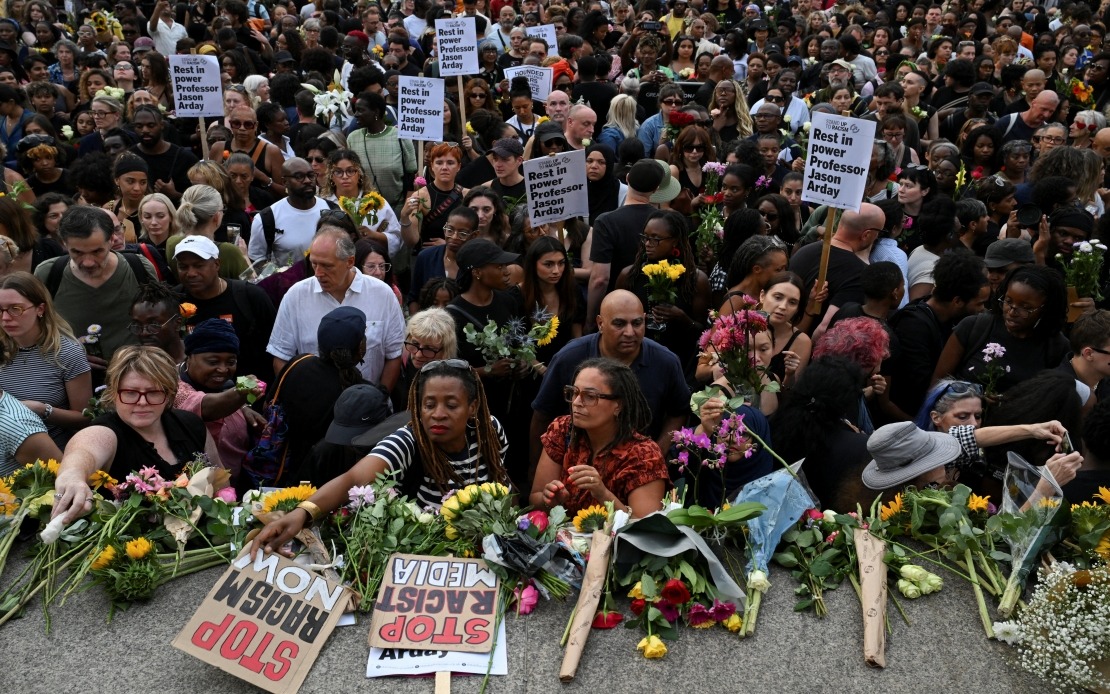
The academic dispute that culminated in the death of a celebrated Cambridge scholar has now claimed a professional casualty in continental Europe. Ghent University in Belgium has suspended postdoctoral researcher Nathan Cofnas, who had levelled plagiarism allegations against Jason Arday, the University of Cambridge's youngest Black professor who died unexpectedly in August. The suspension represents a dramatic escalation in what began as an internal scholarly debate but evolved into a public reckoning that shook the British academic establishment and raised uncomfortable questions about institutional accountability and the boundaries of legitimate criticism.
Cofnas, who held a postdoctoral position in Ghent University's department of philosophy and moral sciences, had publicly accused Arday of plagiarism, allegations that prompted scrutiny of the professor's academic record. The researcher announced his suspension through social media on Thursday, stating he was under investigation for allegedly discriminating against Arday. In subsequent posts, Cofnas indicated that his suspension would likely lead to termination, transforming what might have remained a confined scholarly disagreement into a broader examination of academic responsibility and institutional responses to allegations of misconduct.
The timeline of these events compressed dramatically in August. Arday, who was only 41 years old, resigned from his Cambridge position on August 5 following weeks of intense scrutiny concerning the allegations and questions surrounding elements of his academic record and personal narrative. In characteristically measured language, he stated that his resignation should not be construed as acceptance of the narratives circulating about him. A week later, on August 12, Cambridge University announced it would investigate the circumstances surrounding Arday's appointment. However, the investigation would never reach conclusion: on August 14, Arday was discovered dead at his home in south London. Police confirmed his death was unexpected but found no indication of suspicious circumstances.
Arday's meteoric rise through the academic ranks had made him a compelling figure within British higher education. Appointed as professor of sociology of education in 2023, he became Cambridge's youngest Black professor and a visible embodiment of institutional progress toward greater diversity. Born in south London to Ghanaian immigrant parents and raised in a working-class household, Arday had overcome significant educational obstacles to achieve his position. He had publicly discussed his autism and learning difficulties, describing how he remained nonverbal until age eleven and did not master reading and writing until eighteen. His narrative of perseverance resonated widely and made him a prominent voice in debates about educational access and institutional discrimination.
The emergence of plagiarism allegations in July fundamentally altered this narrative. Questions about the authenticity of his academic work and details of his personal story invited closer examination of his scholarship and biography. Such scrutiny, while potentially warranted if plagiarism concerns had merit, occurred in a context where Arday's visibility as a young Black academic may have amplified both support and criticism. The pressure mounted rapidly, culminating in his departure from Cambridge within weeks. The university's subsequent announcement of an investigation into his appointment, combined with his sudden death, created a tragic denouement that left many questions unresolved and raised difficult conversations about proportionality in institutional responses to academic misconduct allegations.
Ghent University's decision to suspend Cofnas reflects the complications now surrounding the entire episode. The Belgian institution acknowledged Arday's death as prompting reflection but indicated it took seriously Cofnas's recent public statements on the matter. In a joint statement, rector Petra De Sutter and vice-rector Herwig Reynaert balanced competing institutional commitments, affirming the university's dedication to academic freedom and open debate while emphasizing that such freedom carries responsibility and must be constrained to protect others' rights. The university stated it was examining Cofnas's public comments with gravity and taking appropriate action within its authority and applicable framework, though it declined to specify what additional measures might follow.
Cofnas has previously generated controversy through his published positions on race and intelligence. In 2024, he lost his research associate role at Emmanuel College, Cambridge, after publishing a blog post asserting that Black people possess lower average intelligence than white people and that in a true meritocracy, Harvard would have almost no Black professors. These statements, which reflect contentious claims rejected by mainstream scientific consensus, formed the backdrop against which his plagiarism allegations against Arday were considered. For many observers, the combination of such claims with accusations against a prominent Black academic raised questions about motivation and potential bias, even if the plagiarism concerns contained factual substance.
The distinction between legitimate scholarly critique and potentially discriminatory targeting remains contested within academic discourse. Ghent University's careful language attempts to navigate this territory: defending academic freedom while cautioning against statements that appear to undermine the rights and dignity of colleagues. The university's reluctance to detail the specific grounds for suspension suggests sensitivity to the complexity of distinguishing between protected speech and institutional violation of policies against discrimination. Cofnas's own framing of the suspension as retaliation for the plagiarism allegations inverts the causal chain that the university appears to have identified—namely, that his public statements on race and intelligence, rather than the plagiarism allegations themselves, motivated the investigation and suspension.
The case carries broader implications for academic institutions navigating questions of misconduct accountability and researcher conduct standards. Universities in the United Kingdom and Europe increasingly confront tensions between maintaining rigorous standards for scholarly integrity and ensuring that oversight mechanisms do not become vehicles for discrimination or harassment. Arday's death has rendered these tensions more acute by removing the possibility of resolution through normal institutional channels. His inability to respond to accusations, mount a defense, or participate in any investigation has left the episode unresolved, with questions about what actually occurred remaining matters of contested interpretation rather than established fact.
For Malaysian academic institutions and others in Southeast Asia, the episode offers instructive lessons about institutional governance and duty of care. The rapid escalation of allegations into public controversy, coupled with insufficient procedural protection for the accused, raises questions about whether established processes for investigating academic misconduct can accommodate the accelerated dynamics of social media and public judgment. Universities must balance rigorous enforcement of scholarly standards against the obligation to protect scholars from premature conviction in the court of public opinion. The integration of diversity initiatives with misconduct investigations also demands careful institutional design to prevent the weaponization of accountability mechanisms against underrepresented groups.
The suspension of Cofnas by Ghent University represents an attempt to address what the institution perceives as discriminatory conduct, yet it also closes off further dialogue on the underlying plagiarism allegations. Without Arday's ability to respond, the truth regarding the accusations may never be fully established. The incident thus illustrates the tragic dimensions of institutional failure—not simply the failure of any single organization to manage a situation adequately, but the systemic failure to preserve the conditions necessary for truth-seeking that academia ostensibly exists to serve. As universities worldwide grapple with questions of research integrity and equitable oversight, the Arday case stands as a cautionary tale about the consequences of allowing allegations to metastasize beyond institutional control without appropriate safeguards for all involved.
Moving forward, academic institutions globally will likely confront calls for more explicit guidelines governing how plagiarism allegations are investigated, how findings are communicated, and how whistleblowers against academic misconduct are themselves held accountable for their conduct during the process. The deaths of scholars remain rare, but the psychological pressures generated by intensive public scrutiny of academic work have been documented as substantial. Institutions bear responsibility for ensuring that investigative processes, even when prompted by legitimate concerns, do not create environments that endanger the wellbeing of those under examination. The equilibrium between accountability and protection remains difficult to achieve, yet the consequences of failure are too significant to permit sustained institutional drift on these matters.

