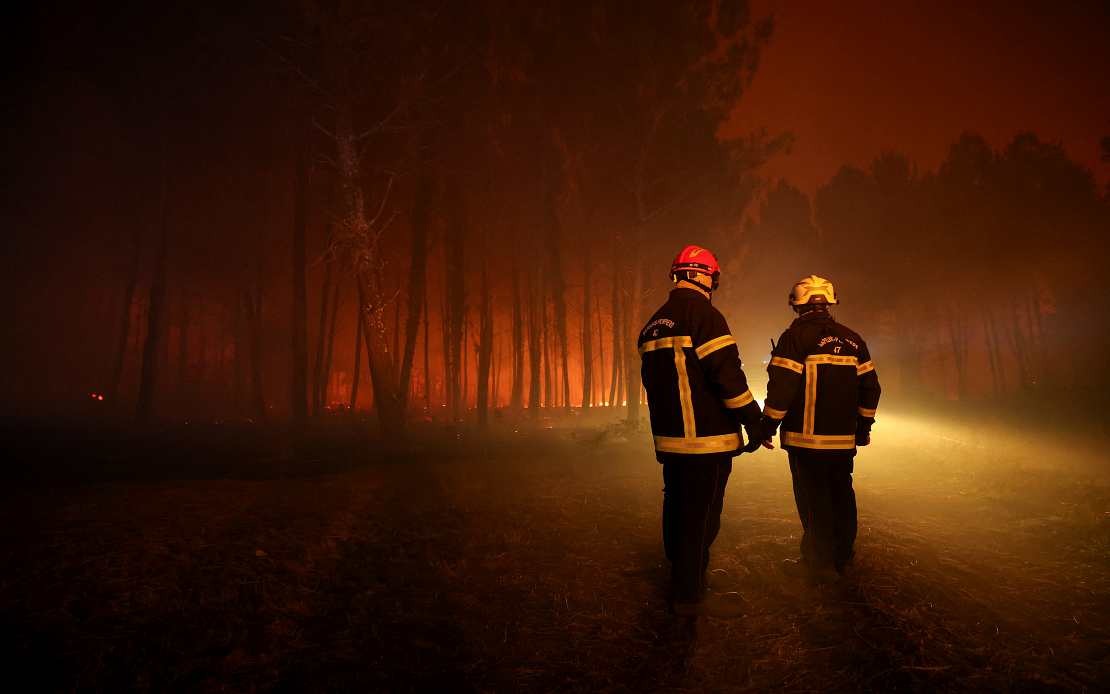
Eastern Belgium is confronting an unprecedented environmental crisis as a massive wildfire rages through the High Fens nature reserve, scorching approximately 2,700 hectares by Saturday evening and displacing roughly 600 residents from surrounding villages. The conflagration, which ignited on Friday afternoon near the German border, has already surpassed the scale of any previous wildfire recorded in Belgian history, establishing a grim new benchmark for the country's fire management authorities.
The extent of devastation became clear as emergency officials tracked the fire's relentless expansion throughout Friday and into Saturday. What authorities initially assessed as a 1,600-hectare burn area had grown dramatically larger, with flames continuing to advance across the rugged landscape despite intensive firefighting efforts. Historical data from the European Forest Fire Information System demonstrates the gravity of this event: the previous major wildfire in Belgium, which occurred in 2011, consumed nearly 1,400 hectares—roughly half the current blaze's reach.
The geographical characteristics of the High Fens region have significantly complicated containment operations. The nature reserve's challenging terrain, marked by marshland and rocky outcrops, has prevented firefighting teams from deploying conventional ground-based tactics effectively. Emergency crews attempting to advance on the flames have encountered obstacles that limit their ability to mount close-range assaults on the spreading fire, forcing them to rely increasingly on aerial support and strategic positioning rather than direct engagement.
Environmental conditions have intensified the crisis substantially. Belgium experienced a severe heat wave this week, with temperatures soaring to 37 degrees Celsius in some localities on Friday alone. The combination of extreme heat, prolonged drought conditions, and shifting wind patterns has created ideal circumstances for rapid fire propagation, transforming the landscape into a tinderbox where flames spread with frightening speed. Unpredictable wind patterns have particularly hampered suppression efforts, periodically redirecting smoke toward populated areas and threatening to push the fire toward communities that authorities had deemed relatively safe.
Evacuation operations have unfolded across multiple communities bordering the affected zone. Local authorities ordered approximately 600 residents to leave their homes as a precautionary measure, while tourist facilities in the vicinity were also cleared. A children's summer camp operating in the area was hastily evacuated, reflecting the scope of the disruption to civilian life. The sudden displacement underscores how ecological disasters of this magnitude extend far beyond environmental concerns, directly affecting families and disrupting community activities.
Recognising the scale of the emergency, Belgium activated the European Union Civil Protection Mechanism on Saturday, formally requesting international assistance. This invocation of the EU's crisis response framework—typically reserved for catastrophes exceeding a member state's capacity to respond independently—signals the exceptional nature of the current situation. The mechanism quickly mobilised resources from neighbouring nations, with firefighting aircraft arriving from the Czech Republic, Sweden, and the Netherlands to supplement Belgian capabilities.
The multinational response reflects both the severity of the crisis and the principle of European solidarity in disaster management. Ground-based firefighting contingents have also crossed borders, with personnel from Germany and Luxembourg joining Belgian crews in what has become a coordinated international operation. Domestically, the Belgian military has been deployed to support civilian firefighting units, whilst local farmers have contributed equipment and local knowledge to assist the emergency response. This layered approach—combining civilian, military, and international resources—represents the full mobilisation of available response capacity.
The wildfire emerges within a broader context of climate change's intensifying impact on European natural systems. Heat waves and drought conditions have become increasingly frequent across the continent, with regions traditionally considered low-risk for wildfires now experiencing significant fire seasons. Belgium, not historically known as a wildfire hotspot, finds itself confronting environmental challenges that were largely theoretical in previous generations. The 2700-hectare devastation in the High Fens serves as an sobering reminder that climate impacts penetrate even relatively temperate, developed nations.
For Southeast Asian observers and policymakers, Belgium's wildfire offers instructive parallels. The region's tropical forests face analogous risks from uncontrolled combustion during drought periods, as demonstrated by the recurring transboundary haze crises affecting Malaysia, Indonesia, and Singapore. While the ecological contexts differ markedly, the essential dynamics—intense heat, dry conditions, difficult terrain, and cascading societal impacts—translate across geographies. Belgium's mobilisation of international mechanisms and cross-border cooperation during this emergency underscores strategies that could inform regional approaches to fire management during Southeast Asia's critical seasons.
The incident also highlights vulnerabilities in civilian infrastructure and preparedness systems when disasters exceed anticipated parameters. The fact that Belgium's previous record wildfire was substantially smaller suggests that planning frameworks may not have adequately accounted for extreme-case scenarios in an era of climatic volatility. As climate science increasingly warns of intensifying extremes, nations worldwide must recalibrate their disaster preparedness assumptions, moving beyond historical precedent toward scenario planning that incorporates contemporary scientific projections.
Looking forward, the High Fens wildfire will likely trigger extensive post-incident reviews examining response effectiveness, resource allocation, and prevention strategies. Authorities will analyse whether early warning systems functioned optimally, whether evacuation procedures proved adequate under genuine emergency conditions, and whether existing fire suppression equipment and training remain sufficient for novel challenges. These assessments may produce policy recommendations affecting land management practices, emergency service resourcing, and potentially land-use regulations in fire-prone zones.

