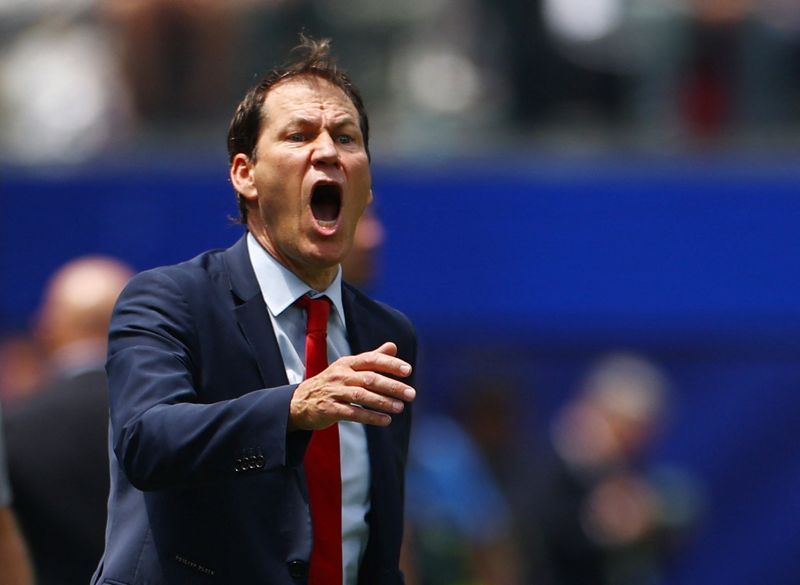
Belgium's World Cup campaign ended in Atlanta on Friday with a 2-1 quarter-final loss to Spain, but the decisive moment came not from the opposition's attacking prowess alone. The decision by coach Rudi Garcia to withdraw first-choice goalkeeper Thibaut Courtois from the match has ignited a firestorm of criticism that now threatens to overshadow the team's overall tournament performance and raises fundamental questions about Garcia's suitability to lead the national side going forward.
Courtois initially believed he could remain on the pitch despite experiencing minor discomfort in his leg, but Garcia enforced a substitution at the 71-minute mark, demanding absolute physical readiness from his players. The replacement goalkeeper Senne Lammens proved unable to handle the pressure of the occasion. In the 86th minute, he fumbled a low shot from Pau Cubarsi, gifting substitute Mikel Merino the simplest of finishes to seal Spain's progression. The timing and circumstance of the Belgian goalkeeper's withdrawal have become the focal point of post-match analysis, with prominent sports commentators questioning whether Garcia's rigid management philosophy cost his team a place in the semi-finals.
Peter Vandenbempt, one of Belgium's most respected football voices, offered a scathing assessment on Belgian radio, struggling to comprehend the logic behind replacing what many consider the world's finest goalkeeper during such a critical match. Vandenbempt's incredulity centred on Garcia's stated rationale that a player operating below 100 per cent fitness could not be trusted, even one of Courtois's calibre. The commentator argued that a goalkeeper of Courtois's experience would possess the self-awareness to communicate honestly about his physical limitations and capability to perform essential duties, particularly the long-range distribution that had been fundamental to Belgium's strategy throughout the tournament.
Garcia, however, stood firmly behind his substitution decision, articulating a consistent management philosophy that had guided his team selection policy since the World Cup commenced. He explained that maintaining strict standards regarding player fitness formed a core principle of his tenure, applied universally regardless of individual status or reputation. The coach acknowledged that Courtois's ability to execute accurate long passes remained integral to Belgium's tactical setup, with the goalkeeper serving as a crucial link in transitions to forwards Charles De Ketelaere and Romelu Lukaku. Yet from Garcia's perspective, protecting a player from potential serious injury justified the short-term disruption to team balance.
This controversy arrives at a particularly delicate moment for the Belgian federation, as Garcia's contract expires at the end of the month, triggering an imminent review of his continued employment. The French coach, now 62 years old, brings considerable credentials to the position, having secured the Ligue 1 championship with Lille in 2011 and earned international recognition through his work in multiple top European leagues. He assumed the Belgium role at the beginning of 2025 specifically tasked with reversing the perceived damage inflicted by his predecessor, Domenico Tedesco, whose tenure had become defined by discord and a sense of lifelessness within the squad.
Garcia's opening assignments proved achievable on the surface. He retained Belgium's top-tier Nations League status, achieved smooth progression through World Cup qualification, and guided the team to the quarter-finals, meeting the federation's baseline expectations. His competitive record across twenty internationals shows twelve victories, six draws, and merely two defeats, statistics that would normally suggest a reasonably successful period. Yet the manner of the Spain exit, combined with accumulated concerns about tactical inflexibility and questionable in-game management, has substantially complicated the federation's deliberations about his future direction.
Belgium's path through the World Cup had hardly inspired complete confidence, even before the quarter-final disappointment. The group stage demonstrated inconsistency, with the team required to recover from draws against Egypt and Iran before ultimately topping their section with a win over New Zealand. Their knockout progression against Senegal in the last 32 proved especially contentious. With the team trailing 2-0, Garcia withdrew several key attacking players, a decision that preceded a remarkable comeback, though whether this reflected the manager's tactical acumen or primarily benefited from Senegal's defensive collapse remains genuinely debatable within analytical circles.
The substitution controversy gains additional weight when examined against Garcia's broader record of tactical decisions and personnel management. Beyond the Courtois incident, commentators and federation observers have raised broader questions about his strategic approach, his pattern of substitution choices, and his overall management style. The narrow defeat to Spain did little to silence these critics or demonstrate that such concerns were merely superficial complaints. If Garcia is to have any realistic chance of remaining in post for Belgium's campaign toward the 2028 European Championship, the federation will require substantial reassurance regarding his tactical evolution and decision-making consistency.
Garcia can, however, point to meaningful achievements that temper the narrative of mismanagement entirely. Belgium's comprehensive 4-1 demolition of co-host United States represented genuinely impressive football, showcasing attacking fluency and defensive solidity. Moreover, Garcia successfully integrated emerging talents such as Nathan Ngoy and Nicolas Raskin into the squad, both of whom delivered notably strong performances throughout the tournament. These developments suggest the manager possesses capabilities for player development and can extract cohesive performances from his squad when circumstances align favourably.
As the federation leadership contemplates Belgium's managerial future, the Courtois substitution will undoubtedly feature prominently in their analysis, but must be weighed against the fuller context of Garcia's eighteen-month tenure. The fundamental question facing Belgian football officials is whether Garcia represents the foundation upon which to build competitive sides capable of serious European Championship and World Cup challenges, or whether his rigid principles and tactical limitations render him unsuitable for the demands of elite international football management. The decision they reach will significantly shape Belgian football's trajectory across the next four years.

