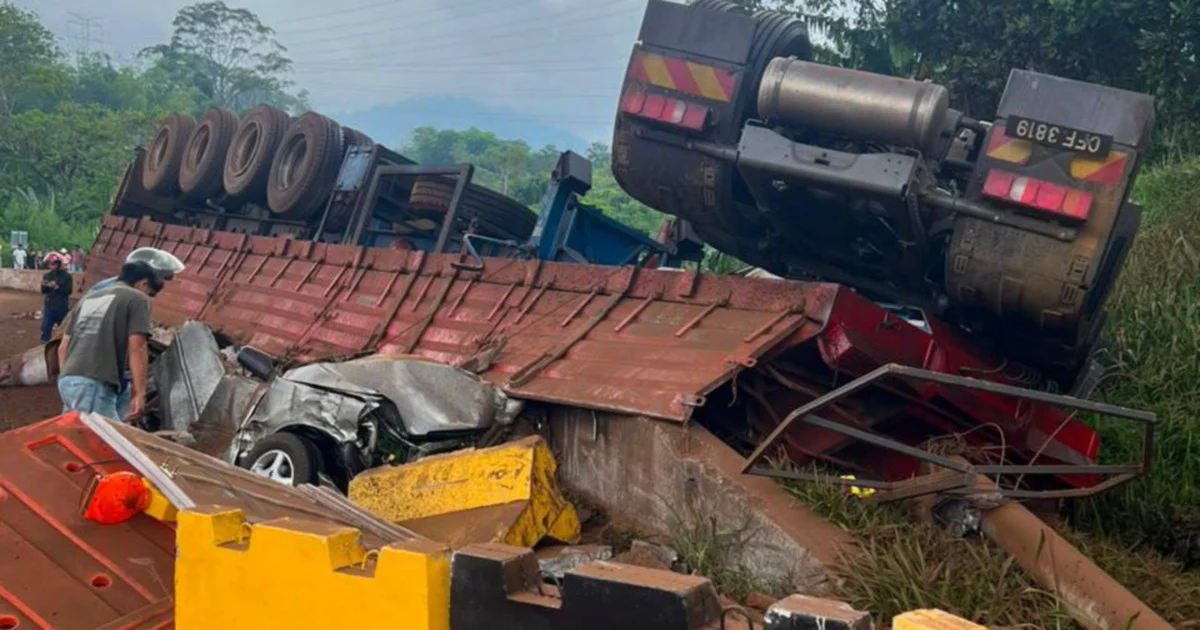
The operator of a heavy trailer involved in a catastrophic collision on the Karak Expressway has been released on police bail, marking the latest development in an ongoing investigation into the incident that claimed four lives on June 14 near Bentong. The decision to free the driver on bail signals that police inquiries are progressing, though the investigation remains active as authorities work to establish the precise sequence of events that led to the tragedy.
The crash occurred on a major expressway corridor that carries substantial traffic between Kuala Lumpur and the east coast, an economically vital route for goods movement and commuter travel. Heavy vehicles such as trailers are integral to Malaysia's logistics infrastructure, transporting goods across the country, but incidents involving large trucks can prove catastrophic due to the mass and momentum involved. The circumstances surrounding this particular accident have prompted police to conduct a thorough examination of factors that may have contributed to the collision.
Investigations into fatal road accidents typically examine multiple elements, including vehicle maintenance records, driver fatigue levels, road conditions at the time of impact, and whether speed or mechanical failure played a role. The decision to release the driver on bail rather than detain him further suggests police have gathered sufficient preliminary information to permit his temporary freedom while they pursue additional lines of inquiry. Such decisions are made when authorities determine that continued detention is no longer necessary to prevent absconding or obstruction of justice.
The Karak Expressway, which stretches across Pahang and Selangor states, is known for its challenging terrain and elevation changes, particularly in sections near Bentong. Weather conditions, visibility, and road surface conditions in this region can vary significantly and may affect vehicle handling. Heavy vehicles require greater stopping distances and are more vulnerable to control loss on steep gradients, especially if brakes are inadequately maintained or if drivers become fatigued during extended journeys.
Trailer drivers often work under demanding schedules that can stretch across multiple hours, creating fatigue-related risks that regulatory bodies continuously attempt to mitigate through safety standards and enforcement. Malaysia's Commercial Vehicles Licensing Board and the Road Transport Department maintain stringent requirements for heavy vehicle operators, including mandatory rest periods and regular medical assessments. However, compliance challenges persist across the industry, particularly among operators managing tight delivery schedules.
The bail release carries implications for the broader investigation, as it indicates that the case will likely proceed through Malaysia's criminal justice system with the driver remaining at liberty pending further developments. Family members of the four victims will be monitoring the investigation closely, as its findings will help determine whether charges are eventually filed and under what provisions of Malaysian traffic and criminal law.
Fatal accidents on major expressways attract particular scrutiny given their potential to influence broader road safety policies. Each such incident provides authorities with opportunities to identify systemic vulnerabilities, whether related to vehicle standards, enforcement patterns, or infrastructure design. The Karak Expressway has witnessed numerous serious accidents over the years, prompting ongoing discussions about speed limits, barrier improvements, and emergency response capabilities.
For the logistics and transport industry, high-profile accidents create pressure to demonstrate that operators maintain rigorous safety standards. Industry associations and company operators often review their own procedures following major incidents, implementing additional safety measures or driver training programmes. Insurance premiums for heavy vehicle operators may also be affected by accident patterns and claims history in specific regions or corridors.
The investigation's progression will ultimately determine whether the driver faces charges under Section 304 of the Penal Code, which covers causing death by negligence, or other relevant provisions. Malaysian courts have shown willingness to impose substantial sentences in cases where negligence or recklessness by vehicle operators results in fatalities, with convictions sometimes resulting in years of imprisonment and significant fines. However, charges are typically only filed once investigations establish the specific factors that contributed to the accident.
For families affected by the tragedy, the bail decision means the investigation will continue without the driver's continued detention, allowing authorities to pursue witness statements, vehicle examination, and forensic evidence collection without time pressure. The coming weeks and months will determine the investigation's conclusions and inform decisions about potential prosecution. Meanwhile, the accident serves as a sobering reminder of the dangers inherent in heavy vehicle operations and the critical importance of maintenance, driver training, and adherence to safety regulations on Malaysia's expressway network.
%22%2F%3E%3C%2Fpattern%3E%3C%2Fdefs%3E%3Crect%20width%3D%22100%25%22%20height%3D%22100%25%22%20fill%3D%22url(%23ph504jeg)%22%2F%3E%3Crect%20width%3D%22100%25%22%20height%3D%22100%25%22%20fill%3D%22url(%23ph504jep)%22%2F%3E%3Ctext%20x%3D%2250%25%22%20y%3D%2250%25%22%20text-anchor%3D%22middle%22%20dominant-baseline%3D%22central%22%20fill%3D%22rgba(255%2C255%2C255%2C0.95)%22%20font-family%3D%22Georgia%2C%20'Times%20New%20Roman'%2C%20serif%22%20font-weight%3D%22700%22%20font-size%3D%22320%22%20letter-spacing%3D%22-0.02em%22%3EMOH%3C%2Ftext%3E%3C%2Fsvg%3E)
%22%2F%3E%3C%2Fpattern%3E%3C%2Fdefs%3E%3Crect%20width%3D%22100%25%22%20height%3D%22100%25%22%20fill%3D%22url(%23ph51k2vg)%22%2F%3E%3Crect%20width%3D%22100%25%22%20height%3D%22100%25%22%20fill%3D%22url(%23ph51k2vp)%22%2F%3E%3Ctext%20x%3D%2250%25%22%20y%3D%2250%25%22%20text-anchor%3D%22middle%22%20dominant-baseline%3D%22central%22%20fill%3D%22rgba(255%2C255%2C255%2C0.95)%22%20font-family%3D%22Georgia%2C%20'Times%20New%20Roman'%2C%20serif%22%20font-weight%3D%22700%22%20font-size%3D%22320%22%20letter-spacing%3D%22-0.02em%22%3EIJN%3C%2Ftext%3E%3C%2Fsvg%3E)
%22%2F%3E%3C%2Fpattern%3E%3C%2Fdefs%3E%3Crect%20width%3D%22100%25%22%20height%3D%22100%25%22%20fill%3D%22url(%23ph3oqxzg)%22%2F%3E%3Crect%20width%3D%22100%25%22%20height%3D%22100%25%22%20fill%3D%22url(%23ph3oqxzp)%22%2F%3E%3Ctext%20x%3D%2250%25%22%20y%3D%2250%25%22%20text-anchor%3D%22middle%22%20dominant-baseline%3D%22central%22%20fill%3D%22rgba(255%2C255%2C255%2C0.95)%22%20font-family%3D%22Georgia%2C%20'Times%20New%20Roman'%2C%20serif%22%20font-weight%3D%22700%22%20font-size%3D%22226%22%20letter-spacing%3D%22-0.02em%22%3EMarcos%3C%2Ftext%3E%3C%2Fsvg%3E)