Malaysia's national news agency is stepping up its campaign to kindle patriotic sentiment among both its workforce and the broader public as the country heads into its annual National Day festivities. Bernama, operating under the Ministry of Communications, has positioned itself at the forefront of efforts to amplify messages of national unity and pride during the National Month period, signalling the importance government places on state-controlled media in shaping public discourse around national identity.
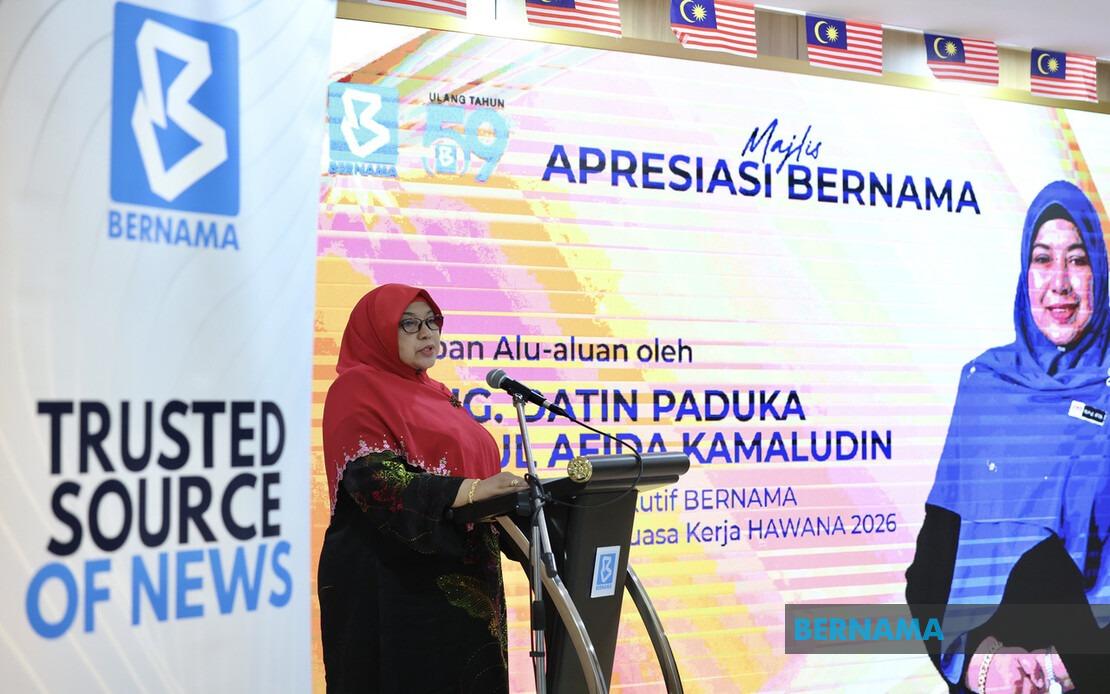
The push comes as Datin Paduka Nur-ul Afida Kamaludin, who leads the agency as chief executive officer, outlined an expanded mandate for Bernama's role beyond conventional news dissemination. Speaking at an internal appreciation ceremony held at Bernama's headquarters, she emphasised that the agency functions as more than a news publisher—it serves as a conduit through which government communications and policy initiatives reach citizens. This dual function reflects the close integration between Malaysia's state media apparatus and ministerial priorities, a relationship that underscores how official narratives around national celebrations are crafted and distributed across the country.
Central to Bernama's National Month strategy is the "Satu Rumah, Satu Jalur Gemilang" campaign, which translates to "One House, One Malaysian Flag." The initiative encourages employees to display the Jalur Gemilang, Malaysia's national flag, not only at Bernama's premises but also within their private residences. This approach extends the reach of patriotic symbolism from institutional spaces into domestic environments, creating a more pervasive visual reminder of national identity throughout communities where Bernama staff reside. The campaign reflects a broader government strategy to make flag-flying a widespread personal practice rather than limiting it to official spaces.
The timing of these initiatives follows Prime Minister Anwar Ibrahim's formal launch of the National Month campaign in Ipoh, marking the official commencement of August's patriotic observances. Bernama's headquarters has been decorated with the national flag as a visible endorsement of the campaign, and the agency has positioned this as an example for its employees to emulate. Such coordination between government leadership and state media institutions demonstrates how national celebrations are orchestrated at multiple levels, with official messaging cascading from ministerial announcements through news agency communications and into household-level practices.
For Malaysian readers and regional observers, Bernama's amplified patriotic messaging reflects deeper questions about the role of state media in democracies. The agency's explicit commitment to promoting government programmes and initiatives, while simultaneously functioning as a news provider, raises considerations about editorial independence and the distinction between journalism and state communications. Regional counterparts operating in similar institutional frameworks face comparable tensions, though approaches vary significantly across Southeast Asian media landscapes.
The internal appreciation ceremony served as a platform to do more than merely distribute flags. Bernama used the gathering to unveil the official National Day theme song, composed by singer Faizal Tahir, introducing this cultural element to staff before broader public rollout. This sequencing—unveiling patriotic cultural content first to government employees—ensures that state media staff become initial vectors for amplifying and promoting creative content tied to national celebrations. By first familiarising internal audiences with these materials, Bernama positions itself to provide informed coverage and enthusiastic promotion as the content reaches the general public.
Nur-ul Afida acknowledged a practical constraint that shaped the agency's approach: the difficulty of assembling all Bernama staff at headquarters simultaneously. Rather than viewing this challenge as an obstacle, the agency consolidated its various initiatives—from the flag campaign to the song launch—into a single comprehensive event. This bundling strategy maximises the impact of internal gatherings and reflects how state institutions optimise communication across distributed workforces. For a news agency serving a geographically dispersed country, such efficiency in messaging becomes operationally important.
The emphasis on bringing together scattered staff also carries symbolic weight. By creating a unified moment of patriotic expression among employees, Bernama reinforces institutional identity and shared purpose. This internal cohesion then translates into more consistent, aligned messaging when staff members engage with news reporting and government communications dissemination. The agency's recognition that staff participation in patriotic initiatives strengthens their subsequent role in promoting national messaging reveals how modern state institutions blend employee engagement with strategic communications objectives.
For Malaysia's broader media ecosystem, Bernama's proactive stance during National Month establishes a benchmark that other news organisations—both state-linked and private—respond to or distinguish themselves from. Some outlets may amplify similar patriotic messaging, while others may maintain greater editorial distance. This variation creates a spectrum of approaches to covering national celebrations, with Bernama positioned at the most institutionally integrated end of the spectrum.
The campaign also reflects consideration of how patriotic sentiment translates into measurable public response. By encouraging widespread flag display under an organised campaign framework, the government and Bernama can quantify participation levels, document visual evidence of patriotic participation, and create narratives about national unity based on observable, publicised behavior. This gamification of patriotism—turning it into a participating activity rather than merely a sentiment—shapes how national pride manifests in society.
Looking ahead, Bernama's intensified efforts suggest that government sees state media as a crucial instrument for maintaining or strengthening patriotic consciousness during a period when national cohesion commands political attention. The agency's multi-layered approach—institutional decoration, employee participation, cultural content introduction, and systematic dissemination—demonstrates institutional sophistication in orchestrating patriotic campaigns. For regional observers tracking media's relationship to nationalism across Southeast Asia, Malaysia's approach through its state news agency offers instructive examples of how governments leverage media infrastructure for nation-building purposes.
The National Month campaign represents a routine but revealing moment in Malaysia's institutional life. Bernama's energised involvement signals that government sees the coming weeks not merely as calendar occasions but as opportunities to reinforce national identity narratives through coordinated media action, employee participation, and public engagement strategies that blur lines between news, government communications, and cultural promotion.

