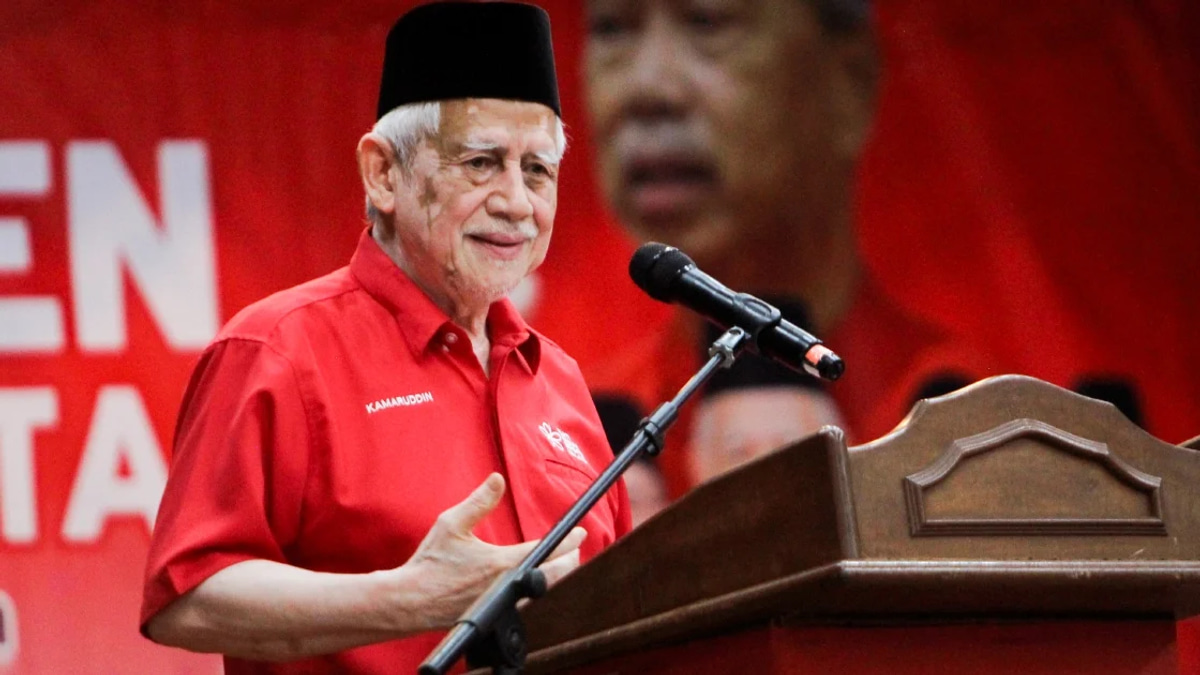
PAS vice-president Amar Abdullah has acknowledged an emerging electoral challenge from Bersama, signalling that the newer political grouping poses a meaningful threat to the Islamic party's efforts to capture support among Malaysia's growing cohort of inexperienced voters. While Amar's assessment stops short of framing Bersama as an existential threat to PAS's core base, it reflects broader concern within the party's leadership about demographic shifts in voter behaviour and the appeal of alternative political narratives to the country's youth.
The acknowledgement comes at a time when Malaysian politics faces significant generational fracturing. Younger voters, particularly those casting ballots for the first time, increasingly exhibit lower party loyalty and greater responsiveness to political messaging that positions itself as fresh or reform-oriented. Bersama's positioning as a newer entrant to Malaysia's political landscape aligns directly with this appetite for alternatives, even as established parties have deepened roots within their communities across decades.
Amar's comments reveal an important distinction in PAS's electoral strategy moving forward. The party appears to be segmenting its voter base into two distinct categories: those with deep historical ties to the organisation, whose loyalty operates through longstanding community bonds and institutional relationships, and those without such connections, whose allegiances remain fundamentally contestable. This recognition suggests that PAS recognises its traditional mechanisms of voter retention may be less effective among demographics that did not mature within the party's cultural and organisational sphere.
The rise of Bersama reflects broader patterns of political fragmentation across Southeast Asia, where younger voters have demonstrated consistent scepticism toward legacy organisations. In Malaysia specifically, recent electoral cycles have seen mounting evidence of generational divergence in voting patterns, with younger cohorts less likely to follow parental voting preferences and more inclined toward issue-based decision-making. Bersama's emergence capitalises directly on this receptiveness to novel political offerings.
For PAS, the challenge extends beyond simple vote competition. The party has spent considerable effort over recent years attempting to modernise its public image and broaden its appeal beyond its core Islamic constituency. Yet Bersama's ability to attract younger voters suggests that repositioning efforts by established parties may encounter structural limitations when competing against genuinely new entrants. The psychological appeal of voting for a new organisation free from accumulated baggage of past decisions constitutes a powerful force in contemporary electoral politics.
The implications for Malaysia's broader political economy are significant. If Bersama successfully consolidates support among first-time voters, it could fundamentally alter the arithmetic of coalition-building in future elections. Malaysian governments depend on assembling diverse coalitions across ethnic, religious, and state lines. The introduction of a new player capable of claiming substantial youth support could complicate existing power-sharing arrangements and force established parties into uncomfortable negotiations or compromises.
Regionally, Bersama's emergence mirrors similar dynamics visible across Southeast Asia, where newer political movements have disrupted traditional two-party or dominant-party systems. Thailand's Future Forward Party, Indonesia's experiences with new entrants, and the Philippines' history of political insurgency all demonstrate how fresh political vehicles can mobilise previously disengaged voters. PAS's concern about Bersama thus reflects pattern recognition common among incumbent parties throughout the region.
For younger Malaysian voters specifically, Bersama's appeal likely rests partly on its perceived distance from the ethical and governance challenges that have dogged established parties. Recent decades of Malaysian politics have featured persistent corruption allegations, internal factional conflicts, and accusations of political opportunism across the spectrum. A new organisation lacking this accumulated institutional history enters the electoral arena with a cleaner narrative slate, permitting voters frustrated with existing options to project their hopes onto an alternative without historical baggage to explain away.
Amar Abdullah's candour about this challenge suggests PAS recognises the urgency of addressing youth engagement more directly. The party cannot simply rely on inherited organisational advantages or community networks developed over generations. Instead, capturing first-time voters will require articulating compelling visions of governance and demonstrating responsiveness to concerns prioritised by younger cohorts, whether these relate to climate policy, economic opportunity, digital rights, or other domains where generational interests diverge from traditional party platforms.
The competitive landscape facing Bersama's rise extends beyond PAS alone. All established Malaysian political parties confront similar demographic pressures and the challenge of maintaining relevance with voters unburdened by familial or community loyalty to existing organisations. This structural reality may ultimately force systemic evolution across Malaysian politics, as legacy parties either adapt their messaging and governance approaches or gradually lose ground to newer entrants more naturally aligned with contemporary voter preferences.
Moving forward, the contest between Bersama and established players including PAS will serve as a barometer for whether Malaysian political culture is fundamentally reshaping. Should Bersama sustain its appeal beyond initial electoral cycles, it would signal genuine realignment in Malaysian voter behaviour. Conversely, if the organisation fades after initial enthusiasm wanes, it would suggest that traditional party structures retain greater resilience than their critics acknowledge. Either way, PAS's recognition of this challenge demonstrates clear-eyed assessment of the electoral terrain ahead.