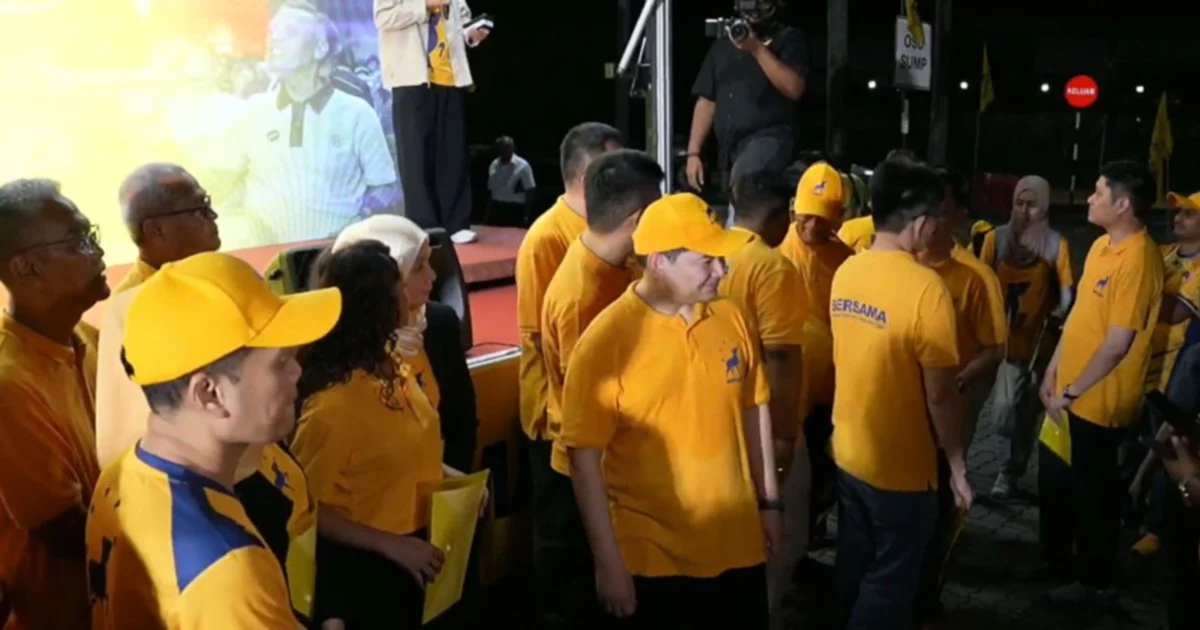
Parti Bersama Malaysia formally introduced its carefully selected roster of 15 candidates vying for seats in the forthcoming Johor state election, marking a significant step in the party's campaign strategy for Malaysia's southern stronghold. The announcement, made on Friday in Kuala Lumpur, underscores the nascent political party's attempt to position itself as a grassroots-focused alternative by drawing candidates from varied professional backgrounds and economic circumstances.
The composition of Bersama's candidate lineup reflects a deliberate attempt to construct broad appeal across different voter demographics. By recruiting aspirants from the entrepreneurial sector, retail management, and logistics operations, the party seeks to demonstrate that it can champion the interests of business owners, middle-management professionals, and working-class Malaysians simultaneously. This diversification strategy represents a departure from traditional electoral playbooks that often emphasize political pedigree or party loyalty as primary selection criteria.
The inclusion of an entrepreneur within the slate signals Bersama's intention to court the business community, particularly small and medium enterprise operators who form a substantial economic backbone in Johor. Such candidates typically bring practical commercial experience and networks that can translate into policy advocacy for business-friendly governance. Their presence may resonate particularly with urban and semi-urban voters concerned with economic growth, employment creation, and entrepreneurial support.
The supermarket manager candidate reflects the party's conscious effort to secure representation from retail and commercial operations that directly engage with consumers daily. Individuals in management positions within the retail sector often possess valuable insights into consumer behaviour, supply chain logistics, and operational efficiency—knowledge that could prove relevant in addressing cost-of-living concerns and economic accessibility issues that dominate public discourse. This positioning may appeal to working-class and lower-middle-income voters navigating pricing pressures and economic constraints.
The logistics worker candidate exemplifies Bersama's outreach to the blue-collar workforce and grassroots communities. By including someone from the logistics and transportation sector, the party signals recognition of workers whose labour underpins Malaysia's supply chains and economic infrastructure. This representation could strengthen the party's narrative about inclusivity and understanding of working-people's challenges, from wage adequacy to workplace safety and occupational benefits.
Johor, as Malaysia's second-largest state by population and a crucial economic hub with significant manufacturing, petrochemical, and port operations, requires political representation sensitive to both commercial interests and worker welfare. The diversity in Bersama's candidate selection suggests an attempt to appeal across this economic spectrum, potentially attracting swing voters dissatisfied with incumbent parties' handling of these competing concerns.
For a relatively nascent political party seeking electoral traction, candidate selection proves instrumental in establishing credibility and voter confidence. Rather than relying solely on established political names or returning candidates from other parties, Bersama's strategy emphasises fresh faces with demonstrable professional achievement in civil society. This approach may appeal particularly to younger, first-time voters and those fatigued by conventional political structures.
The timing of this announcement coincides with intensifying electoral activity across Malaysia, where multiple state governments face potential transitions and political realignments continue reshaping the landscape. Johor, traditionally a Barisan Nasional stronghold with some Pakatan Harapan representation, represents a contested battleground where new entrants like Bersama might carve out meaningful influence through targeted appeals to underserved voter segments.
Bersama's candidate strategy must navigate the complex Johor political terrain where race, religion, and economic grievances intersect. The party's cross-sectional approach to candidate recruitment suggests awareness that modern Malaysian voters increasingly prioritise practical governance competence and responsiveness to livelihood concerns over purely identity-based politics. However, the party's ability to translate demographic diversity into electoral success will ultimately depend on campaign execution, resource availability, and messaging resonance with target constituencies.
The 16th Johor election represents a significant test case for newer political movements attempting to establish themselves beyond the established two-coalition framework. Bersama's diverse candidate lineup reflects broader trends toward political fragmentation and voter appetite for alternatives perceived as closer to ground-level realities. Whether this positioning yields meaningful electoral gains or remains symbolic will become apparent once campaigning intensifies and voters engage directly with the proposed candidates.

