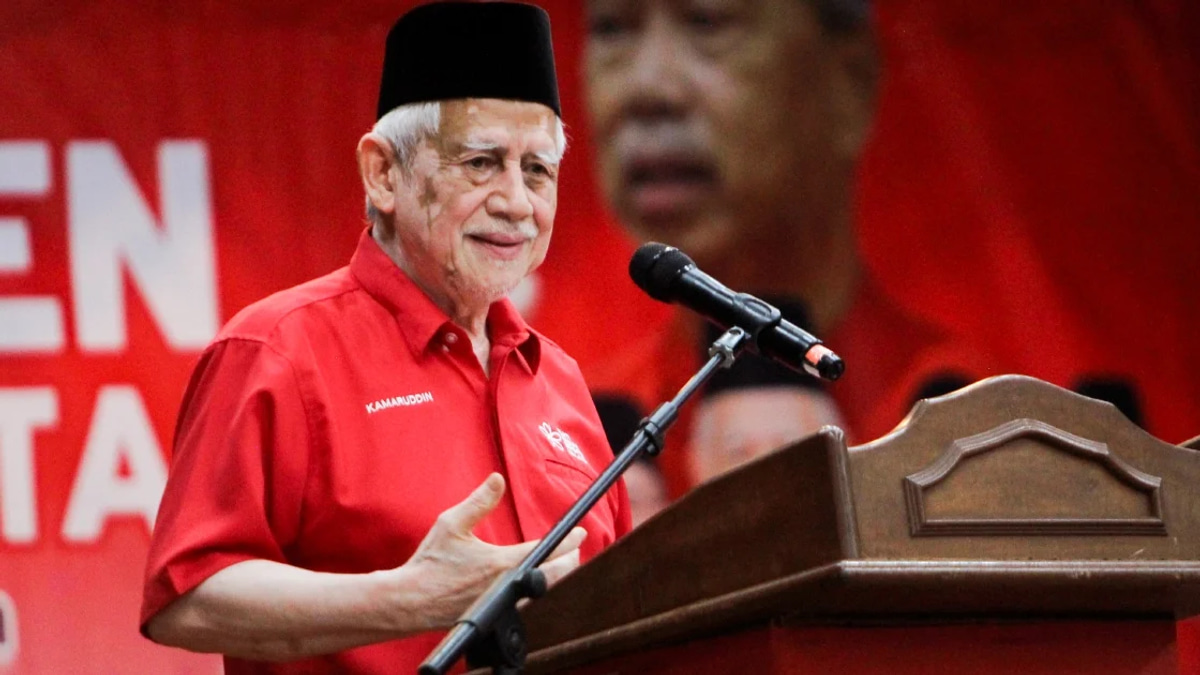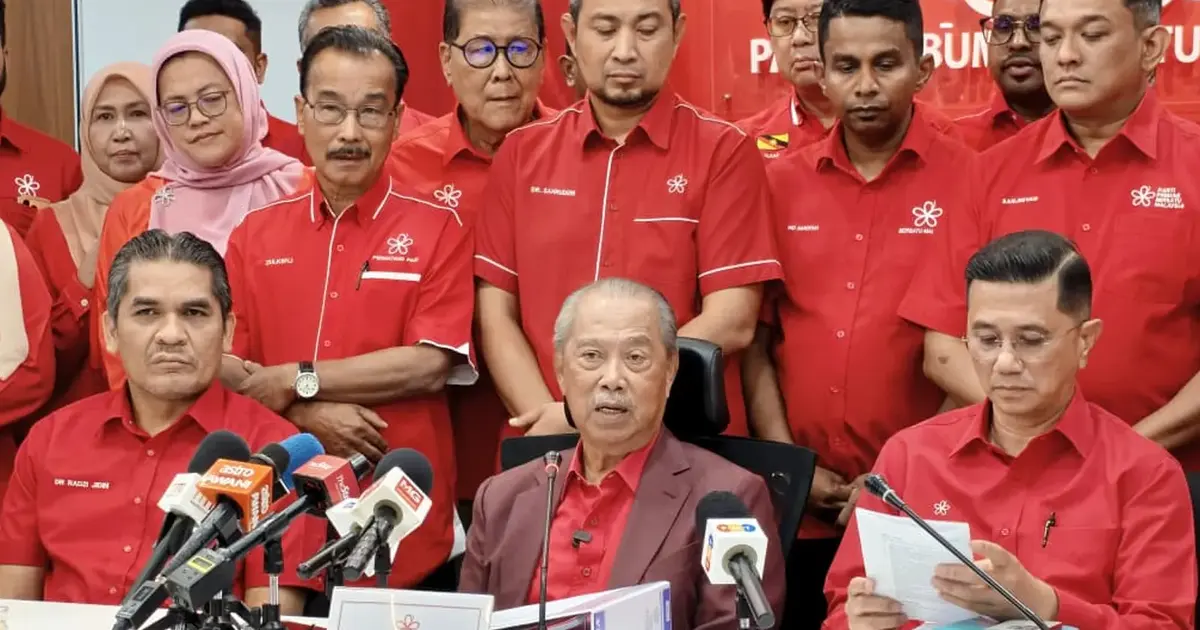
Bersatu's leadership has signalled its intention to maintain the party's membership within Perikatan Nasional, with president Muhyiddin Yassin anchoring the commitment to public sentiment and electoral positioning. The declaration underscores the Malaysian opposition coalition's efforts to project stability and unified direction as it navigates an increasingly competitive political landscape ahead of potential electoral contests.
Muhyiddin's statement reflects a strategic calculation that keeping Bersatu within the PN framework serves the party's long-term interests better than pursuing alternative alignments. The party, which emerged from a fractious split within UMNO and subsequently consolidated as a nationalist Malay-Muslim vehicle, faces inherent incentives to maintain coalition discipline and collective bargaining power. By remaining part of PN, Bersatu avoids political isolation while preserving its leverage within a broader opposition bloc that spans ideological and communal lines.
The public acceptance argument carries particular weight in Malaysian politics, where coalition stability often depends on grassroots perception of viability and coherence. Muhyiddin's framing suggests that PN polling or internal party surveys indicate voter receptivity to the coalition as currently constituted, a finding that would validate the coalition's structural choices and internal power-sharing arrangements. This emphasis on public validation represents a departure from purely internal factional dynamics and gestures instead toward claims of democratic legitimacy.
For Malaysia's opposition ecosystem, Bersatu's reaffirmation carries downstream consequences. The party functions as a bridge between traditional Malay-Muslim conservatism and multiethnic opposition politics, holding significant ground particularly in the Klang Valley and East Coast states. Its presence within PN moderates the coalition's overall ideological profile and broadens its electoral appeal beyond narrowly defined constituencies. Defection or withdrawal would fracture the opposition's geographic and demographic reach.
The statement also implies that internal cohesion within PN remains sufficiently intact to discourage member parties from contemplating exit strategies. Coalition politics in Malaysia frequently strain under the weight of seat negotiations, portfolio distribution, and conflicting provincial interests. That Bersatu chooses public recommitment rather than maintaining ambiguous silence suggests the party leadership perceives current arrangements as satisfactory relative to available alternatives. This contrasts with periods when PN components signalled dissatisfaction through measured distance and public complaints about marginalisation.
Bersatu's trajectory since its formation underscores why stability within PN matters to its strategic position. The party initially rode momentum from Muhyiddin's 2020 appointment as Prime Minister within the Sheraton Move realignment, only to lose federal office when PN fractured over PAS and Bersatu's decision-making regarding Umno engagement. Subsequent years brought electoral volatility, with the party's performance fluctuating across parliamentary and state contests. Remaining within PN provides institutional scaffolding and coalition resources that independent operation would deny.
The Malaysian electorate's receptivity to PN as a unified bloc remains contingent on several factors. Recent state-level results have yielded mixed returns, with the coalition registering strong showings in Terengganu and Kelantan but facing stronger Pakatan Harapan competition in urban and Selangor-centered constituencies. Public perception of PN's governing capacity and policy coherence continues to shape coalitional viability, particularly among younger voters and urban professionals less anchored to traditional party structures. Muhyiddin's emphasis on public acceptance implicitly acknowledges that coalitional longevity depends on demonstrated effectiveness beyond mere factional loyalty.
Regional political dynamics across Southeast Asia provide additional context for Malaysia's opposition coalitional strategy. Throughout the region, opposition blocs face inherent fragility arising from ideological diversity and personality-driven politics. Successful opposition coalitions, such as those that emerged in Indonesia and Thailand, typically required sustained commitment to avoiding defection cascades. Bersatu's public endorsement of PN membership contributes to signalling that Malaysia's opposition operates under similar discipline, though persistent structural weaknesses remain apparent to external observers.
The economic backdrop to Malaysia's political cycle also influences Bersatu's calculation regarding coalition membership. As cost-of-living pressures and currency volatility shape public sentiment, opposition coalitions face heightened expectations to articulate coherent policy responses. Remaining within PN allows Bersatu to participate in broader policy coordination while avoiding the isolation that would attach to independent status. The coalition framework theoretically enables more sophisticated policy messaging than individual parties could develop in isolation.
Muhyiddin's statement warrants interpretation alongside PN's broader positioning vis-à-vis Pakatan Harapan and Barisan Nasional, the three major power clusters in Malaysia's fragmented parliament. The opposition coalition's strategic vulnerability arises partially from Pakatan's internal tensions between DAP and Amanah over religious policy and Malay-centric politics, dynamics that theoretically create openings for PN capture of disaffected voters. Bersatu's commitment to PN suggests confidence that the coalition can exploit these vulnerabilities rather than attempting independent competition.
Looking forward, the durability of Bersatu's commitment will depend on whether PN continues delivering adequate electoral returns and participatory space to justify membership costs. Future state elections and eventual federal contests will test whether public acceptance, as Muhyiddin invokes it, translates into tangible seat gains and influence. Should PN experience significant electoral reversals, commitment statements become subject to revision and renegotiation, a pattern familiar across Malaysia's history of fluid coalition politics.