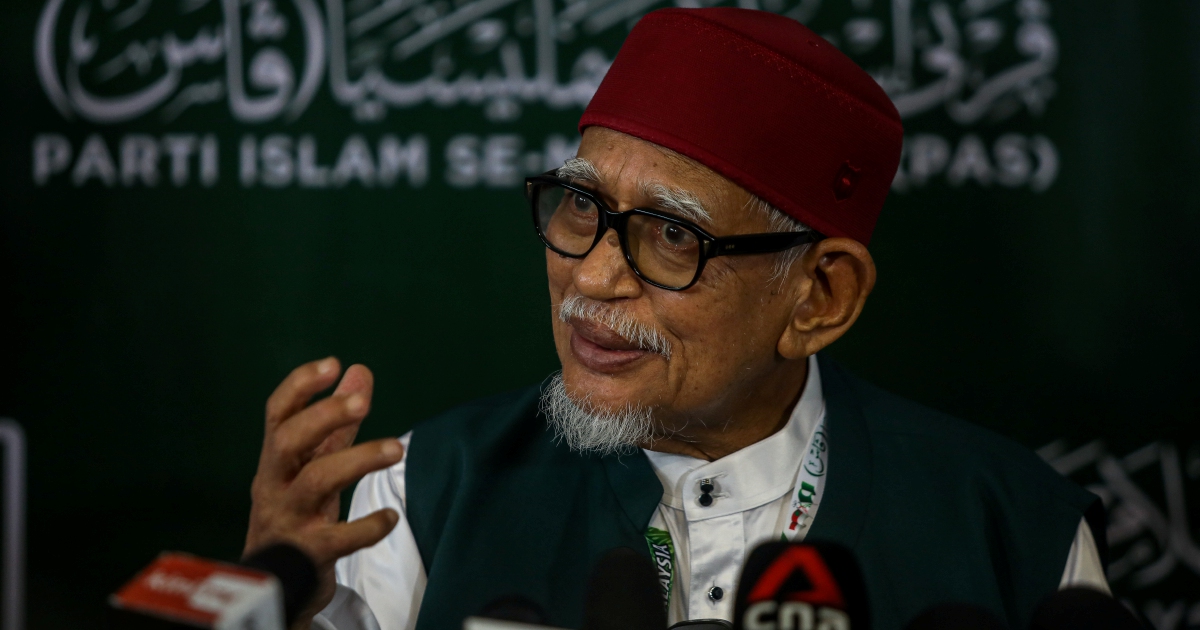
Bersatu's position within Perikatan Nasional has been automatically terminated, according to a statement from PAS president Tan Sri Abdul Hadi Awang, following Tan Sri Muhyiddin Yassin's public declaration that Bersatu would form a new political coalition. The revocation appears to have been triggered by Muhyiddin's announcement itself, which signalled the party's intention to pursue alternative political alliances rather than remain committed to the existing PN arrangement.
The development marks a significant rupture within Malaysia's opposition bloc, which has operated as a unified political force against the governing coalition in recent parliamentary sessions. Perikatan Nasional, which comprises PAS, Bersatu, and other partners, has functioned as a coordinated grouping since its formal establishment, though internal tensions have periodically threatened its cohesion. The automatic revocation mechanism suggests that the coalition agreement includes provisions allowing for the termination of membership when constituent parties publicly commit themselves to alternative arrangements.
Muhyiddin's announcement of a new coalition represents a pivotal strategic shift for Bersatu, which previously positioned itself as a core component of PN. The party has been navigating complex political dynamics as various coalition arrangements compete for influence within Malaysia's fractured parliamentary landscape. By signalling its intention to explore new alliances, Bersatu appears to be repositioning itself amid broader realignments in Malaysian politics, where coalition mathematics and strategic partnerships remain fluid and subject to rapid change.
The timing of this development carries particular significance for Malaysian politics, as it occurs against a backdrop of ongoing negotiations and manoeuvring among various political factions. The dissolution of Bersatu's formal membership suggests that the party leadership has made a deliberate choice to recalibrate its political positioning, potentially in response to evolving circumstances within the parliamentary sphere or shifting electoral calculations. Such moves have become increasingly common in Malaysian politics, where parties regularly reassess their coalition commitments based on changing political conditions.
For PAS, the departure of Bersatu fundamentally alters the composition of Perikatan Nasional. As the largest party within PN, PAS will need to reassess its strategic direction and determine whether PN continues as a viable political force or whether alternative arrangements might be necessary. The loss of Bersatu removes one of the coalition's more significant components, potentially affecting PN's collective parliamentary strength and its ability to function as a unified voting bloc.
Muhyiddin's move also raises questions about Bersatu's longer-term political trajectory and its relationship with other major parties. The party's decision to pursue a new coalition pathway suggests that its leadership has identified opportunities or constraints that make remaining within PN less attractive than exploring alternatives. This could involve discussions with other political actors who similarly occupy complex positions within Malaysia's multi-sided political competition.
The announcement has immediate practical implications for parliamentary operations and legislative negotiations. Bersatu's departure reduces PN's numerical strength, which could affect the coalition's influence over parliamentary proceedings and its ability to implement coordinated legislative strategies. Meanwhile, Bersatu's members will now operate as representatives of a party outside any formal coalition structure, at least temporarily, until new arrangements are formally established.
From a broader perspective, this development reflects the inherent instability within Malaysia's current political configuration, where no single coalition commands overwhelming parliamentary dominance and where individual parties retain substantial leverage to influence political outcomes. The fluidity of coalition membership demonstrates how Malaysian politics continues to operate on the basis of constantly negotiated relationships between parties, rather than stable, institutionalised arrangements. This dynamism creates both opportunities and risks for political actors seeking to advance their agendas.
Bersatu's departure also carries implications for voters and citizens attempting to understand and navigate Malaysia's complex political landscape. The frequent restructuring of coalitions and shifting party allegiances can create confusion regarding which parties represent which political directions and values. For ordinary Malaysians, such developments underscore the extent to which coalition politics remains driven by elite-level negotiations and strategic calculations rather than fundamental ideological realignments or programmatic differences.
Looking forward, the question of whether Muhyiddin's new coalition initiative will successfully attract significant political partners or parliamentary support remains uncertain. The success of such ventures depends on identifying parties with complementary strategic interests and securing sufficient numbers to constitute a meaningful parliamentary force. Bersatu's explicit commitment to this new pathway represents a calculated bet on its capacity to improve its political position through alternative arrangements.
The broader consequences of this rupture will likely extend beyond the immediate restructuring of coalition memberships. It signals that Malaysian politics remains in a state of significant realignment, with major political actors continuously reassessing their positions and seeking optimal strategic configurations. Whether this represents a step toward eventual political consolidation or further fragmentation remains to be determined by subsequent political developments and the electoral calculations of Malaysia's competing political actors.

