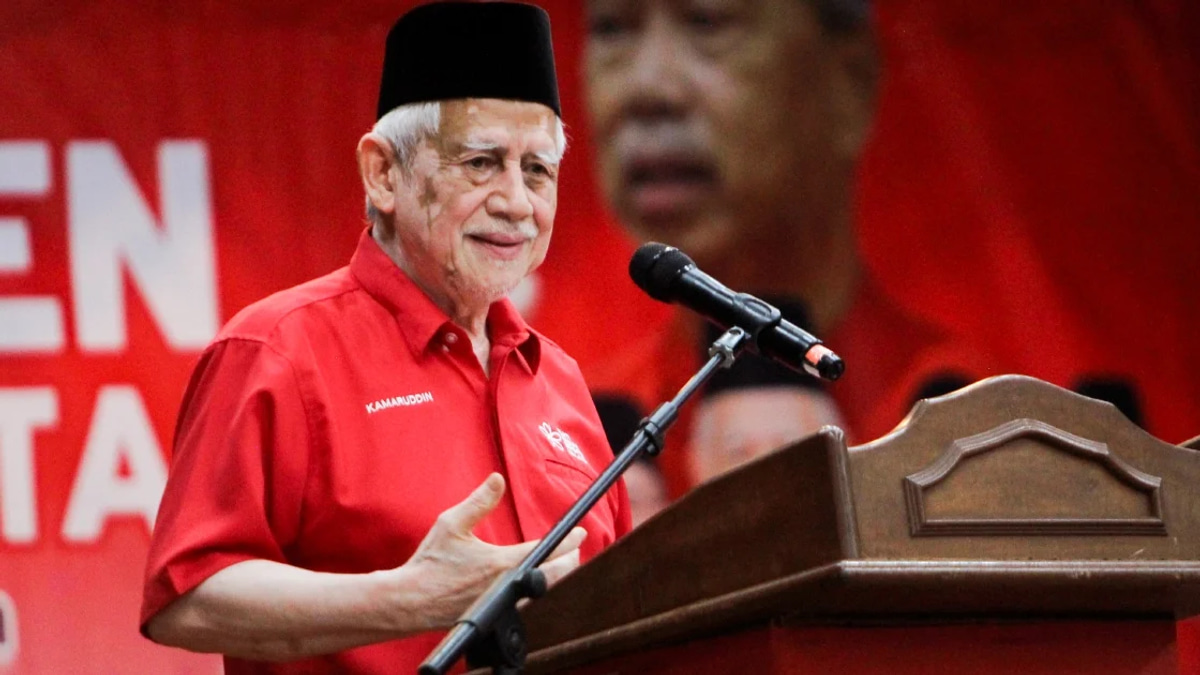
The stability of Bersatu has come under renewed scrutiny following stark assertions from Machang member of parliament Wan Ahmad Fayhsal Wan Ahmad Kamal, who warned that Malaysia's fourth-largest ruling coalition member faces an imminent structural collapse. The parliamentary representative attributed the party's deteriorating condition to what he characterised as inadequate leadership and poor management of deepening factional divisions within the organisation.
Wan Ahmad Fayhsal's intervention marks a significant escalation in public criticism of party management, suggesting that discontent within Bersatu's ranks extends beyond informal grumbling to formal parliamentary channels. His assessment that president Tan Sri Muhyiddin Yassin has demonstrated a failure to navigate party disputes with rational deliberation underscores the seriousness of institutional challenges facing the organisation. Such high-profile statements from within the ruling coalition often signal broader anxieties about governmental stability, particularly when directed at coalition members rather than opposition figures.
Bersatu emerged as a significant political force following its formation in 2016, attracting prominent defectors from the United Malays National Organisation (UMNO) and securing considerable Bumiputera support, particularly among Malay-Muslim voters. However, the party's trajectory has been marked by recurrent internal upheaval, including disputes over representation, policy direction, and resource allocation among competing factions. These structural tensions have persisted despite efforts by senior leadership to enforce party discipline and maintain organisational cohesion.
The current crisis bears implications for Malaysia's broader political architecture, particularly for the stability of Perikatan Nasional (PN), the coalition framework to which Bersatu belongs. Coalition governments in Malaysia depend on maintaining numerical parliamentary majorities and organisational discipline among member parties. If Bersatu's institutional integrity deteriorates significantly, the cascade effects could undermine confidence in the current federal administration and create uncertainties that complicate policy implementation across multiple sectors.
Muhyiddin Yassin's leadership has previously encountered challenges during Malaysia's complex post-2018 political transition, during which he navigated coalitions involving UMNO, the Pan-Malaysian Islamic Party (PAS), and other entities. His ability to maintain Bersatu as a functioning political unit despite repeated internal pressures has been tested repeatedly. The emergence of formalised critiques such as Wan Ahmad Fayhsal's comments suggests that internal patience with the current management approach may be approaching critical thresholds.
Internal party conflicts in Malaysian politics frequently stem from competition for ministerial positions, state-level influence, and resource distribution mechanisms. Bersatu's structure involves both federal and state-level operations, and disparities in resource allocation or perceived unfairness in position distribution can amplify factional tensions. The party's relatively smaller size compared to UMNO or PAS means that senior appointments become particularly contested, as fewer positions exist to accommodate aspiring members seeking advancement.
For observers of Southeast Asian politics, Malaysian coalition dynamics offer instructive examples of how multi-party systems managed proportional representation must balance competing interests. Bersatu's predicament illustrates the structural vulnerabilities of younger political organisations attempting to establish themselves within crowded political marketplaces. The party must simultaneously maintain internal cohesion, compete for voter support, and preserve coalition partnerships—demanding organisational competence across multiple registers.
The implications for regional politics should not be underestimated. Malaysia's government substantially influences regional economic policy, ASEAN consensus positions, and diplomatic engagement across Southeast Asia. Political instability at the federal level creates uncertainties that extend beyond domestic boundaries, potentially complicating Malaysia's participation in regional initiatives and frameworks.
Wan Ahmad Fayhsal's public criticism carries additional significance because parliamentary members typically exercise caution regarding public critiques of coalition partners, preferring internal resolution mechanisms. The resort to parliamentary channels suggests that conventional internal dispute resolution pathways may have become exhausted or prove inadequate to address accumulated grievances. This escalation pattern frequently precedes either significant organisational restructuring or, in more severe cases, institutional fragmentation.
The trajectory of Bersatu over the coming months will likely shape not merely the party's future but also broader governmental stability and coalition relationships. Whether Muhyiddin Yassin can implement corrective measures sufficient to arrest the party's apparent institutional deterioration remains uncertain. The organisation faces a critical juncture requiring substantive reforms addressing the systemic sources of internal conflict rather than symptomatic interventions addressing surface-level disputes.
Bersatu's experience underscores broader patterns within Malaysian politics regarding the sustainability of coalition arrangements and the organisational challenges confronting political parties navigating competitive environments. As the situation develops, stakeholders across Malaysia's political landscape will closely monitor whether the party successfully implements stabilising measures or whether institutional collapse proceeds as Wan Ahmad Fayhsal's assessment suggests.