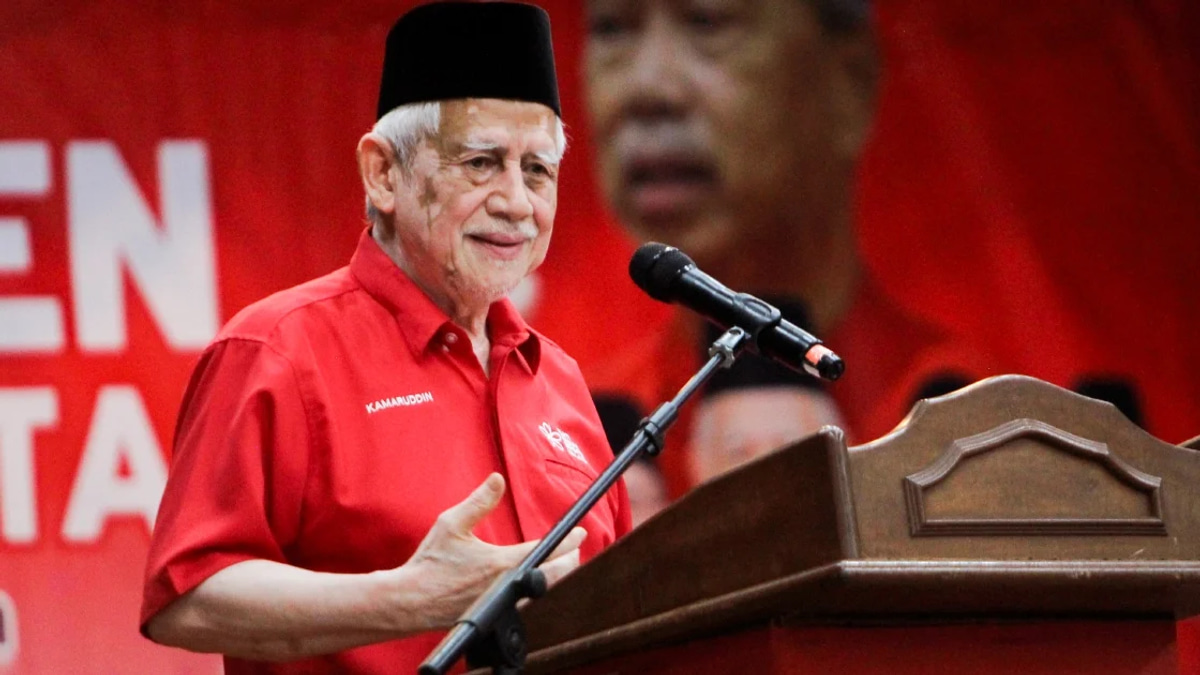
Perikatan Nasional has made significant personnel changes within its Bersatu contingent, relieving prominent figures Azmin Ali and Radzi Jidin of their positions ahead of crucial state-level contests. Ahmad Samsuri Mokhtar, the coalition's chairman, attributed the reshuffle to the coalition's need to strengthen its positioning as Johor and Negeri Sembilan prepare for state elections, signalling an attempt to energise the political coalition's ground operations.
The timing of this manoeuvre carries considerable significance for Malaysian politics. Rather than appearing reactive to performance shortcomings, Perikatan Nasional frames the changes as proactive strategic decisions designed to enhance electoral competitiveness in two states where the coalition seeks to consolidate or expand its influence. The removal of Azmin Ali and Radzi Jidin suggests that party strategists identified specific gaps in their leadership structure that required recalibration before campaigning intensifies.
Azmin Ali, a Bersatu stalwart with a political history spanning multiple parties and coalitions, has occupied important positions within both the party and broader political movements. His repositioning within the coalition hierarchy reflects evolving power dynamics and possibly reassessments of how effectively his current role translates into electoral gains. Similarly, Radzi Jidin's departure from his responsibilities indicates that the coalition views fresh approaches and different personnel arrangements as necessary to mobilise voters in these competitive battlegrounds.
State elections in Johor and Negeri Sembilan represent critical tests for Perikatan Nasional's viability as a governing force. Both states have experienced political volatility in recent years, with electoral fortunes swinging between competing coalitions. The composition and effectiveness of leadership teams directly influences campaign messaging, ground-level coordination, and ultimately voter turnout and persuasion. By restructuring its internal command structure now, the coalition appears determined to avoid complacency and signal dynamism to party members and supporters.
Within Bersatu specifically, these changes carry implications for internal factional balances. The party has navigated competing interests and personalities since its formation, and leadership adjustments often reflect subtle shifts in influence among different power centres. The removal of two prominent members may indicate that other factions within Bersatu have gained ascendancy, or alternatively, that Ahmad Samsuri Mokhtar and the party leadership have consolidated tighter control over strategic direction. Understanding these internal mechanics proves essential for observers tracking Perikatan Nasional's stability and cohesion.
For Malaysian readers following coalition politics, these developments underscore the intensely competitive nature of contemporary electoral contests. Perikatan Nasional's willingness to make high-profile changes demonstrates that political leadership remains determined to prove its relevance and capability to govern effectively. Conversely, such reshuffles may also trigger questions among party loyalists about the reliability of institutional structures and the job security of those serving in various capacities within coalition hierarchies.
The broader regional context matters as well. Malaysia's multiparty system and coalition-based governance require constant negotiation, compromise, and organisational flexibility. Perikatan Nasional's restructuring reflects patterns visible across other political coalitions, where state elections frequently trigger internal recalibrations designed to optimise electoral performance. Southeast Asian politics generally demonstrates that parties treat sub-national contests as crucial proving grounds for national ambitions, investing substantial organisational effort and strategic attention in campaigns at the state or provincial level.
Looking ahead, the effectiveness of these leadership changes will become evident during campaigning in Johor and Negeri Sembilan. Voters, party workers, and political analysts will assess whether the new arrangements translate into improved coordination, sharper messaging, and stronger electoral performance compared to previous contests. Should the coalition perform well, the restructuring will be viewed as a shrewd calculation; conversely, disappointing results may prompt further changes or intensify internal criticism about the soundness of these decisions.
Azmin Ali and Radzi Jidin's repositioning also reflects broader questions about career trajectories in Malaysian politics, where ministerial and leadership appointments can shift considerably based on electoral cycles, coalition dynamics, and internal party politics. Both individuals retain their standing within Bersatu, but their move away from specific roles suggests that the party leadership evaluated the comparative advantages of deploying them elsewhere within the organisational structure. How they adapt to their new circumstances and whether they re-emerge in prominent positions during subsequent political developments remain questions that Malaysian political observers will monitor closely in coming months.
The coalition's focus on these two state elections highlights how even as national politics continues to evolve, state-level contests retain outsized importance for political parties seeking to maintain relevance and demonstrate capability. For Perikatan Nasional, the coming electoral contests in Johor and Negeri Sembilan represent opportunities to validate its strategic choices and reinforce its position within Malaysia's competitive political landscape. Ahmad Samsuri Mokhtar's public articulation of the reasoning behind these changes attempts to frame internal restructuring as disciplined, forward-thinking management rather than crisis response or leadership instability.