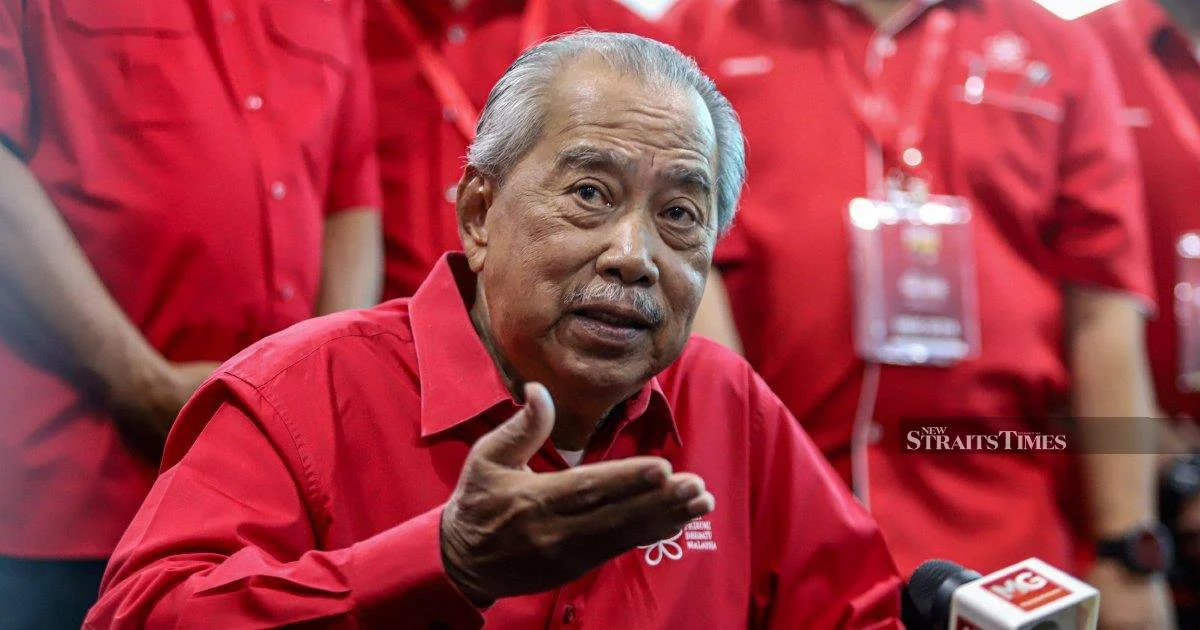
Tan Sri Muhyiddin Yassin, president of Bersatu, has moved to quash persistent rumours about his party's political future by declaring that the party will maintain its alliance within the Perikatan Nasional coalition indefinitely. His statement comes at a time when Malaysian political observers have grown increasingly attentive to the stability and long-term viability of PN, which has emerged as a significant counterweight to the federal government since its formation.
Muhyiddin's declaration represents an attempt to provide clarity on one of the most sensitive questions in current Malaysian politics: whether the coalition partners will remain bound together or seek new political arrangements. Such speculation has dogged PN since its inception, with analysts regularly questioning whether ideological differences and competing ambitions might eventually drive a wedge between its constituent parties. By stating unequivocally that Bersatu will remain "forever," the party president is sending a signal of confidence to his supporters and attempting to reassure coalition partners of his party's stability.
The Perikatan Nasional coalition comprises multiple parties with varying interests and constituencies. Bersatu, founded by Muhyiddin himself, occupies a crucial position within this bloc, particularly given the party's ability to mobilise support in several strategic constituencies. The party's commitment to PN therefore carries substantial weight in determining the coalition's internal cohesion and external political viability. Muhyiddin's assertion suggests that Bersatu views its future as intrinsically linked to PN's fortunes.
Speculation about coalition stability often reflects broader uncertainties within Malaysia's political landscape. Since the 2022 general election, Malaysian politics has been characterised by shifting alignments, negotiations between competing blocs, and periodic reshuffling of alliances. In this environment, public reassurances about coalition durability serve an important function, both in maintaining party discipline and in projecting an image of political solidity to voters who may harbour doubts about the sustainability of rival arrangements.
For Bersatu specifically, anchoring itself to PN offers several advantages. The coalition provides a platform for the party to exercise influence at both federal and state levels, and potentially to contest general elections as part of a broader alliance rather than facing the electoral disadvantages of standing alone. Muhyiddin's track record as a former prime minister and his political experience give him credibility when making such pronouncements, lending weight to his assurances that the party's trajectory is settled.
However, the very need to make such declarations suggests that concerns about PN's future persist within political circles and among the Malaysian public. Coalition governments inherently face pressure from partner parties seeking to maximise their own returns and influence, and PN is no exception. That Muhyiddin felt compelled to state categorically that Bersatu will remain in PN "forever" indicates that these pressures are felt keenly, even if publicly both he and other PN leaders project confidence.
The timing and context of such announcements matter in Malaysian politics. Public statements about coalition commitment often serve as anchors that subsequent party leadership and members are expected to honour, creating a form of political accountability. By making this pledge, Muhyiddin has arguably constrained his own party's future options and those of potential successors, cementing Bersatu's direction for years to come.
For the broader political ecosystem, Bersatu's confirmed commitment to PN affects calculations about the balance of power at national level. The coalition's strength rests partly on the durability of its constituent partnerships. Any perception of weakness or imminent fragmentation could embolden rival coalitions or encourage defections. Conversely, public reaffirmations of commitment bolster PN's credibility as a governing alternative and reinforce party members' investment in the alliance.
Malaysian voters observing these political machinations may view Muhyiddin's statement as either reassuring or symptomatic of deeper instability that requires constant verbal reinforcement. The relationship between political pronouncements and actual party behaviour has always been complex in Malaysia, where defections, party-hopping, and realignments have occasionally surprised observers despite prior public assurances. Nevertheless, such statements remain important signalling devices within Malaysia's political communications.
Looking forward, Bersatu's entrenchment within PN will shape the trajectory of Malaysian opposition politics and electoral competition. If Bersatu remains steadfast in this commitment and other PN partners reciprocate with similar pledges, the coalition could develop into a more institutionalised force capable of providing sustained checks on federal government power. Alternatively, if underlying tensions or competitive pressures eventually force reconsideration of current alignments, Muhyiddin's emphatic declaration will stand as a memorable moment of professed certainty that circumstances later contradicted.
The statement ultimately reflects Muhyiddin's assessment that Bersatu's interests are best served through sustained participation in PN. Whether this strategic calculation remains valid across multiple election cycles and political scenarios remains to be seen, but his public commitment has now raised the political costs of any future departure, at least in terms of explaining reversals to both party members and the Malaysian electorate.

%22%2F%3E%3C%2Fpattern%3E%3C%2Fdefs%3E%3Crect%20width%3D%22100%25%22%20height%3D%22100%25%22%20fill%3D%22url(%23phxmxkg)%22%2F%3E%3Crect%20width%3D%22100%25%22%20height%3D%22100%25%22%20fill%3D%22url(%23phxmxkp)%22%2F%3E%3Ctext%20x%3D%2250%25%22%20y%3D%2250%25%22%20text-anchor%3D%22middle%22%20dominant-baseline%3D%22central%22%20fill%3D%22rgba(255%2C255%2C255%2C0.95)%22%20font-family%3D%22Georgia%2C%20'Times%20New%20Roman'%2C%20serif%22%20font-weight%3D%22700%22%20font-size%3D%22194%22%20letter-spacing%3D%22-0.02em%22%3ESarawak%3C%2Ftext%3E%3C%2Fsvg%3E)