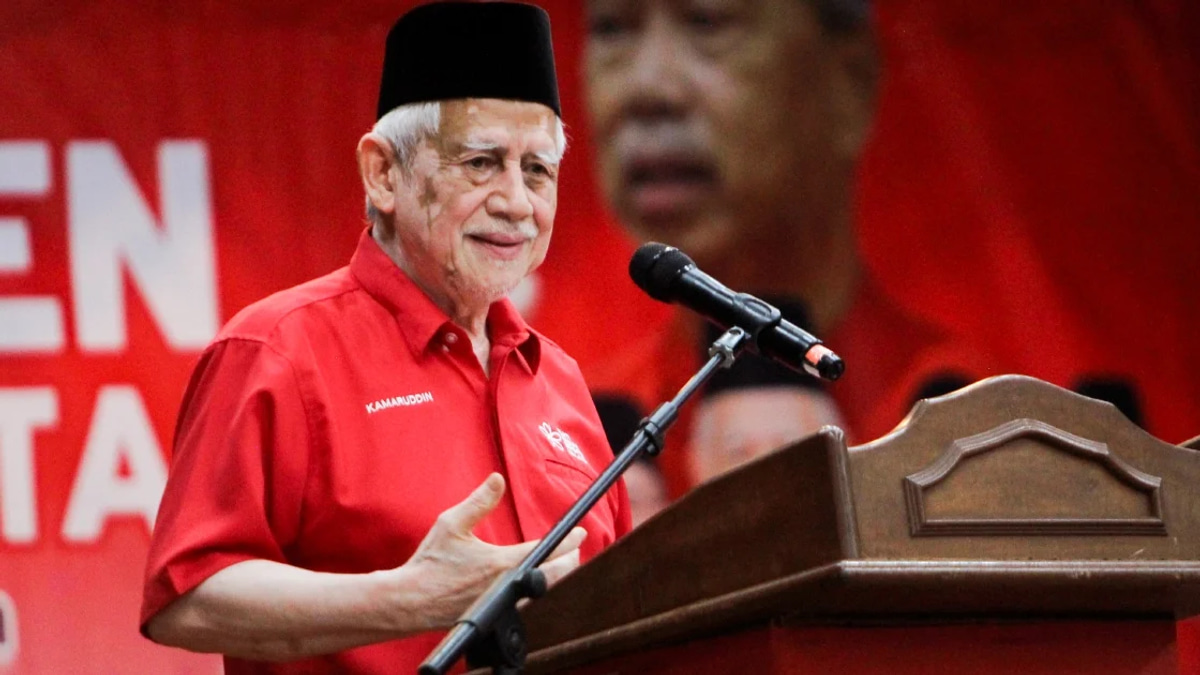
Bersatu will maintain its position within the Perikatan Nasional coalition and contest upcoming state elections under the PN banner, party president Tan Sri Muhyiddin Yassin announced on June 16. The decision comes at a critical juncture for the opposition alliance, which has faced mounting pressures and defections in recent months. Speaking after a Supreme Leadership Council meeting at Bersatu headquarters in Petaling Jaya, Muhyiddin underscored the party's determination to remain a stalwart member of the PN framework, signalling stability within the coalition even as internal discord threatens its cohesion.
The PN logo will feature on Bersatu's ballots in both the Johor state election scheduled for July 11 and the Negeri Sembilan election slated for August 1. This unified branding represents a strategic decision to present a consolidated opposition front to voters in these two economically significant states. Johor, in particular, holds immense political weight as Malaysia's second-largest state by population and a traditional stronghold of electoral competition. Negeri Sembilan, meanwhile, has emerged as a closely contested arena where the margin between ruling and opposition coalitions has narrowed considerably in recent election cycles.
Muhyiddin's statement carries particular significance given the fraught backdrop against which it was delivered. The Bersatu president stressed that no single party within PN possesses the unilateral authority to expel another member, a clear reference to PAS's recent decision to sever ties with Bersatu. This assertion of constitutional protections within the coalition suggests that Bersatu views its membership as contractually secure, even as political temperatures rise. By invoking procedural safeguards and consensus-building mechanisms, Muhyiddin attempted to project confidence in the coalition's institutional resilience, though such rhetoric often masks underlying fragility in opposition alliances.
The timing of Bersatu's reaffirmation is calculated to preempt further defections and demonstrate resolve to party members and sympathetic voters. In Malaysian politics, coalition stability—or the appearance thereof—directly influences voter confidence and campaign momentum. When opposition pacts fragment, even marginally, it creates opportunities for the ruling coalition to exploit divisions and depress turnout among opposition supporters who fear wasted votes. Bersatu's explicit commitment to PN thus serves both an internal morale function and an external messaging purpose, intended to reassure the electorate that the opposition remains unified despite turbulence.
The presence of key party figures at the meeting underscored the significance of the decision. Bersatu vice-presidents Datuk Dr Radzi Jidin and Datuk Seri Ahmad Faizal Azumu, together with secretary-general Datuk Seri Mohamed Azmin Ali, conveyed the top echelon's consensus on maintaining PN membership. These leaders represent geographical and demographic diversity within Bersatu's power structure, suggesting that the commitment to PN transcends factional boundaries within the party itself. Such unity at the leadership level, when communicated publicly, can help stabilise activist and grassroots sentiment, which often proves more volatile than elite opinion.
PAS's earlier announcement that it had terminated political cooperation with Bersatu fundamentally altered the PN landscape. The departure of PAS, an Islamist party with substantial organisational capacity and grassroots networks, weakens PN's electoral machinery and geographic reach. PAS controls significant party machinery in several states, and the loss of this capacity represents a tangible setback for the coalition's electoral prospects. Muhyiddin's insistence that Bersatu will remain in PN thus takes on added poignancy, as it demonstrates a commitment to coalition unity precisely when such unity is most tested and most precarious.
The constitutional argument Muhyiddin invoked—that consensus and adherence to formal procedures are requisite for expulsion—reflects the reality that opposition coalitions in Malaysia often lack the informal cohesion that characterises the ruling Barisan Nasional's traditional dominance. Where Barisan operated for decades as a hegemonic structure with clearly subordinate partners, PN emerged as a more equitable alliance of parties with comparable resource bases and political legitimacy. This structural difference makes PN simultaneously more democratic and more fragile, prone to exits when parties calculate that going it alone serves their interests.
For Malaysian voters and regional observers, Bersatu's continued presence in PN matters for understanding the opposition's competitive viability in the medium term. Bersatu brings its own electoral base, particularly among Malay-Muslim voters and in states like Pahang and Terengganu where it has meaningful ground presence. The party's departure from PN would further fragment opposition politics, potentially enabling the ruling coalition to consolidate support across multiple constituencies simultaneously. Conversely, PN's ability to retain Bersatu suggests that the coalition, despite chronic tensions, continues to perceive mutual advantage in collective action over individual maximisation.
The Johor and Negeri Sembilan elections will serve as a referendum on PN's electoral viability under its current composition. These contests occur at a moment when opposition politics across Southeast Asia faces reassessment, as populist and Islamist movements grapple with maintaining coalition discipline while addressing core supporters' demands for ideological coherence. How Bersatu and its remaining PN partners perform in these elections will shape perceptions of opposition capacity heading toward the next general election, currently due by 2027 but potentially callable earlier depending on political circumstances.
Muhyiddin's public commitment to PN also reflects pragmatic calculation regarding Bersatu's electoral prospects in isolation. A Bersatu breakaway would likely marginalise the party in a fragmented opposition landscape where voters gravitate toward larger blocs perceived as capable of assuming government. By remaining in PN and maintaining coalition discipline, Bersatu preserves credibility as a kingmaker and coalition partner, a status that translates into negotiating leverage for ministerial positions and policy influence should opposition coalitions ultimately prevail. This strategic logic underpins elite coalition maintenance across Malaysian politics, transcending ideological boundaries.