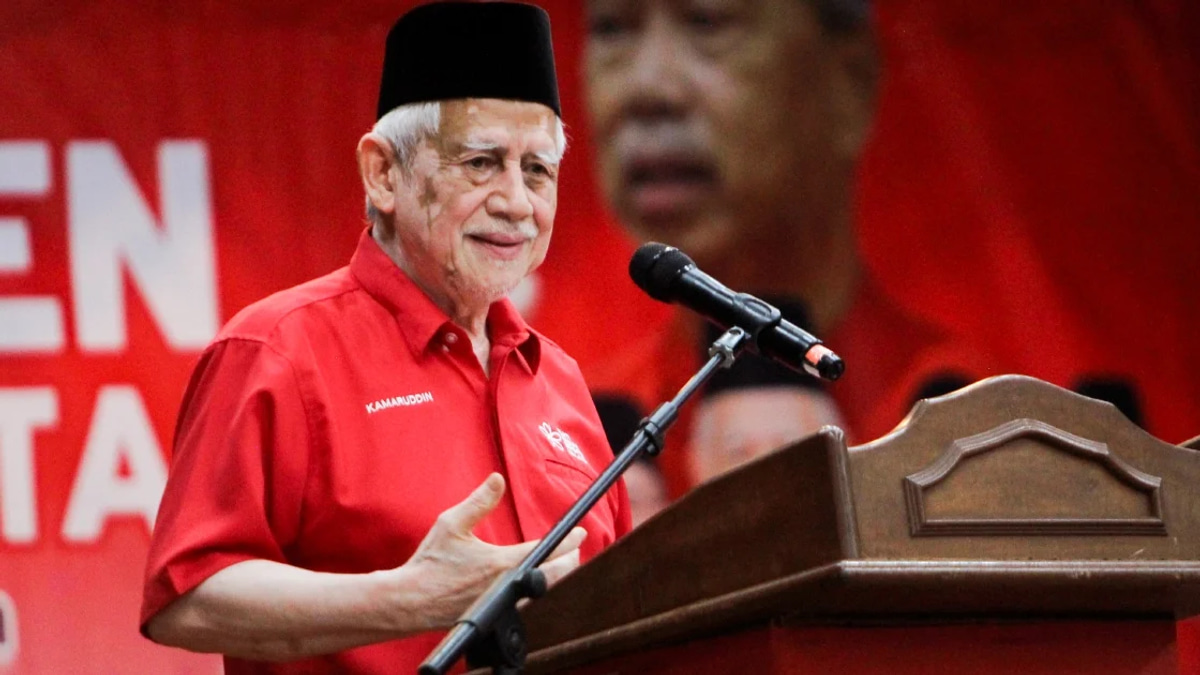
The unity within Perikatan Nasional faces fresh strain as Bersatu's deputy leadership openly questions the coalition's readiness to engage on Johor's electoral prospects. The party's vice-president has directed sharp criticism at PN chairman Ahmad Samsuri Mokhtar, accusing him of neglecting to convene any substantive meeting to coordinate the bloc's response to forthcoming state polls. This public rebuke represents an unusual degree of tension within the traditionally aligned opposition coalition, suggesting underlying impatience with the pace of decision-making at the highest levels.
Bersatu's frustration appears rooted in a practical concern: the party feels constrained by waiting for consensus across PN's membership, particularly given PAS's sometimes methodical approach to strategic decisions. The vice-president's remarks indicate that Bersatu leadership believes the coalition cannot afford to delay its own preparations while seeking alignment from all parties, especially when electoral timelines demand swift action. This suggests the party is preparing contingency plans that may not require formal PN blessing, a significant departure from the bloc's earlier emphasis on presenting a unified front.
The criticism of Ahmad Samsuri Mokhtar is particularly noteworthy given his formal position as PN chairman. His apparent inaction on convening coalition-level discussions signals either bandwidth constraints or perhaps insufficient priority assigned to Johor's electoral contest at the highest strategic level. For a coalition that positions itself as a cohesive alternative to the ruling government, such lapses in coordination can undermine the credibility of its operational capabilities and suggest internal friction over electoral priorities.
Johor's electoral significance extends beyond routine state politics. As Malaysia's second-largest state by population and a critical economic hub, control of Johor's state government carries substantial national ramifications. Any fragmentation of PN's approach to the state election could prove costly, potentially allowing competing blocs to consolidate support more effectively. This context makes Bersatu's willingness to move independently particularly consequential for PN's broader strategic position.
The party's readiness to proceed without formal coalition coordination also reflects deeper questions about PN's decision-making structures and how much autonomy individual members actually retain. Bersatu's confidence in striking out independently suggests the party believes it possesses sufficient electoral machinery and grassroots support in Johor to contest effectively without PN's formal backing. This calculation may reflect Bersatu's recent organisational strengthening or confidence in particular local leaders and candidates.
From a Malaysian political perspective, this development highlights the inherent fragility of opposition coalitions constructed primarily around shared opposition to the ruling Pakatan Harapan government rather than common ideological ground or long-term strategic vision. PN comprises parties with distinct electoral bases, organisational structures, and policy orientations, making consensus-building perpetually challenging. When external pressure or electoral urgency mounts, these coalitions often reveal structural weaknesses that formal unity statements cannot conceal.
Bersatu's potential independent electoral manoeuvre in Johor could have ripple effects across other states where PN is active. If the party demonstrates success by pursuing its own strategy in Johor without formal coalition coordination, other PN members might pursue similar approaches in their respective strongholds. This could gradually hollow out the practical meaning of PN membership, converting it into a loose electoral understanding rather than a functioning coalition with shared strategy.
The timing of this public dispute also matters. Electoral campaigns demand momentum and decisive messaging; extended periods of internal wrangling undermine both. By making his criticisms public rather than raising them privately, Bersatu's vice-president appears to be escalating pressure on PN leadership to either accelerate coalition-level decision-making or explicitly grant member parties autonomy to pursue electoral strategies independently. This is a calculated move designed to force a resolution of the underlying coordination problem.
For Malaysian voters observing opposition politics, these internal divisions raise questions about PN's capacity to govern effectively should it achieve power. A coalition struggling to coordinate electoral strategy during relatively benign circumstances might face far greater challenges managing cabinet-level disagreements and policy coordination under the pressures of government. Coherent governance requires precisely the kind of coordination mechanisms that PN appears to lack on critical issues like major state elections.
Bersatu's position also reflects shifting calculations about the electoral landscape. If the party believes Johor remains competitive or winnable through its independent efforts, waiting for comprehensive coalition alignment may represent unnecessary delay. Conversely, if Bersatu doubts PAS's capacity to deliver electoral support or worries that PN coordination might subordinate Bersatu's interests to larger partners' preferences, moving independently becomes strategically rational even if it fragments the coalition.
The absence of high-level coalition meetings on a significant electoral contest underscores how Malaysian opposition politics remains dominated by tactical positioning rather than strategic coherence. Rather than developing comprehensive national platforms or long-term governance agendas, opposition coalitions often operate in crisis mode, responding reactively to developments rather than proactively shaping political outcomes. This reactive posture weakens opposition credibility and allows governing coalitions to maintain initiative.
Looking forward, how PN chairman Ahmad Samsuri Mokhtar responds to Bersatu's public criticism will reveal much about the coalition's future trajectory. An energetic effort to convene coalition meetings and forge consensus could stabilise PN and potentially strengthen its Johor positioning. Alternatively, if PN leadership accepts Bersatu's independent approach, it signals a significant shift toward confederal rather than coalitional arrangements, with profound implications for opposition competitiveness across multiple state elections.