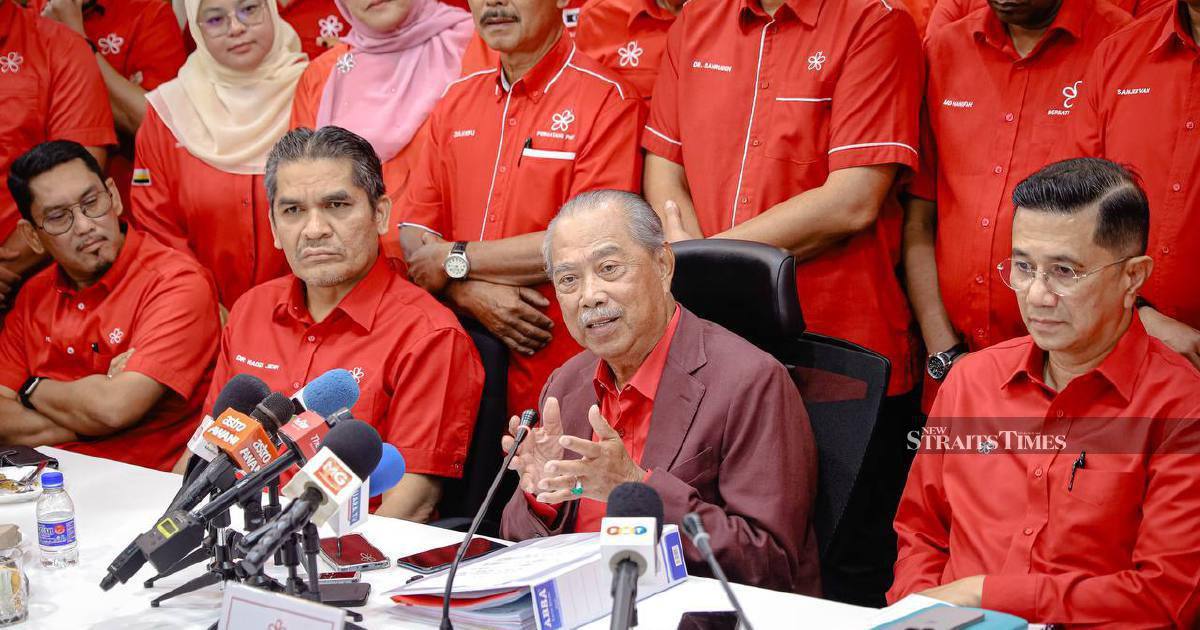
Bersatu has signalled its willingness to engage in direct electoral competition with Pas in the upcoming Johor state election should negotiations over seat allocation between the two parties prove unsuccessful. The statement from party president Tan Sri Muhyiddin Yassin reflects growing tensions within Malay-Muslim political coalitions ahead of state-level polls, suggesting that unity arrangements traditionally observed during elections may be fraying under pressure from conflicting political ambitions.
The declaration underscores a significant shift in the political landscape of Johor, historically dominated by the Barisan Nasional coalition but increasingly contested by opposition groupings. Bersatu's position as a party bridging federal government alignment with significant grassroots Malay support has placed it in a delicate position, requiring simultaneous management of coalition partnerships while maintaining its independent political standing. The party's readiness to contest directly against Pas signals confidence in its organisational capacity and electoral appeal within the state.
Pas has emerged as an increasingly formidable political force, particularly among rural and semi-urban Malay constituencies across peninsular Malaysia. The party's consolidation of the conservative Islamic vote and expansion into traditionally non-Islamist strongholds has created competition for the same voter demographics that both Bersatu and other Malay-centric parties seek to mobilise. This demographic overlap makes seat-sharing negotiations contentious, as neither party wishes to concede constituencies where their respective bases hold genuine electoral potential.
The broader context involves the complex architecture of Malaysian federal politics, where state-level elections reflect but do not entirely mirror national coalition arrangements. Bersatu joined the ruling Perikatan Nasional federal coalition alongside Pas and several other partners, yet the relationship remains transactional rather than ideologically unified. At the state level, parties often prioritise local political interests and historical grievances over federal alliance considerations, leading to frequent tensions when seat negotiations commence.
Johor's political significance extends beyond its substantial parliamentary representation. As Malaysia's second-largest state by population and a traditionally affluent economic zone, Johor's electoral outcome carries implications for federal political calculations. A strong Pas performance in Johor would amplify the party's claims for ministerial portfolios and policy influence at the national level. Conversely, a successful Bersatu showing would strengthen Muhyiddin's position within the Perikatan coalition and demonstrate organisational competence ahead of potential general elections.
The mechanics of Malaysian electoral politics mean that vote-splitting between ideologically similar parties often determines electoral outcomes. Constituencies where Bersatu and Pas field separate candidates risk splitting Malay-Muslim votes, potentially allowing opposition coalition candidates from Pakatan Harapan to secure victories with plurality rather than majority support. This electoral mathematics has historically incentivised seat-sharing arrangements, yet mounting personal animosities and strategic miscalculations frequently disrupt these agreements at the last moment.
Muhyiddin's statement likely reflects internal Bersatu discussions regarding acceptable seat numbers in any negotiated settlement. By publicly asserting readiness to contest directly, the party president signals to his party machinery that negotiations should not yield excessively to Pas demands. Such positioning strengthens Muhyiddin's hand during private coalition discussions, establishing boundaries beyond which Bersatu will choose electoral competition over compromise. This represents calculated posturing rather than definite electoral strategy.
Regional observers note that Johor occupies particular strategic importance for Bersatu given its geographical proximity to federal territories and its concentration of urban and semi-urban constituencies where the party has developed organisational presence. Unlike some other states where Bersatu maintains minimal infrastructure, Johor represents territory where the party has invested in membership development and candidate cultivation. This ground-level presence provides genuine electoral competitiveness that lends credibility to Muhyiddin's assertions.
The timing of Bersatu's public statements carries significance within Malaysia's political calendar. Electoral Commission announcements regarding state election schedules typically occur several months before actual polling dates, providing negotiating space for coalition partners to reach accommodation. By staking out strong initial positions, Bersatu positions itself for better final arrangements than might otherwise result from quiet negotiations conducted without public pressure and factional leverage.
Past Johor electoral history demonstrates that even fragmented Malay opposition voting has occasionally produced surprising results, particularly in semi-urban constituencies experiencing rapid demographic change. Younger voters, urban professionals, and constituencies experiencing economic strain have shown receptiveness to alternative political options beyond traditional Barisan Nasional dominance. Both Bersatu and Pas recognise this opening, explaining their reluctance to cede potentially winnable seats through unfavourable seat-sharing formulae.
For Malaysian voters and political observers, this situation exemplifies recurring patterns within competitive electoral democracies where coalition stability constantly faces pressure from competitive ambitions among constituent parties. Bersatu's stated preparedness for direct competition against Pas reflects rational political behaviour given the incentive structures facing political parties in state-level contests. The actual election outcome in Johor will ultimately depend on whether coalition partners successfully navigate these tensions or whether public brinkmanship gives way to genuine electoral contest.