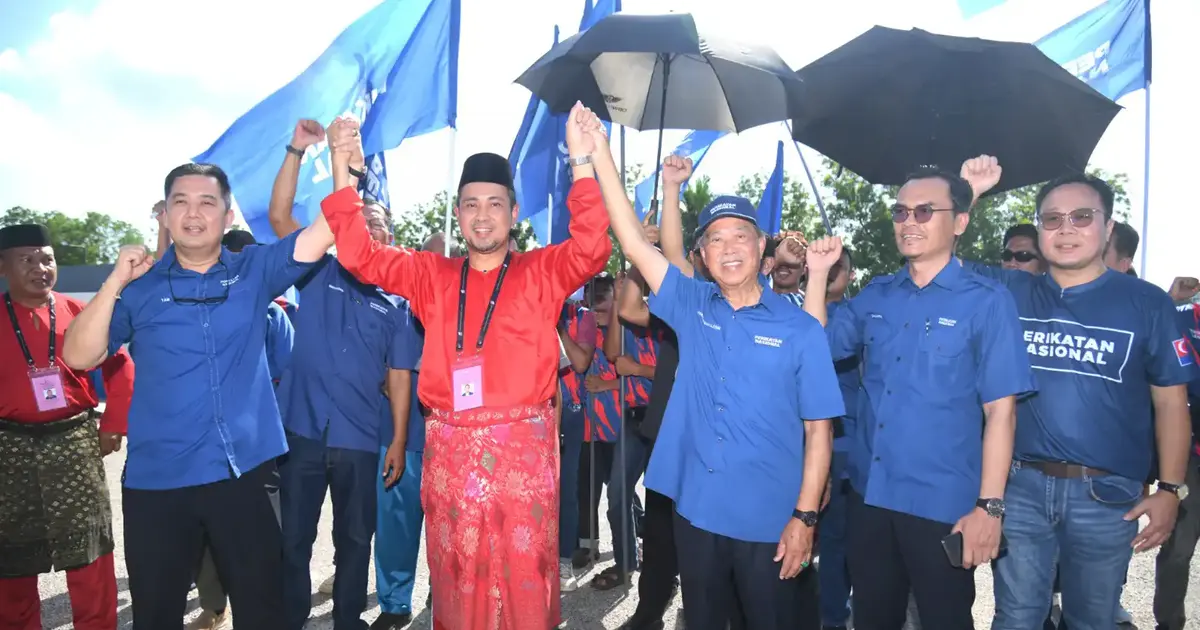
The president of Bersatu has signalled his party's equanimity following PAS's decision to withhold its organisational resources and campaign machinery, framing the development as consistent with the coalition's foundational values rather than a departure from them. Muhyiddin Yassin's measured response underscores the delicate balance required to maintain Perikatan Nasional's cohesion amid mounting tensions between its component parties, particularly as electoral pressures intensify and strategic interests diverge.
Muhyiddin's stance reflects a pragmatic recognition that despite the formal alliance binding Bersatu and PAS under the Perikatan Nasional banner, each party retains autonomy over its operational decisions. The withdrawal of PAS support highlights the structural vulnerabilities of coalition politics in Malaysia, where parties frequently navigate competing loyalties and electoral calculations. By publicly accepting PAS's position without acrimony, Bersatu's leader appears intent on preserving the broader partnership rather than allowing tactical disagreements to fracture the alliance.
At the core of Muhyiddin's position lies an assertion that cooperation and reciprocal backing remain central pillars of Perikatan Nasional's founding philosophy. However, his equally explicit acknowledgement that such cooperation cannot be imposed or mandated suggests a sophisticated understanding of coalition dynamics. This framing allows Bersatu to maintain its moral claim to partnership principles whilst simultaneously acknowledging that voluntary participation is the only sustainable basis for inter-party collaboration. The distinction carries particular weight in Malaysian political culture, where perceptions of fairness and respect for party autonomy significantly influence grassroots morale and public perception.
The PAS decision to withhold its machinery carries tangible consequences for Bersatu's ground operations, particularly in constituencies where the Islamic party commands substantial organizational capacity and voter loyalty. In Malaysian electoral contests, party machinery—encompassing volunteers, campaign coordinators, grassroots mobilization networks, and logistical support—often proves decisive in competitive seats. The loss of such resources, however, represents both a tactical challenge and a test of Bersatu's resilience as an independent political force capable of contesting elections without dependence on coalition partners.
Historical precedent suggests that public displays of unity following internal disagreements serve important functions within coalition frameworks. By addressing the withdrawal matter openly and without rancour, Muhyiddin simultaneously signals to PAS that Bersatu respects its autonomy whilst reassuring Perikatan Nasional's broader constituency that the alliance framework remains intact. This narrative management becomes particularly crucial when media coverage threatens to amplify divisions or suggest imminent coalition breakdown, developments that typically depress voter turnout among coalition supporters.
The broader political context shaping this exchange involves intensifying competition within Malaysia's right-leaning political space. Perikatan Nasional has positioned itself as an alternative to both Barisan Nasional and Pakatan Harapan, attempting to capture voters dissatisfied with established coalitions. Yet inherent tensions persist between Bersatu's multiethnic, pan-Malaysian orientation and PAS's Islamic-nationalist agenda. These ideological differences, temporarily submerged during coalition formation, periodically resurface when tactical decisions require divergent approaches to campaign resource allocation.
Muhyiddin's refusal to cast the PAS decision as a breach of covenant suggests confidence that Bersatu possesses sufficient organizational capacity and political appeal to contest elections without external machinery support. This positioning becomes increasingly important as the party seeks to establish itself as a durable fixture rather than a transitional vehicle dependent on coalition patronage. For Malaysian voters considering support for Perikatan Nasional, evidence of constituent parties' independent strength provides reassurance regarding the alliance's viability and the feasibility of its longer-term governance prospects.
The incident also illustrates how coalition politics in Malaysia frequently operates beneath layers of institutional formality. Whilst party constitutions and alliance agreements establish formal obligations, the actual provision of campaign assistance often depends on fluctuating calculations regarding local electoral prospects, intra-party resource constraints, and tactical positioning within broader political narratives. By acknowledging these realities rather than insisting on formal compliance, Muhyiddin demonstrates a mature recognition of political practice as it functions in contemporary Malaysia.
For Perikatan Nasional's sustainability, the capacity of constituent parties to navigate such disagreements without public acrimony proves essential. Malaysian voters have demonstrated considerable skepticism towards coalitions perceived as fractious or internally divided. The ability to absorb tactical withdrawals and resource reallocations whilst maintaining outward unity therefore directly influences voter confidence and electoral viability. Muhyiddin's measured response contributes to this stabilizing narrative.
Looking forward, the incident may presage broader shifts in how Bersatu and PAS coordinate within Perikatan Nasional. Should such withdrawals become routine, the alliance's organizational advantages could erode significantly, potentially triggering a reassessment of coalition viability among participating parties. Conversely, if viewed as an isolated instance driven by specific local circumstances, the matter might prove manageable within existing partnership frameworks. The coming weeks will clarify whether this represents a temporary divergence or the opening phase of more fundamental realignment within Malaysia's coalition politics.

