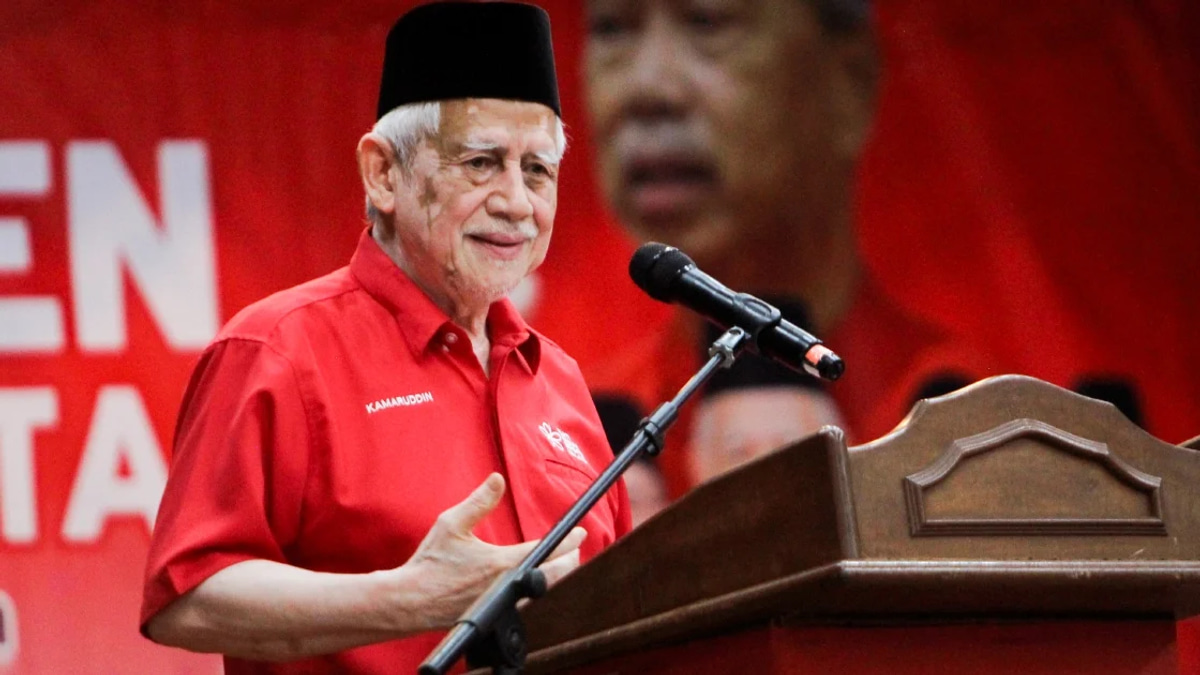
The future of Bersatu's membership within Perikatan Nasional (PN) now rests firmly in the hands of the coalition's supreme council, which will settle the matter through a majority vote at an upcoming meeting. This development signals a critical juncture for the Islamist-led political alliance, which has become an increasingly significant force in Malaysian politics since its formation before the 2023 general election.
Bersatu's position within PN has grown increasingly complicated as internal tensions within the coalition have mounted over the past months. The party, led by Muhyiddin Yassin, has been a core component of PN's strength, particularly in states like Kedah and Perlis where it commands substantial support. The coalition's effectiveness depends significantly on maintaining cohesion among its component parties, making any departure by a major player potentially destabilizing.
The supreme council, composed of representatives from all major parties within PN including PAS, Perikatan Negara Sosialis Malaysia (Amanah), and other member parties, serves as the highest decision-making body in the coalition. A majority vote requirement means that no single party can unilaterally determine the outcome, reflecting the democratic processes designed to govern the partnership. This institutional mechanism, while potentially contentious, underscores the coalition's attempt to function as a genuine alliance rather than a hierarchy dominated by one faction.
Understanding the stakes of this vote requires grasping PN's broader political role in Malaysia. The coalition has emerged as a third major force beyond the traditional Barisan Nasional (BN) and Pakatan Harapan (PH), and its internal stability directly impacts the nation's parliamentary mathematics and coalition-building possibilities. Bersatu's presence strengthens PN's claim to be a credible alternative government, particularly given Muhyiddin's experience as prime minister during the turbulent 2020-2021 period.
For Malaysian readers, this vote carries implications extending beyond elite factional politics. Coalition stability or instability affects policy consistency, budget allocation, and the government's ability to implement long-term economic and social programmes. A weakened PN could reshape the broader political landscape and alter the balance of power in the next electoral cycle. Conversely, Bersatu's departure would force PN to recalibrate its strategy and potentially seek new alignments.
Regionally, Malaysia's coalition dynamics remain closely watched by Southeast Asian observers, particularly in Thailand, the Philippines, and Indonesia, where coalition politics similarly challenge governmental stability. PN's evolution and internal management serve as a case study in how multiethnic democracies navigate factional pressures while maintaining functional governance.
The supreme council vote mechanism itself reflects important principles about how Malaysian political coalitions should function. Rather than allowing bilateral disputes to fester or personality-driven negotiations to dominate, the council structure forces transparent deliberation among all stakeholder parties. This collective decision-making approach, if properly executed, can prevent accusations of backroom dealings that have historically plagued Malaysian politics.
Bersatu's potential exit would also raise questions about the viability of single-party dominance within coalitions. PAS, as PN's largest member by parliamentary representation, would necessarily gain greater influence should Bersatu depart. This shifting power dynamic could alter policy priorities, particularly regarding religious and cultural issues where PAS traditionally takes more assertive positions than other coalition members.
The timing of this decision remains crucial for multiple stakeholders. An early determination would provide Bersatu with sufficient runway to either consolidate its position or pursue alternative partnerships. Similarly, other PN members require clarity to plan their own strategies, whether for state-level governance or national politics. Prolonged uncertainty typically weakens coalition cohesion as member parties begin exploring external options.
For Bersatu specifically, the supreme council vote represents a moment of truth regarding its strategic direction. Remaining in PN signals commitment to the coalition's vision and accepts the discipline of collective decision-making. Alternatively, departure would enable greater independence but risks political isolation given that Bersatu currently holds limited parliamentary seats outside the PN framework and faces formidable competitors across the political spectrum.
The supreme council's voting outcome will inevitably be interpreted through multiple lenses. Bersatu supporters may view the result as either validation or rejection of Muhyiddin's leadership direction. PAS members will assess whether the vote strengthens or weakens their coalition's coherence. Meanwhile, opposition parties and uncommitted voters will scrutinize whether PN emerges from this process appearing more or less credible as a governing alternative.
As Malaysia navigates an increasingly complex electoral environment where no single party commands a decisive parliamentary majority, coalition management becomes the essential political skill. The PN supreme council's impending decision on Bersatu will serve as an important test of whether the coalition can resolve internal disputes through structured mechanisms or whether deeper fractures threaten its long-term viability.