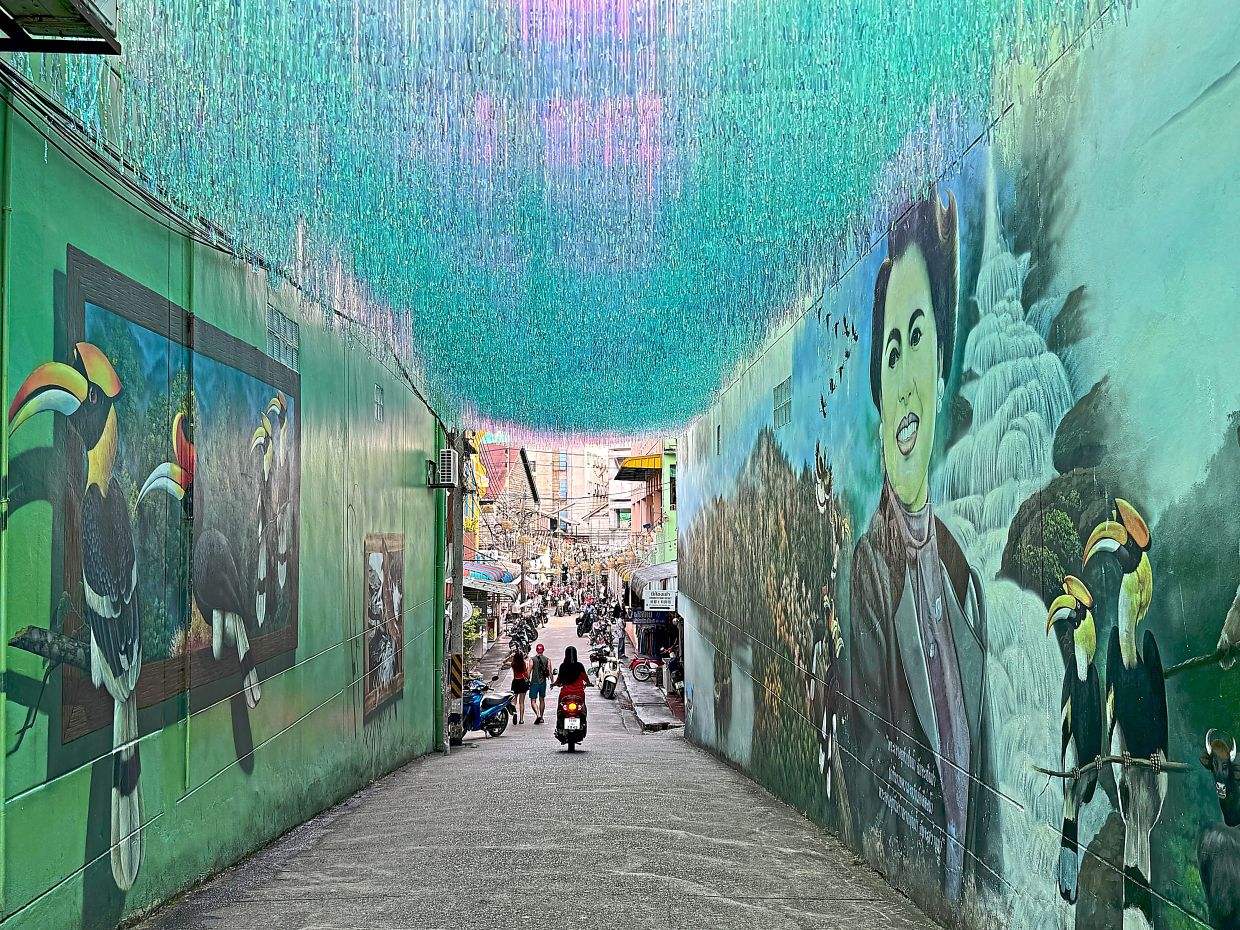
Betong may not appear on most Malaysian travellers' radars, yet this modest Thai town positioned near the Malaysian-Thai border offers an unexpectedly rich collection of cultural and historical attractions that make it worth the five-hour drive from Kuala Lumpur. Located approximately 380 kilometres from Malaysia's capital, Betong has quietly cultivated a reputation as a destination for curious roadtrippers seeking authentic experiences beyond Thailand's well-trodden tourist circuits. What emerges from exploring this mountain town is not a polished resort destination, but rather a living community proud of its distinctive heritage and eager to share it with visitors.
The town's most distinctive symbol is the Betong chicken, a local breed that has become so integral to the area's identity that enormous statues now commemorate it throughout the community. During a casual lunch stop at a local eatery, diners discover that the chicken sculptures adorning lamp posts and the towering bronze monuments scattered across town are far more than whimsical decorations. These tributes honour a poultry breed that locals fiercely protect and celebrate, giving rise to a culinary scene dominated by chicken preparations in every conceivable form. From fragrant chicken rice served at humble shophouses to delicate chicken porridge simmered in dawn darkness, the protein features so prominently in Betong's gastronomic landscape that visitors quickly grasp how central this bird is to local culture and economic vitality.
Beyond its agricultural pride, Betong stands as a gateway to Thailand's modern engineering marvels and darker historical chapters. The Mongkollit Tunnel, constructed in 2001 and recognized by the Tourism Authority of Thailand as the nation's first mountain tunnel, initially strikes visitors as an unremarkable infrastructure achievement. Yet once evening descends and brilliant sapphire illumination floods the passage, the structure transforms into an enchanting attraction that draws crowds to its pedestrian walkways, where visitors jostle for the best photographic angles. This dramatic evening transformation speaks to how Betong maximizes limited resources through thoughtful enhancement, creating memorable experiences from straightforward infrastructure.
The Piyamit Tunnel represents a more sobering chapter in both Thai and Malaysian regional history. Situated roughly 15 kilometres from town and buried deep within jungle terrain, this one-kilometre passage dates to the late 1970s and originally functioned as a base for the Communist Party of Malaya during their armed struggle. The tunnel's sophisticated design reflected the tactical needs of guerrilla fighters, featuring multiple entrance and exit points that permitted rapid dispersal during military operations, along with specialized infrastructure serving as an air raid shelter, supply depot, and communication hub. Visitors approach the tunnel along a sheltered walkway before encountering the Piyamit Histories Museum, which houses historical photographs and objects documenting the daily existence of communist fighters who inhabited the surrounding forest, lending context to the physical spaces visitors will explore.
Walking through the tunnel's dimly lit passages reveals the stark reality of insurgent life. Former sleeping quarters, meeting rooms where strategy was debated, and radio communication chambers all remain accessible, permitting visitors to visualize how fighters navigated their clandestine existence. Outside the tunnel's entrance, visitors observe a specialized cooking installation designed to channel smoke underground, preventing enemy detection by rendering the camp invisible to aerial observation and ground-based reconnaissance. This ingenious engineering solution underscores the constant vigilance required during the conflict's height, when discovery meant annihilation. For those seeking deeper understanding of this historical period, the Chulabhorn Phatthana Village 9 located in Mae Wat approximately 120 kilometres away preserves the stories of former communist party members who eventually transitioned to civilian life, transforming personal narratives into educational narratives.
Betong's compactness actually enhances the visitor experience, as most attractions cluster within walkable distances in the town's older quarters. While motorized exploration remains possible, the scarcity of parking spaces makes navigating on foot both practical and preferable. Local residents employ a simple colour-coded kerb system to regulate parking, with black and white indicating permitted spaces and red and white signifying restrictions. This pragmatic approach reflects the town's informal yet organized character, where residents have developed intuitive solutions to everyday challenges.
Route 410, locally designated as the Pattani-Betong Highway, spans approximately 160 kilometres and has become legendary among motorcycle enthusiasts across Southeast Asia. This winding mountain passage, characterized by dramatic elevation changes and serpentine corners threading through dense jungle, attracts organised riding groups who congregate at specialist shops like Betong Route 410. These establishments cater to the biking community with apparel, memorabilia, and custom Thai-style registration plates that celebrate rider culture. The highway's popularity demonstrates how Betong has diversified its appeal beyond historical tourism, capitalizing on its geographical position to attract adventure-oriented visitors.
Near the highway corridor stands Wat Phutiwhat, a temple crowned with an imposing bronze Buddha statue that commands views across the town below. This sacred site houses Buddhist relics and attracts both pilgrims and tourists throughout daylight hours, though early morning visits prove most rewarding for those seeking quieter contemplation. The temple exemplifies how religious and secular tourism interests coexist harmoniously in this community, with spiritual spaces welcoming cultural visitors alongside devoted practitioners.
Perhaps Betong's most endearing oddity involves its postal infrastructure. While standard Thai mailboxes rise to approximately adult height, Betong boasts two oversized versions that have become impromptu monuments to the town's playful character. The original structure, standing 3.2 metres tall and dating to 1924, occupies a position near the Betong Clock Tower. This particular mailbox originally incorporated a built-in loudspeaker system permitting government authorities to broadcast announcements to residents, representing an early form of civic communication technology. Remarkably, this century-old installation remains functional for postal services today. A nine-metre replica constructed subsequently as a formal tourist attraction now stands outside the City Convention Hall along Sukyang Road, doubling the whimsical impact of this distinctive feature.
The true revelation of visiting Betong emerges not from structured planning but from embracing spontaneity. Travellers who abandon rigid itineraries in favour of following local recommendations and unplanned detours discover that this unpretentious border town orchestrates genuine surprises. The Betong chicken statues that initially seemed quirky become meaningful symbols of agricultural heritage. The illuminated tunnels transform from engineering facts into enchanting evening experiences. The oversized mailboxes evolve from oddities into reflection points about community identity. For Malaysian weekend explorers seeking alternatives to overcrowded Thai beach destinations, Betong offers authentic cultural engagement, historical depth, and unexpected charm wrapped in a community proud of its distinctive character.

