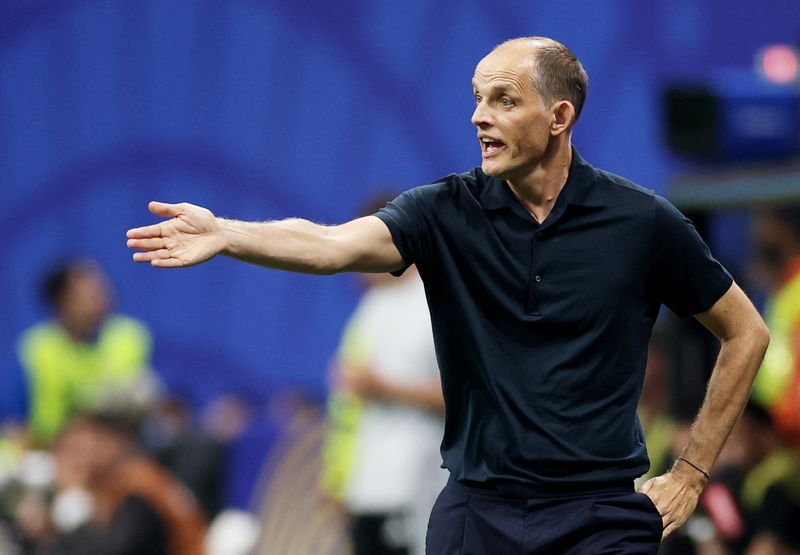
Thomas Tuchel stepped into the England manager's role with considerable fanfare and expectation, tasked with delivering what the nation has pursued since 1966. After the German tactician's appointment was announced in October 2024, Football Association Chief Executive Mark Bullingham declared that the organisation believed Tuchel represented "the best possible chance" to capture a major tournament at the upcoming World Cup. His credentials seemed impeccable: a decorated club manager who had won the Champions League with Chelsea and secured titles across multiple leagues. Yet when England fell to Argentina in the semi-finals, the accumulated goodwill evaporated almost instantly, replaced by a torrent of analysis questioning his strategic approach and decision-making in the dying moments of the match.
The recriminations focused particularly on Tuchel's defensive reorganisation following Anthony Gordon's opener, a shift that critics argued undermined England's momentum and invited Argentina to exert increasing pressure. Measured voices in the commentary, including former manager Alan Pardew, suggested that the tactical adjustment reflected a broader psychological retreat. "Fear, mistakes and a rational organisation of the team was lost," Pardew observed on talkSPORT. "In truth the manager fed a negative mindset." Such assessments carried weight because they came from seasoned observers familiar with the pressures of tournament football, yet they also obscured a more complex reality about what unfolded on the pitch.
Tuchel himself offered a strikingly different diagnosis of England's downfall, one that transcended the specific choices made during ninety minutes of football. The manager suggested that structural and cultural factors had constrained his team's capacity to control proceedings. "In this moment my feeling was no structure in the world could have helped us," he reflected after the match. He drew attention to England's apparent deficit in ball possession as a fundamental strategic asset, noting that technical mastery of the ball appeared embedded in the DNA of Spanish, Argentine, and Brazilian football cultures in a way that remained elusive for English teams. This observation moved beyond the realm of tactical tinkering to address something more foundational: the philosophical approach to the game itself.
The statistics from England's collapse underscore Tuchel's point with sobering clarity. Between the 72nd and 92nd minutes, as England retreated into increasingly desperate defensive formations, the team completed only two passes in Argentina's half of the pitch. In the same period, Argentina attempted 111 such passes, maintaining possession and searching relentlessly for the breakthrough that would eventually come. This disparity reflected not merely a manager's in-game adjustments but a fundamental imbalance in how the two teams approached tournament football at the highest level. Argentina's superiority in possession, combined with their refusal to surrender even when circumstances seemed unfavourable, created an inexorable pressure that eventually overwhelmed England's resistance.
Yet to place blame solely on Tuchel would be to ignore the extraordinary quality arrayed against his team. Argentina entered the semi-final as defending world champions, a status that carried tangible advantages in terms of collective experience, confidence, and the presence of Lionel Messi. At 39 years old, the Argentine great remained capable of performing at a level that transcended normal professional football. Messi's presence on the pitch functioned as both tactical asset and psychological force, a reminder that Argentina possessed a player whose individual brilliance could overcome organisational obstacles. Thierry Henry, who had observed Messi across three seasons at Barcelona, captured the essence of this transformative capability. "When his team needs him, he raises his game," Henry noted. "He's just unstoppable when he goes into that mood."
Argentina's path through the knockout stages had revealed both vulnerability and resilience. Cape Verde had pushed Scaloni's side to uncomfortable margins in the round of sixteen. Egypt had required three late goals to be disposed of. Switzerland had taken the match to extra time despite being reduced to ten men in the quarter-finals. These narrow escapes might have suggested an ageing squad fortunate to remain in contention. Instead, each narrow victory appeared to galvanise the team, strengthening collective resolve and reinforcing the conviction that destiny favoured their campaign. The failures of previous challengers to break Argentina's spirit served as a warning that England faced opponents whose hunger and determination extended beyond the merely technical dimensions of football.
Messi's movement and positioning during the crucial final passages of the England match exemplified the challenge facing Tuchel's defensive setup. Rather than remain in central areas where England had concentrated their rearguard, the Argentine star drifted to the right flank, leveraging his experience to exploit space and create opportunities from unexpected angles. From these positions, he supplied the assists for both Enzo Fernandez and Lautaro Martinez to score the goals that secured Argentina's passage to the final. This was not a failure of Tuchel's tactical blueprint per se, but rather the inevitable consequence of a player of Messi's intelligence and experience encountering a defensive structure designed to contain more conventional threats.
The broader context of Tuchel's position warrants consideration as well. This represented his first major international tournament as a senior manager, a significant gap in his otherwise impressive resume. Didier Deschamps, the architect of France's recent World Cup successes, had required six years in the role before steering his team to the 2018 title, subsequently adding a runners-up finish four years later. Aimé Jacquet, the manager who delivered France's 1998 World Cup triumph, had needed five years to develop his championship-winning team. By this standard, Tuchel's semi-final appearance in his debut tournament compares favourably with historical precedent. His February 2025 contract extension to a two-year deal suggested that the Football Association maintained confidence in his long-term project despite the semi-final disappointment.
The criticism directed at Tuchel also risks obscuring Argentina's genuine merits as a team. Lionel Scaloni had overseen a squad that had breezed through the group phase, establishing themselves as one of the tournament's most convincing early performers. The knockout rounds had exposed flaws and required increasingly dramatic interventions to survive, yet each challenge appeared to strengthen rather than weaken the team's collective identity. Argentina was pursuing a historic second consecutive World Cup title, an achievement last accomplished by Brazil in 1962. This objective animated the squad with a sense of mission that transcended normal competitive ambition. For a team and a player of Messi's stature, with a final World Cup opportunity rapidly approaching, the motivation to overcome obstacles proved overwhelming.
England's failure ultimately reflects a convergence of factors rather than a single identifiable cause. Tuchel's tactical decisions merit scrutiny, as do the fundamental cultural and philosophical differences in how English football approaches possession-based play at the international level. Yet equally significant were Argentina's exceptional resilience, Scaloni's experienced management of a tournament campaign, and most critically, the continued brilliance of Messi operating at a level that few players in the modern era have consistently achieved. The German manager will have acquired invaluable lessons from this exposure to tournament football at the highest level, lessons that may yet bear fruit in future competitive windows. For now, however, the semi-final defeat stands as a reminder that even the most accomplished club manager requires time and circumstances to align when navigating the unique pressures and unpredictability of international football's greatest stage.

