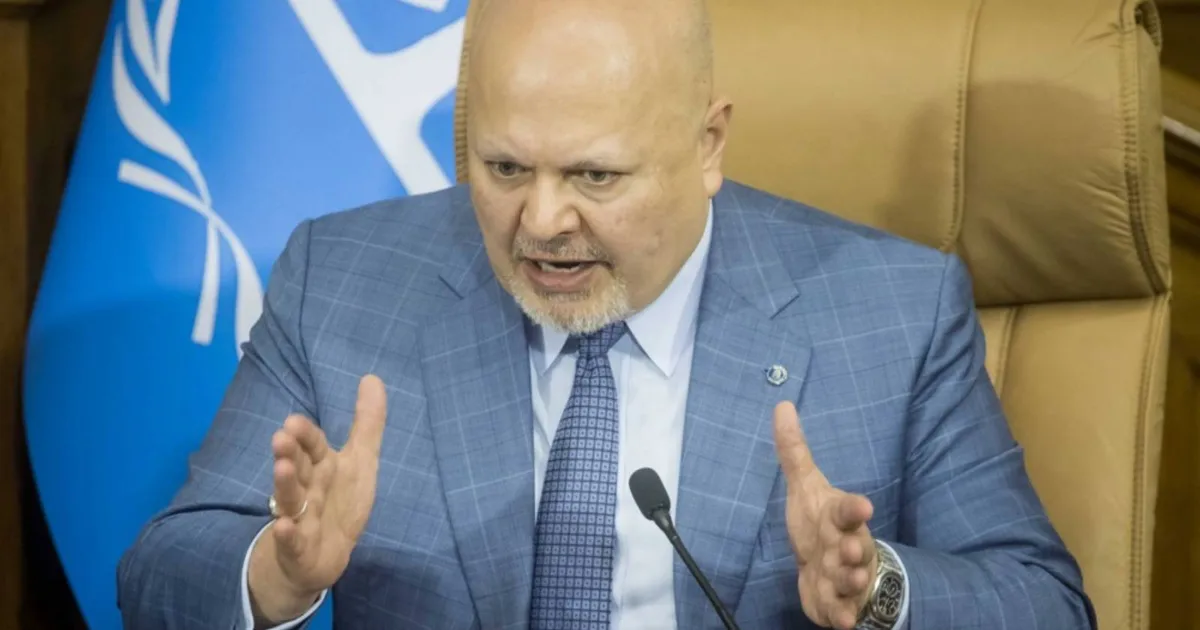
The departure of Karim Khan from his position as prosecutor at the International Criminal Court represents one of the most significant ruptures in the institution's twenty-year existence. While serious allegations surrounding his conduct precipitated his exit, the narrative of his professional journey extends considerably beyond the circumstances of his departure. The question of how posterity will evaluate his contributions to international criminal justice remains genuinely contested, particularly among legal scholars, victims' advocates, and those who monitor the institution's work across the globe.
Khan's tenure at the ICC occurred during a period of profound crisis for the organisation. When he assumed office in 2021, the court faced mounting criticism from powerful nations, declining resources, and accusations of selective prosecution that disproportionately targeted African leaders. His appointment arrived amid widespread expectations that he would restore credibility to an institution that seemed increasingly marginalised in global affairs. The prosecutor's mandate is extraordinarily demanding—balancing investigations across multiple continents, managing pressure from nations with competing interests, and pursuing accountability for mass atrocities whilst navigating intense political constraints.
Among his most consequential decisions was opening an investigation into the situation in Ukraine following Russia's invasion in 2022. This represented a dramatic shift in the court's geographical focus and signalled that the ICC could respond to conflicts beyond the African continent, where its presence had previously been concentrated. The move generated substantial international attention and demonstrated the prosecutor's willingness to pursue investigations that challenged major powers. For many observers in Southeast Asia and the Global South, however, this expansion also raised uncomfortable questions about whether the court's resources and political leverage would finally match its expansive mandate, or whether this represented merely symbolic gesture-making.
Khan's approach to Palestine and Gaza similarly captured international headlines. His decision to seek arrest warrants against Israeli and Palestinian officials signalled a determined effort to maintain the court's independence from geopolitical pressure, even from Western nations traditionally supportive of the institution. Whether one views this as principled impartiality or problematic equivalence between state and non-state actors, the move demonstrated Khan's apparent commitment to universal application of international criminal law. In the context of a global south where many nations harbour deep scepticism toward international institutions, such moves held symbolic weight, even if their practical consequences remained constrained.
Yet Khan's stewardship coincided with persistent criticism regarding the pace and scope of ICC investigations. Cases involving alleged crimes in Myanmar, Afghanistan, and elsewhere proceeded with agonising slowness, frustrating victims' groups and human rights organisations. The prosecutor's office faced chronic resource limitations, and Khan inherited an institution where the gap between aspiration and capacity remained enormous. Some analysts argue that his aggressive expansion of investigations—whilst laudable in principle—stretched already-thin resources even further, potentially compromising the depth and rigour of prosecutorial work.
The allegations that ultimately forced Khan's resignation relate to personal misconduct allegations, distinct from questions about his professional approach to prosecution. This separation matters considerably for evaluating his legacy. A prosecutor's substantive decisions regarding which situations to investigate, which suspects to pursue, and how to interpret the Rome Statute are separable from questions about their personal behaviour and the work environment they created. Historical assessment will necessarily consider both dimensions, but conflating them risks obscuring important distinctions.
For Malaysian and Southeast Asian audiences, Khan's tenure offers instructive lessons about international institutional dynamics. The ICC's limited enforcement power depends fundamentally on state cooperation, a reality that becomes starkly apparent in regions where numerous nations remain cautious about the court's legitimacy or reluctant to arrest suspects on ICC warrants. Khan's decisions to pursue investigations in Ukraine and Palestine, whilst relatively familiar to global media audiences, occurred within the same institutional framework that has struggled to advance accountability in contexts closer to home. This underscores how international justice remains fundamentally constrained by political considerations and power imbalances.
The prosecutor's investigation into the Myanmar situation, though proceeding slowly, represents one of the few mechanisms through which the international community has attempted to establish accountability for the Rohingya crisis. Khan's legacy in this region is bound up with the pace, thoroughness, and ultimate outcomes of such investigations. Whether the institutional reforms and investigative priorities he established will ultimately strengthen or weaken the court's capacity to address mass atrocities in Asia remains an open question.
Historians will likely evaluate Khan's leadership through multiple lenses simultaneously. His willingness to challenge powerful nations and investigate geopolitically sensitive situations demonstrated institutional independence, yet the limited concrete outcomes—measured in convictions and sentences—may ultimately seem modest. His attempt to make the court more responsive to contemporary conflicts like Ukraine's situation suggested adaptability, though some critics argue this scattered resources without clear strategic direction. The resource crisis that plagued his tenure was not of his making, yet his decisions occurred within these constraints.
The allegations surrounding Khan's departure present a separate reckoning. They raise urgent questions about institutional culture, power dynamics within the prosecutor's office, and accountability mechanisms for international officials. Whether future prosecutors can learn from this rupture to build healthier institutional environments remains unclear. The ICC's response to these allegations will itself form part of how Khan's era is remembered—as a catalyst for necessary institutional reform or as a cautionary tale about internal dysfunction.
Ultimately, Karim Khan's legacy will not be reduced to the circumstances of his departure, though these cannot be ignored. His contributions to the court's jurisprudence, his prosecutorial priorities, and his willingness to investigate powerful states all merit serious assessment. Simultaneously, questions about his management style, workplace conduct, and whether his expansive investigative agenda adequately served victims and the pursuit of justice remain legitimate lines of inquiry. History rarely offers tidy narratives, and Khan's tenure exemplifies the complexity of evaluating leadership in fragile international institutions navigating profound constraints.

