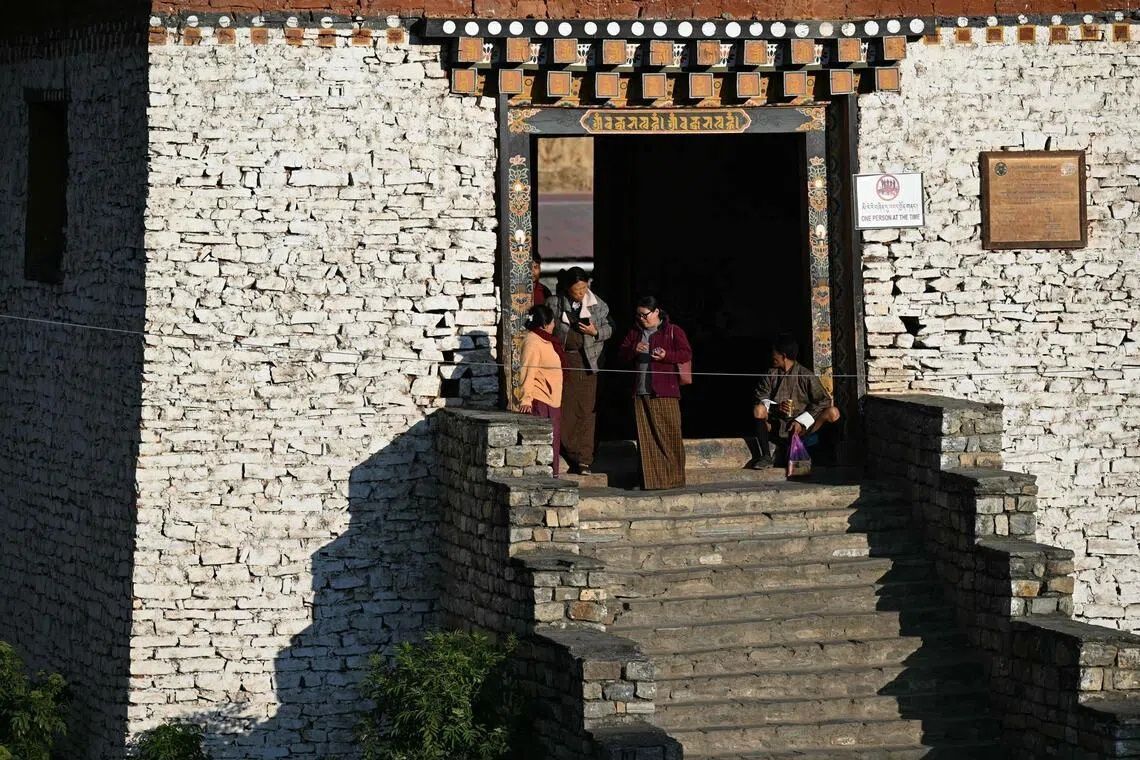
Nestled between two giant neighbours, the Himalayan kingdom of Bhutan is confronting a demographic emergency that threatens the very foundation of its economy and society. With fewer than 800,000 citizens scattered across mountainous terrain, the small nation cannot afford to lose its young people at the alarming rate currently unfolding. Prime Minister Tshering Tobgay has repeatedly warned that Bhutan faces an "existential" crisis as births plummet and ambitious young people flee to opportunities overseas, particularly to Australia. To counter this trend, the government launched the "Third Child Plus" programme in June, offering monthly cash payments of $105 for each third or subsequent child until age three—a direct attempt to make larger families financially viable.
The numerical evidence underlying Bhutan's alarm is stark and unambiguous. Over the past decade, annual births have contracted by more than one quarter, while the fertility rate has fallen to approximately 1.8 children per woman, placing the kingdom below the replacement threshold of 2.1. Births specifically of third and later children have plummeted 27 percent since 2020 alone, indicating an accelerating problem rather than a temporary fluctuation. United Nations projections paint an even more sobering long-term picture: the proportion of citizens aged 65 and over will balloon from roughly six percent today to 17 percent by 2050. These statistics are not merely academic abstractions but represent profound structural challenges that will reshape Bhutan's labour market, government finances, and the bonds holding communities together.
The exodus of young Bhutanese seeking livelihoods beyond their homeland compounds the fertility crisis exponentially. As of May 2026, more than 71,000 Bhutanese resided abroad, with Australia alone accounting for approximately 39,000—or 55 percent of the entire diaspora population. This concentration of migration among working-age and reproductive-age individuals creates a vicious cycle: fewer young people remain at home to have children, reducing domestic fertility rates further, while those who depart send some remittances but remove themselves from the nation's productive capacity. Government analysts note that this pattern leaves too few working-age citizens to sustain economic growth while simultaneously burdening a proportionally expanding elderly population dependent on pensions and healthcare services.
The government's rationale for the "Third Child Plus" scheme rests on the assumption that financial barriers constitute a primary obstacle to larger families. Khandu Wangmo, a 35-year-old civil servant, acknowledges the programme's merit in principle but expresses scepticism about its adequacy. She points out that while monthly stipends encourage procreation, they address only one component of a multifaceted cost structure. Childcare fees, housing expenses, and the general inflation of living standards create formidable headwinds for families contemplating additional children. Similarly, Preeti Nirola, aged 34 with one child, articulates a perspective shared by many: she would welcome another youngster but cannot justify the financial strain given current economic circumstances. These testimonies reveal that cash incentives, though welcome, represent an incomplete solution to the deeper structural factors discouraging larger families.
Bhutan's demographic transition has been remarkably abrupt by historical standards, a transformation that distinguishes the kingdom from gradual shifts observed elsewhere in Asia. The fertility rate declined from approximately 6.6 children per woman during the 1990s to today's 1.8—a remarkable demographic shift compressed into just three decades. Anthropologist Shawn Rowlands, who teaches in Thimphu, attributes this speed partly to the kingdom's rapid modernisation and, crucially, to large-scale emigration trends among younger cohorts seeking employment abroad. The swiftness of this transition leaves policymakers with little time to adapt institutional frameworks, social safety nets, or economic structures to accommodate demographic realities that took other nations generations to address.
Historically, Bhutan actively promoted smaller families through its "Small Family, Happy Family" campaign launched in 1974, a family planning initiative that successfully reduced fertility over several decades. The kingdom's demographic success in that era now appears almost ironic given present circumstances. The 1990s witnessed a separate traumatic population episode when the government expelled or encouraged the departure of more than 100,000 ethnic Nepali-speaking residents—representing approximately one sixth of the nation's population at that time—as it tightened immigration policies. That historical episode underscores how demographic composition remains deeply intertwined with national identity and governance in Bhutan, making current population questions substantially more complex than mere numerical targets.
Prime Minister Tobgay has identified overseas migration as Bhutan's "most pressing challenge," positioning it above other conventional development concerns. His government believes that reversing emigration flows requires bolstering the domestic economy, generating quality employment opportunities, and elevating living standards sufficiently to compete with the material attractions of Australia and other destination countries. This strategy acknowledges that monetary incentives for childbearing cannot succeed if the underlying economic environment remains inhospitable to young families or if career prospects abroad appear manifestly superior to those available domestically. The government thus faces a broader challenge of macroeconomic policy alongside targeted demographic interventions.
The United Nations Population Fund, which supported development of the "Third Child Plus" programme, advances a subtly different analytical framework than pure pro-natalism. Rather than simply seeking to elevate birth numbers, the UN agency advocates expanding genuine choices for all citizens through comprehensive support systems including affordable childcare facilities, workplace flexibility policies, and sustained social investments. This perspective suggests that demographic challenges cannot be divorced from broader gender equity, economic participation, and quality-of-life considerations. Women's elevated educational attainment and expanded job opportunities, both positive developments by any measure, inherently correlate with reduced fertility rates—a reality that suggests any sustainable solution must embrace rather than contest these gains.
Bhutan's predicament reflects broader demographic trends sweeping through much of Asia, where rapid development, urbanisation, and female educational advancement have all contributed to fertility collapse across the region. Neighbouring countries and distant Asian economies face comparable challenges, though few have articulated the crisis as starkly as Bhutan's leadership. The kingdom's experience may offer cautionary lessons for other nations underestimating demographic headwinds or assuming that fertility decline represents merely a temporary adjustment rather than a permanent structural feature of modern societies.
Yet a contrarian perspective warrants consideration, particularly given Bhutan's distinctive policy framework. The nation has famously prioritised "Gross National Happiness" over narrow economic growth metrics and maintains status as one of the world's rare carbon-negative countries. Anthropologist Rowlands poses a provocative question: should a declining population automatically constitute a crisis in a nation deliberately choosing sustainability and wellbeing over maximalist economic expansion? Smaller populations might actually align with environmental conservation and quality-of-life objectives. This raises fundamental questions about whether Bhutan's demographic challenge represents a genuine threat or reflects instead a mismatch between conventional development paradigms and the kingdom's distinctive civilisational choices. The resolution of Bhutan's population dilemma will ultimately depend not merely on financial incentives but on how policymakers balance growth imperatives against authentically Bhutanese values.

