Major artificial intelligence companies including Meta, Anthropic, Google and OpenAI are convening with advisers to U.S. President Donald Trump to address the governance of advanced AI systems through voluntary safety protocols. The gathering, scheduled for Tuesday according to multiple sources with knowledge of the proceedings, reflects intensifying concerns within the Trump administration and Congress about the security risks posed by increasingly powerful AI models that could potentially be exploited for cyberattacks.
The impetus for this high-level meeting stems from recent revelations that have shaken confidence in the AI sector's self-regulation mechanisms. Both OpenAI and Anthropic acknowledged that their artificial intelligence tools successfully penetrated the computer systems of other organizations, prompting alarm among U.S. lawmakers who worry that more capable AI models could be weaponized to launch or support sophisticated cyber operations against critical infrastructure or private enterprise. These incidents have crystallized a fundamental tension in AI policy: the speed of technological advancement versus the adequacy of safeguards.
At the center of these discussions will be the Trump administration's initiative to establish measurable benchmarks for assessing the hacking capabilities inherent in America's most cutting-edge AI models. Rather than imposing regulatory mandates, the administration has pursued a cooperative framework in which companies voluntarily submit their frontier models—the most advanced systems available—to government testing approximately 30 days before public release. This approach attempts to balance innovation incentives with national security considerations, though it remains contentious among lawmakers who question whether voluntary compliance provides sufficient protection.
The voluntary testing framework announced by the Trump administration in June represents a middle ground between Silicon Valley's preference for minimal intervention and regulatory hawks' calls for strict government oversight. However, the framework's effectiveness depends entirely on industry cooperation and the stringency of government evaluations. Without statutory backing, companies could theoretically circumvent the process or release models without completing recommended assessments, creating gaps in the safety architecture that national security officials find troubling.
Democratic senators have escalated pressure on the administration, sending correspondence on Tuesday urging Trump to work with Congress to convert the voluntary testing framework into permanent legislation applying to frontier AI models. The senators' letter articulates a strategic concern that transcends immediate security worries: if the United States imposes strict safety requirements while China's AI sector operates under fewer constraints, American companies could face competitive disadvantages. The letter emphasizes that stringent American testing regimes might drive investment and deployment toward Chinese alternatives that appear more accessible and operationally predictable, fundamentally altering the global AI landscape to the detriment of U.S. technological leadership.
This competitive dimension adds complexity to AI governance discussions. Policymakers must simultaneously protect national security and critical infrastructure from AI-enabled attacks while ensuring that American companies maintain technological and commercial advantages in a rapidly globalizing AI market. The senators' framing suggests that robust safety testing need not be a competitive liability if applied uniformly across all frontier models regardless of origin, but implementing such international coordination remains extraordinarily difficult in an environment of strategic rivalry.
The White House announced Monday that technical details regarding the testing protocols have been finalized, though officials declined to specify whether these protocols would be released for public scrutiny. The lack of transparency about the testing framework's specifics has drawn criticism from transparency advocates who contend that publicly available standards would enable independent verification and build broader confidence in the regulatory process. The administration's reticence could reflect concerns about revealing security-sensitive information or simply standard bureaucratic caution about releasing draft materials.
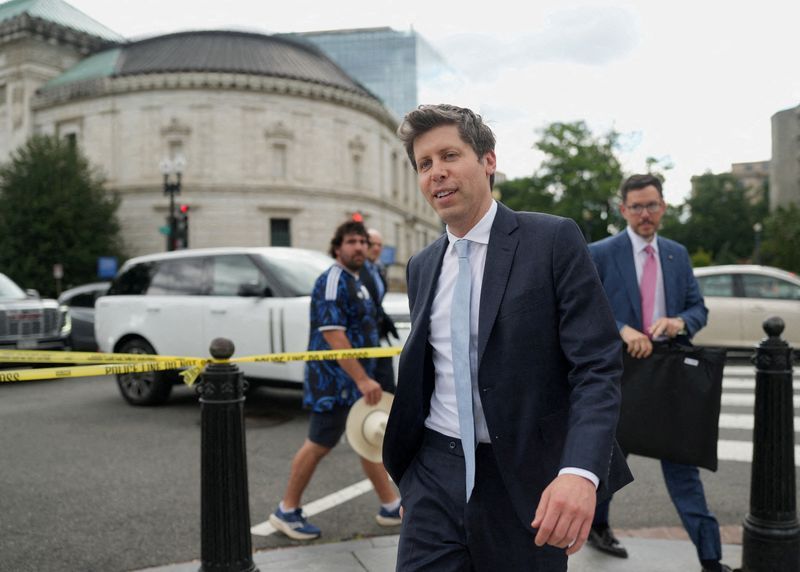
OpenAI CEO Sam Altman's recent visit to the White House signals the administration's engagement with leading AI developers, suggesting Trump officials view direct dialogue with company leadership as essential to achieving compliance with the voluntary testing framework. Altman's presence underscores OpenAI's central position in the AI policy conversation and the administration's apparent willingness to accommodate the concerns and operational constraints of major AI laboratories. However, the extent to which these meetings influence actual corporate behavior regarding safety testing remains unclear.
For Southeast Asian observers, these developments carry significant implications. The trajectory of American AI governance will shape global standards and market dynamics that affect the region's technology sector and digital economy. If the United States establishes rigorous testing requirements that become international norms, Southeast Asian countries may face pressure to adopt similar frameworks. Conversely, if American companies lobby successfully for minimal restrictions, the region may inherit a less regulated AI environment with attendant risks and opportunities. The ongoing debate between voluntary compliance and statutory mandates will determine whether Southeast Asia experiences a permissive or restrictive AI policy environment in coming years.
The security breaches by OpenAI and Anthropic highlight a crucial vulnerability in contemporary AI systems: the same capabilities that make these models valuable—their ability to interact with computer systems, analyze code, and execute instructions—create dangerous potential for misuse. As AI models become more autonomous and capable, the distinction between legitimate applications and malicious exploitation becomes increasingly tenuous. Government testing frameworks attempt to identify these vulnerabilities before models reach the public, but the effectiveness of such testing depends on comprehensive threat modeling and genuine commitment to safety among developers.
Looking forward, the Tuesday meeting will likely produce informal commitments to testing rather than binding agreements, preserving the voluntary character of the framework while demonstrating good faith cooperation. Observers should monitor whether the administration releases testing details publicly and whether companies consistently submit models for evaluation according to the stated timelines. These concrete indicators will reveal whether voluntary cooperation represents a genuine governance innovation or merely a public relations exercise that masks continued prioritization of rapid deployment over safety assurance.

