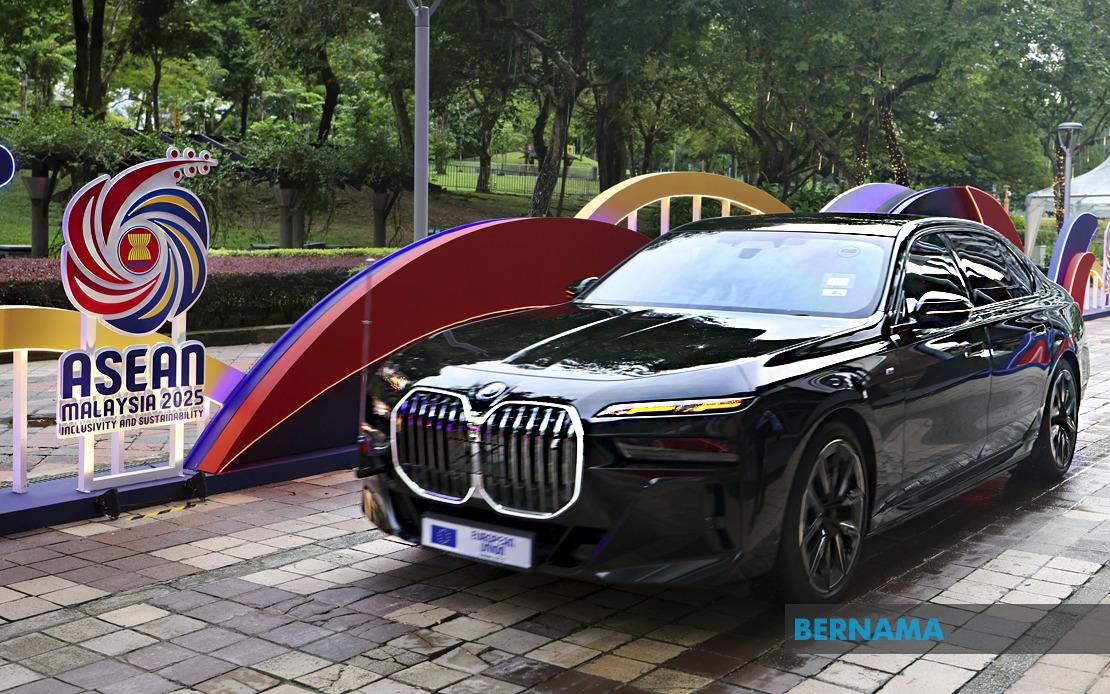
The Prime Minister's Department has moved to clarify that a BMW luxury vehicle recently observed in use by Prime Minister Datuk Seri Anwar Ibrahim is an existing government asset rather than a newly purchased official vehicle, the department announced through a statement released on Facebook on July 6. The clarification was prompted by speculation and allegations circulating across social media platforms regarding the ownership and acquisition of the high-end vehicle.
According to the official statement from JPM and the Ceremonial and International Conference Secretariat Division (BIUPA), the BMW falls under BIUPA's supervision and is specifically designated for Malaysia's official logistics requirements. This classification places the vehicle in a distinct category of state assets reserved for particular governmental functions rather than general ministerial use. The department emphasized that the vehicle serves a defined operational purpose within the broader context of how Malaysia manages its official transportation assets.
The primary rationale for maintaining such a specialized vehicle relates to Malaysia's international obligations and security standing. When heads of state and heads of government—particularly those holding the rank of president or prime minister—visit Malaysia on official business, the country must demonstrate adherence to internationally recognized security protocols and standards. These protocols are not merely ceremonial formalities but represent substantive commitments to protecting visiting dignitaries from evolving security threats in the modern geopolitical environment.
The technical specifications demanded by these security standards are considerable and form the core justification for the vehicle's existence and cost. The BMW in question has been engineered to meet specially designed security requirements that extend far beyond conventional automotive protection. The vehicle must be capable of withstanding ballistic threats from high-caliber weapons, surviving explosive devices, and resisting other contemporary security risks. Notably, the government's statement specifically referenced drone threats, reflecting the increasingly sophisticated nature of security challenges that protective vehicles must now address.
The temporary deployment of this asset for the Prime Minister's use represents a practical response to immediate operational needs. JPM stated that the Prime Minister is using the vehicle on a temporary basis, following advice from and security assessment conducted by the Royal Malaysian Police (PDRM). This distinction is important because it frames the arrangement not as a permanent reassignment of assets but as a tactical decision made in response to specific circumstances and professional security recommendations.
The underlying reason for this temporary arrangement addresses a logistics constraint affecting the Prime Minister's regular transportation arrangements. The Prime Minister's principal official vehicle, which was originally gifted by the Yang di-Pertuan Agong, is currently undergoing routine maintenance. Rather than continue with less secure alternatives during this maintenance period, Malaysian security authorities determined that deploying the specialized BMW was the appropriate course of action given the established security protocols that must govern the Prime Minister's movements.
This situation illuminates the substantial infrastructure that supports Malaysia's diplomatic and ceremonial functions, often invisible to the general public. Maintaining vehicles that meet international security standards requires sustained capital investment and specialized expertise. These assets serve not only the domestic government but also reflect Malaysia's capacity to host and protect international visitors of the highest rank. The existence and proper maintenance of such assets contribute to Malaysia's standing in international relations and its ability to fulfill host-nation responsibilities during bilateral visits or multilateral conferences.
The public clarification issued by JPM underscores the importance of transparency in governmental asset management, particularly when public perception is shaped by social media speculation. In an era where unverified claims can rapidly gain traction online, official government departments have an enhanced responsibility to promptly address misinformation with factual clarifications. The department's decision to provide detailed context—explaining not only what the vehicle is but why such vehicles are necessary—represents an approach to public communication that prioritizes understanding over mere contradiction of rumors.
For Malaysian readers and observers, this episode offers broader lessons about the distinction between asset acquisition and asset deployment. The fact that a vehicle exists within government inventory does not automatically mean it was recently purchased or assigned to a new purpose. Understanding how existing resources are allocated and reallocated in response to operational requirements is essential for accurately evaluating government resource management. The temporary nature of the arrangement, as JPM emphasized, further distinguishes this situation from any permanent expansion of prime ministerial privileges or perquisites.
The Royal Malaysian Police's involvement in the security assessment reinforces the institutional framework through which Malaysia manages protective operations for senior government officials. Security determinations of this nature are not made arbitrarily or at the preference of individual officials but flow through established professional channels where law enforcement expertise drives decision-making. This multi-agency coordination between JPM, BIUPA, and PDRM demonstrates how Malaysia's security infrastructure operates across departmental boundaries to meet evolving requirements.
Looking forward, the situation highlights the ongoing challenge of maintaining security infrastructure appropriate to Malaysia's international role while managing public perception of government asset use. As security threats evolve—including the drone threats specifically mentioned in JPM's statement—the technical specifications and costs associated with protective vehicles will likely increase further. This creates sustained pressure on government budgets and raises questions about how such essential but expensive capabilities should be funded and allocated over time.

