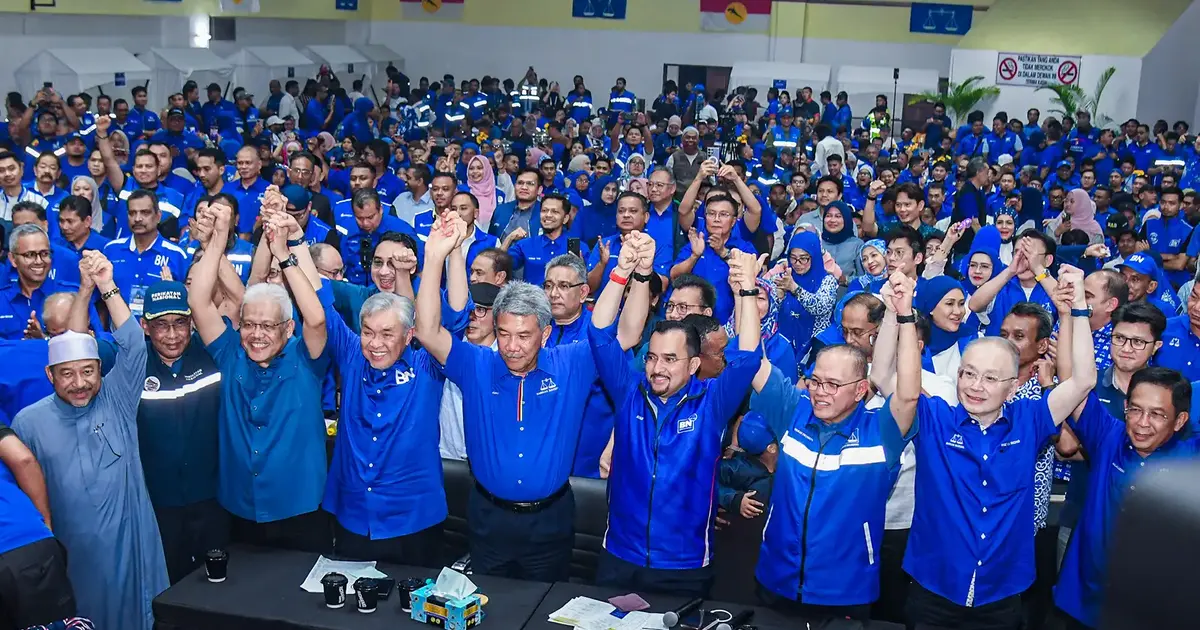
The proposed alliance between Barisan Nasional and Perikatan Nasional faces mounting pressure to settle foundational arrangements before major political complications emerge, according to observers monitoring the partnership's development. As two major electoral blocs consider formal cooperation, analysts emphasize that postponing key decisions could undermine the coalition's electoral prospects and internal stability.
Tawfik Yaakub, a veteran political analyst, has flagged the urgency of resolving structural questions that will define the partnership's character. Among these, the distribution of parliamentary seats across component parties and the selection of a prime ministerial candidate stand as the most consequential matters demanding attention. In complex coalition scenarios, such arrangements typically determine whether a pact holds during campaigning and in government formation.
The challenge facing BN and PN reflects broader realities of Malaysian electoral politics. When multiple parties contest under a single banner, disputes over seat allocation frequently become flashpoints for internal tension. Constituencies represent tangible assets in Malaysian politics—controlling a seat means access to resources, constituents, and political influence. Without a transparent, mutually agreed framework established early, parties may begin making competing claims that erode trust and create perceptions of unfairness among grassroots members.
The prime ministerial question carries even greater weight. In a general election held under a BN-PN banner, voters need clarity about who leads the government if the coalition wins. Ambiguity on this front invites speculation, factional jockeying, and attempts by potential candidates to build parallel power bases within the alliance. Historical examples from Malaysian politics demonstrate how unresolved leadership questions can destabilize coalitions even after electoral victory.
General elections amplify these challenges significantly. Unlike by-elections or minor political negotiations, a general election involves simultaneous contests across all federal constituencies, massive media coverage, and intense party mobilization. The machinery required to field candidates, coordinate campaign messaging, and manage voter expectations demands clear internal protocols. Without established agreements on seat distribution, multiple parties might field competing candidates in the same constituency—a scenario that fragments the anti-incumbent vote and benefits rivals.
Furthermore, the electorate requires persuasive narratives about coalition viability. Voters contemplating support for a BN-PN partnership need confidence that the alliance represents a stable alternative capable of governing effectively. Visible internal disputes over seat allocations or leadership jostling undermine such confidence. Conversely, a coalition that presents early agreements about structure and direction projects cohesion and purposefulness.
The timing of any general election adds another dimension to this urgency. Malaysian political cycles create windows of opportunity that close quickly. If BN and PN intend to contest together, they must use available planning time strategically. Extended negotiations that drag into the election campaign period risk leaving insufficient time for voter education, candidate preparation, and grassroots mobilization. Early agreement allows the coalition to enter the campaign phase with unified messaging and disciplined organizational structures.
Regional context matters as well. Southeast Asian democracies increasingly feature coalition-based governance models. Thailand, Indonesia, and the Philippines regularly experience complex multi-party alliances. These examples demonstrate that coalitions function most effectively when foundational agreements precede public campaigning. Parties that finalize internal arrangements early enjoy clearer communication channels and stronger enforcement mechanisms for maintaining discipline during election campaigns.
For Malaysian observers, the BN-PN situation also reflects changing political arithmetic. Neither major bloc commands sufficient parliamentary strength to govern alone under Malaysia's current demographic and geographical distribution of seats. Coalition politics therefore represents increasingly the only viable path to federal power. This reality makes coalition-building proficiency—the capacity to negotiate, compromise, and implement agreements—a critical competency for future governments.
The specific sectors and stakeholder communities affected by potential BN-PN governance also await clarity. Small and medium enterprises, plantation industries, agricultural communities, and urban professional classes all benefit from knowing which coalition framework might govern their regulatory environment. Early coalition agreements permit these constituencies to make more informed assessments of which parties align with their interests.
Dissenting analysts suggest that leaving details until later provides flexibility and permits parties to negotiate from positions of electoral strength. However, this approach creates risks. Late negotiations after an election victory can easily collapse, leaving governments unable to form. The 2008 aftermath in Perak provided Malaysian voters a cautionary tale about coalitions that failed to consolidate their arrangements.
The economic dimension deserves consideration too. Foreign and domestic investors monitor Malaysian political stability carefully. Uncertainty about which government coalition will control policy frameworks creates hesitation about long-term commitments. A coalition that demonstrates early organizational capacity and internal agreement provides greater economic predictability.
Ultimately, whether BN and PN establish a formal partnership or not, political analysts argue that any such alignment requires meticulous preparation. The complexity of modern general elections—involving digital campaigns, rapid fact-checking dynamics, and sophisticated voter targeting—demands that coalition partners move quickly toward binding agreements on representation, leadership, and policy frameworks before electoral contests commence.

