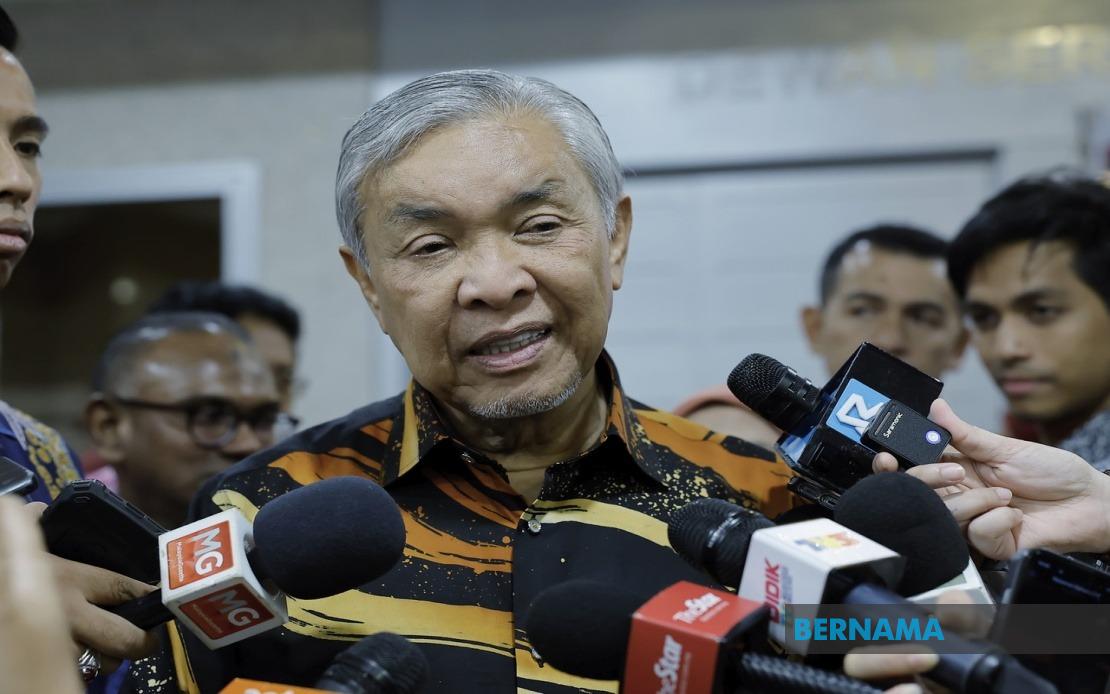
Deputy Prime Minister Datuk Seri Dr Ahmad Zahid Hamidi has declared that Barisan Nasional and UMNO will adopt an uncompromising stance toward any misconduct at Lembaga Tabung Haji, signalling the coalition's determination to hold officials accountable for governance failures at the Islamic pilgrimage savings fund. Speaking after the Rural and Regional Development Ministry's monthly gathering in Putrajaya, Ahmad Zahid emphasised that individuals implicated in wrongdoing or mismanagement across government agencies and statutory bodies must face full consequences for their actions, rejecting any suggestion that the ruling coalition would shield wrongdoers from accountability.
The timing of Ahmad Zahid's comments carries particular significance as parliament prepares for a special sitting on August 11 to debate findings from the Royal Commission of Inquiry into Tabung Haji's operations. Released on July 29, the RCI report presents a sobering assessment of how Malaysia's pilgrimage fund deteriorated during a critical seven-year period, identifying systemic failures that warrant forensic investigation and potential enforcement action. The scope of the inquiry covered Tabung Haji's management and operational decisions between 2014 and 2020, a span encompassing multiple changes in political leadership and fund stewardship.
According to the RCI's conclusions, investigators uncovered evidence of suspicious transactions and deliberate concealment of information within Tabung Haji's hierarchy, pointing to governance breakdowns more serious than mere administrative oversight. These findings represent an implicit indictment of institutional controls that should have prevented improper investment decisions or protected the fund's asset base from erosion. The discovery of such irregularities strikes at the heart of public confidence in statutory bodies entrusted with managing savings and investments on behalf of Malaysian Muslims preparing for the Hajj pilgrimage, one of Islam's five pillars.
The RCI's specific recommendation for a forensic audit into historical investment decisions reflects recognition that Tabung Haji's significant decline in asset value requires expert forensic examination rather than routine internal review. Forensic auditing represents a more intrusive, investigative approach designed to uncover intentional misconduct, fraud, or deliberate mismanagement rather than simple errors of judgment. This escalation in investigative intensity suggests that the RCI panel considered the evidence sufficiently troubling to warrant examination by specialists trained to detect financial irregularities and trace responsibility through complex transaction chains.
For Malaysian readers familiar with high-profile failures in public institutions, the Tabung Haji situation echoes concerns that have periodically affected other government agencies and statutory bodies. The fund's troubles underscore a broader governance challenge affecting how Malaysia manages large pools of public or quasi-public funds, particularly those entrusted to specific religious or demographic constituencies. Tabung Haji's accumulated savings represent genuine wealth belonging to millions of Malaysian Muslims and their families, making fund mismanagement a matter extending far beyond bureaucratic concern into personal financial security.
Ahmad Zahid's public reaffirmation of zero tolerance carries implicit acknowledgement that public trust in Barisan Nasional's stewardship of government institutions remains contested territory politically. By explicitly rejecting any suggestion of protecting wrongdoers within Tabung Haji, the Deputy Prime Minister seeks to differentiate the current coalition government's approach from perceptions of selective accountability that may have characterized previous administrations. The framing reflects broader efforts by the current leadership to rebuild institutional credibility after years of high-profile corruption scandals affecting other agencies and senior officials.
The August 11 parliamentary debate will provide the formal mechanism through which lawmakers scrutinise the RCI findings and signal their intentions regarding enforcement and reform. Parliament's response carries substantial weight because parliamentary resolutions and recommendations shape the urgency and resource allocation for any subsequent forensic audit or enforcement action. Additionally, parliamentary discussion creates a public record that constrains options for government officials inclined toward minimising accountability, as recorded criticism from lawmakers establishes political consequences for insufficient response.
Regional observers of Malaysian governance will note that the Tabung Haji situation illustrates tensions between religious trust and secular institutional management. The fund occupies a distinctive space as both a commercial savings vehicle subject to market forces and a culturally significant institution managing resources tied to Islamic practice. This dual character makes Tabung Haji's governance failures particularly sensitive politically and religiously, as they affect not only financial returns but public perceptions of how well government protects institutions integral to Muslim Malaysians' religious obligations and practices.
The timeline of Tabung Haji's problems—concentrated in the 2014-2020 period examined by the RCI—encompasses a politically significant era, including the 2018 change of government. This historical overlap explains why current leadership may feel compelled to demonstrate responsiveness through Ahmad Zahid's forceful public statements about accountability. Establishing clear distance between present governance standards and documented failures during the previous period serves both practical institutional reform purposes and political messaging objectives.
Moving forward, the forensic audit recommendation represents the investigation's logical next step, though translating RCI recommendations into actual enforcement action depends on political will and resource allocation. The special parliamentary session on August 11 will reveal whether lawmakers across the coalition and opposition benches favour pursuing aggressive investigation and accountability measures. The intensity of parliamentary scrutiny and subsequent government response will send critical signals to stakeholders within Tabung Haji about institutional reform prospects and to Malaysian Muslims holding savings in the fund regarding the security of their investments.

