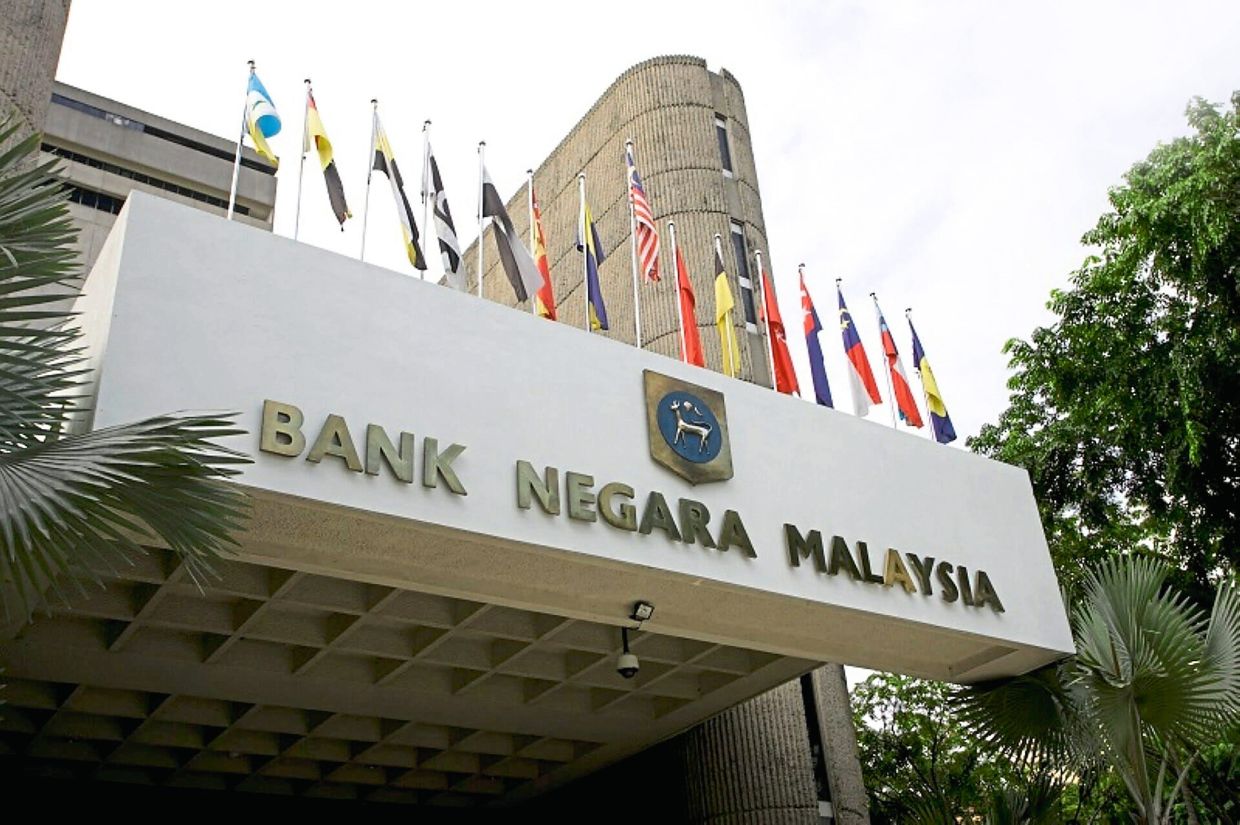
Bank Negara Malaysia and Credit Guarantee Corp Malaysia Bhd have jointly unveiled a RM15 billion financing initiative designed to shield Malaysian businesses from the mounting economic pressures triggered by the Middle East conflict. The geopolitical tensions have created significant disruptions across global supply chains, pushed energy prices upward, and strained international trade flows, with local small and medium enterprises bearing much of the brunt through compressed cash flows, slower payment collections, and escalating operational expenses. These circumstances have prompted many business owners to seek emergency financial support to keep operations stable.
Despite the substantial funding now available through coordinated efforts between Bank Negara Malaysia, Credit Guarantee Corp Malaysia Bhd, and participating domestic banks, loan processing has been hampered by persistent application deficiencies. Banking industry experts discussed at the Sasana Symposium 2026 revealed a troubling pattern of structural weaknesses limiting SME access to these relief facilities. The primary obstacles centre on inadequate financial documentation, weak strategic planning, and fundamental misunderstandings about how lending mechanisms operate.
Many SME operators maintain incomplete or informal accounting systems, relying solely on basic bank transaction records rather than professionally audited financial statements. This documentation gap makes it difficult for banks to validate financial health and repayment capacity with confidence. Beyond accounting issues, numerous applications fail to present convincing business strategies that demonstrate sustainable revenue generation or clear pathways to repay borrowed amounts. A concerning minority of applicants attempt to redirect loan proceeds toward personal rather than business purposes, immediately disqualifying their applications and violating lending covenants.
Noor Mohamed Amin, group chief commercial banking officer at MBSB Bank, emphasised that SMEs must proactively strengthen their applications by articulating clear loan purposes to lenders. He stressed that modern banking relationships transcend simple money transfers, explaining that contemporary financial institutions increasingly function as comprehensive business partners. Banks can facilitate tax efficiency strategies, navigate halal certification requirements, and unlock export market opportunities beyond conventional lending. The sector is shifting toward positioning banks as strategic advisors rather than transactional lenders, fundamentally changing how organisations evaluate business applications.
This evolution has prompted banks to offer sophisticated digital infrastructure including cloud-based accounting platforms, human resources management systems, and electronic invoicing solutions with automated bank reconciliation capabilities. Beyond technology provisioning, leading financial institutions now deliver structured capacity building programmes covering eCommerce operations, customer retention strategies, financial forecasting, and entrepreneurship coaching that guides startup founders through planning stages, execution phases, and scaling considerations. SMEs seeking to strengthen their applications should develop transparent business plans illustrating realistic growth timelines and demonstrable cash flow stability, while actively collaborating with assigned relationship managers to explore comprehensive solutions beyond straightforward financing.
Sean Tan, chief business officer at Credit Guarantee Corp Malaysia Bhd, noted that business owners lacking formal audited financial statements can leverage historical bank transaction patterns to illustrate cash flow trends and operational stability. Transparency regarding intended fund deployment—whether for working capital needs, equipment purchases, or business expansion—significantly influences approval likelihood. The RM15 billion assistance package specifically targets SMEs experiencing revenue declines exceeding 15 percent attributable to Middle East conflict consequences, creating a defined eligibility framework.
Bank Negara Malaysia introduced the RM5 billion Stabilisation Relief Facility targeting established small and medium enterprises across transportation, manufacturing, construction, retail, and agricultural sectors. The facility provides loans up to RM750,000 at 3.75 percent annual interest for repayment periods extending to five years, designed to maintain operational cash flow stability rather than finance expansion initiatives. The scheme has gained considerable traction with approximately RM2 billion deployed within months of launch, demonstrating substantial business demand for such targeted support mechanisms. The remaining RM3 billion allocation remains available for qualifying applications, suggesting significant latent demand remains unmet.
The parallel RM10 billion Guarantee Scheme jointly launched by Bank Negara Malaysia and Credit Guarantee Corp Malaysia Bhd operates through four interconnected pillars addressing distinct business development priorities. The financial inclusion pillar allocated RM2 billion supports startups and newly established enterprises lacking traditional collateral. The climate and sustainability pillar provides RM2 billion for green projects reducing carbon emissions and environmental impact. Manufacturing businesses investing in automation and digitalisation technologies access RM2 billion from the productivity pillar, while the resilience pillar dedicates RM2 billion toward food security initiatives and agriculture-oriented financing addressing sector-specific vulnerabilities.
Beyond conventional lending products, Credit Guarantee Corp Malaysia Bhd offers wholesale guarantee instruments functioning as risk-sharing mechanisms that enable financial institutions to extend unsecured or partially secured financing to SMEs while Credit Guarantee Corp covers 70 to 80 percent of credit risk exposure. Mid-tier company guarantees extend support to businesses with annual revenue reaching RM500 million, offering individual facility amounts to RM20 million with aggregate group limits reaching RM60 million. These instruments effectively address information asymmetries and collateral constraints limiting SME access to mainstream financing, expanding the universe of businesses capable of accessing institutional credit.
To streamline the application process and improve information accessibility, Credit Guarantee Corp Malaysia Bhd operates the imSME portal consolidating financing products and services from multiple participating banks. Business owners logging into the platform can review comprehensive financing options matched to their specific circumstances, with the system algorithmically identifying suitable products based on entered business parameters. This technological intermediation reduces search costs and information friction historically limiting SME awareness of available financing options, democratising access to capital market information previously restricted to sophisticated actors with banking relationships.
The convergence of heightened geopolitical risks, supply chain vulnerabilities, and sector-specific economic pressures creates an opportune moment for Malaysian SMEs to access substantially subsidised financing at favorable terms. However, successful deployment requires business owners to genuinely strengthen operational fundamentals rather than merely applying for financial relief. Those willing to invest time in developing coherent business strategies, professionalizing financial record-keeping, and engaging seriously with banking partners as collaborative advisors position themselves to access the RM15 billion lifeline effectively. The schemes represent government recognition that SME stability constitutes essential economic infrastructure, but extracting full benefit demands corresponding commitment from business operators themselves.

