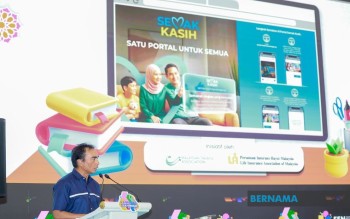
Bank Negara Malaysia has introduced a digital platform designed to reconnect families with financial protection benefits they may not know they possess. The 'Semak Kasih' portal, unveiled at the Terengganu Financial Literacy Carnival in Kuala Terengganu, addresses a persistent gap in Malaysia's insurance ecosystem: substantial sums of money sit unclaimed because beneficiaries remain unaware that their loved ones purchased policies or takaful certificates before their deaths.
Deputy Governor Adnan Zaylani Mohamad Zahid explained that the portal removes friction from what should be a straightforward process. Rather than relying on families to contact insurance companies individually or wait for agents to reach out, beneficiaries can now independently verify coverage details and initiate claims through a single platform. This innovation reflects growing recognition within Malaysia's financial sector that information asymmetry—not lack of desire to claim—prevents many families from accessing legitimate payouts.
The scale of the problem is significant. Joint estimates from the Life Insurance Association of Malaysia (LIAM) and the Malaysian Takaful Association (MTA) indicate approximately 50,000 unclaimed policies and takaful certificates involving death benefits remain in the system. While this figure represents only a fraction of Malaysia's total insurance portfolio, the accumulated value for affected families is substantial, particularly for households relying on these benefits during vulnerable periods.
Insurance and takaful serve distinct but complementary roles in Malaysia's financial protection landscape. Takaful operates on Sharia-compliant principles, appealing to Malaysia's Muslim-majority population and increasingly to those seeking faith-based financial solutions. Conventional insurance provides alternatives for other communities. Both mechanisms perform the same essential function: transferring risk and providing cash during crises such as serious illness, accidents, or property damage. Yet this protective value remains dormant if beneficiaries cannot locate or claim their entitlements.
The problem stems from several practical factors. When individuals purchase insurance or takaful, they may not inform their families or may store policy documentation in locations heirs cannot easily access. Policy numbers, company names, and coverage details often remain private knowledge. When death occurs, grieving families face competing demands on their attention and may lack the knowledge or energy to investigate whether financial coverage exists. Insurance companies have attempted to close this gap through direct mail and agent contact, but such efforts remain incomplete and inconsistent.
The digital portal represents a modernised solution aligned with Malaysia's broader push towards financial inclusion and digital literacy. By centralising information, it reduces search costs for beneficiaries and improves efficiency for insurers and takaful operators. The platform exemplifies how financial regulation and industry cooperation can solve real problems affecting household welfare across income levels.
Beyond addressing the immediate crisis of unclaimed benefits, Bank Negara Malaysia has signalled commitment to broader financial resilience through additional initiatives. Micro, small, and medium enterprises, which form the backbone of Malaysia's economy, continue receiving support through microfinancing schemes offering up to RM100,000 without requiring collateral or guarantors. The central bank allocated RM5 billion through the SME Stabilisation Relief Facility specifically to help companies navigate disruptions from the West Asia conflict, with working capital financing reaching RM750,000 per applicant. These measures acknowledge that financial security extends beyond household insurance to business continuity.
Financial education forms the second pillar of BNM's strategy. The iTekad initiative has engaged more than 14,000 participants nationwide, including approximately 600 in Terengganu, demonstrating measurable improvements in income and living standards. Meanwhile, the Financial Education Forum (FEN) initiative aims to make financial knowledge accessible across all demographic segments, including persons with disabilities, through a redesigned, user-friendly website serving as a comprehensive education centre.
Yet Malaysia faces persistent challenges in translating awareness into behaviour change. Research presented by Adnan Zaylani revealed troubling patterns: approximately 37 percent of Malaysians engage in impulse online purchases, while 26 percent acknowledge excessive debt burdens. These statistics suggest that technology access alone cannot resolve underlying financial discipline issues. Digital payment systems and e-commerce have democratised purchasing power but simultaneously lowered barriers to overspending and accumulation of unsustainable debt obligations.
Addressing these challenges requires interventions beginning in childhood. Bank Negara Malaysia has implemented the MyDuitStory competition and launched the FEN Proaktif 2.0 Programme in collaboration with Universiti Malaysia Terengganu to instil financial management fundamentals among students before they enter the workforce. The premise is sound: habits formed early, including consistent saving practices, generate compound returns over decades and establish psychological frameworks for prudent decision-making throughout adulthood.
The launch of Semak Kasih also carries symbolic weight beyond its immediate practical function. It signals that Bank Negara Malaysia recognises financial protection as a right rather than a luxury accessible only to those sufficiently informed or assertive. By removing barriers to benefit realisation, the portal acknowledges that many Malaysians want financial security but lack the tools or knowledge to claim what they have already purchased.
Looking forward, the portal's success will depend on awareness and adoption rates. Many eligible beneficiaries remain unaware it exists. Bank Negara Malaysia and its industry partners must conduct sustained public education campaigns, particularly reaching lower-income communities and rural areas where information access remains limited. Community financial advisors and government offices should integrate Semak Kasih into their service offerings.
The initiative ultimately reflects a mature approach to financial policy: recognising that regulation and innovation must collaborate to serve citizens effectively. By simplifying access to legitimate benefits, encouraging business continuity support, and building financial literacy from childhood through adulthood, Malaysia is constructing more resilient household and business finances. The Semak Kasih portal represents one tool within this broader effort to ensure that families facing life's inevitable crises possess the protection they have already purchased.

