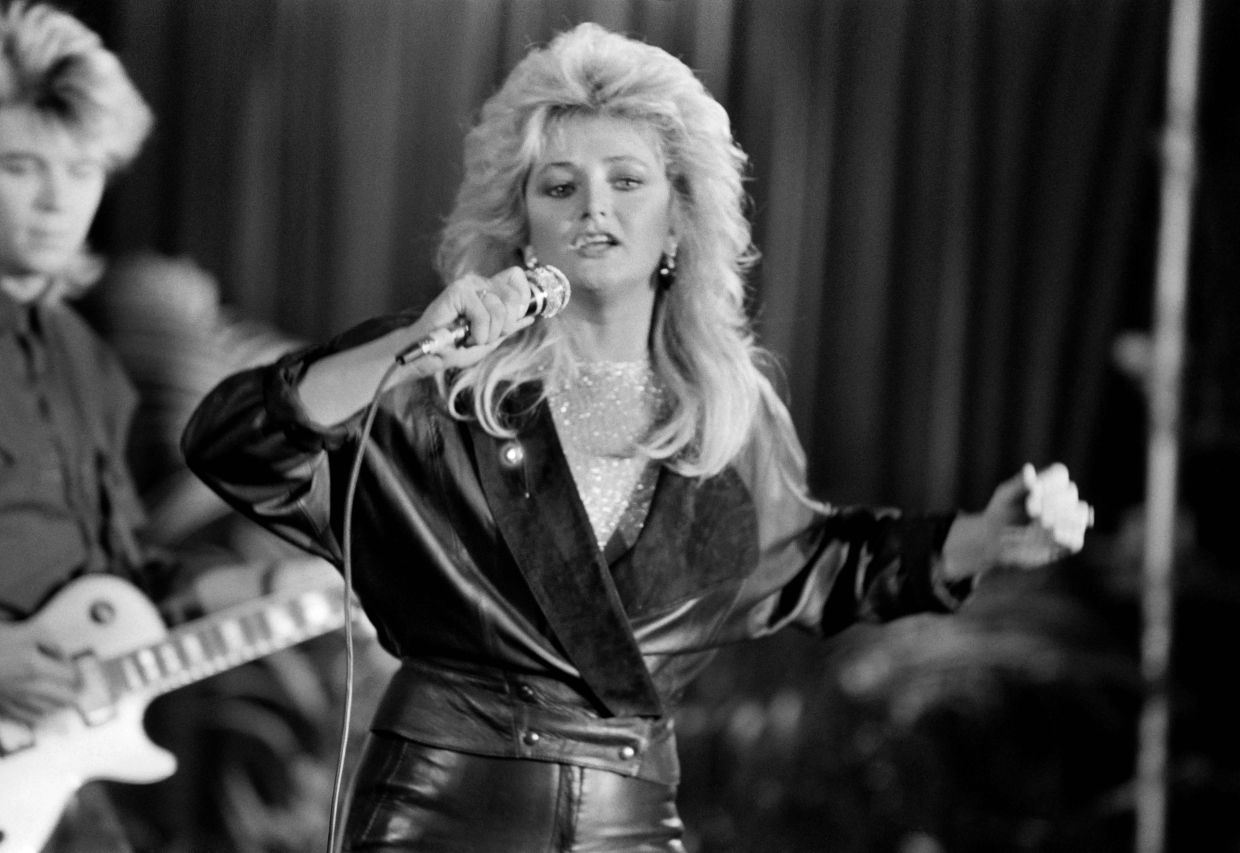
Welsh pop vocalist Bonnie Tyler, whose gravelly voice and the monumental power ballad "Total Eclipse of the Heart" defined an era of bombastic 1980s rock music, has died at the age of 75. Tyler passed away unexpectedly at a hospital in Portugal where she had been undergoing treatment for an undisclosed illness, her family confirmed on Thursday. The death marks the end of a remarkable career that spanned nearly five decades, during which Tyler transcended the boundaries of pop music to become a cultural touchstone revisited by successive generations of listeners.
Tyler had been hospitalized in May at a facility in Faro, where she maintained a residence, for emergency intestinal surgery. Following the operation, her condition deteriorated and she was placed into an induced coma. Despite the medical intervention, she did not recover, succumbing to complications related to her illness. Her family and professional team released a statement expressing their heartbreak at her sudden passing and acknowledging the profound impact she had on music and popular culture worldwide.
The trajectory of Tyler's fame rests almost entirely on a single composition that, remarkably, has only grown in cultural significance with the passage of time. "Total Eclipse of the Heart," released as the lead single from her fifth studio album "Faster Than the Speed of Night" in 1983, spent four weeks at the top of the charts and accumulated more than one billion streams across streaming platforms. The accompanying music video, filmed in a genuinely unsettling former asylum in Surrey complete with architectural remnants of electroconvulsive therapy chambers, became an MTV staple and has garnered over one billion views. The track's resurgence during the 2017 and 2024 solar eclipses demonstrated its enduring relevance, introducing the anthem to audiences who were not yet born when it first topped the charts.
Tyler received three Grammy nominations throughout her career, though she did not secure a win in any category. Her recognition from the Recording Academy included nominations for "Faster Than the Speed of Night" as best rock vocal performance and "Total Eclipse of the Heart" as best pop vocal performance. Beyond Grammy consideration, she represented the United Kingdom at the Eurovision Song Contest in 2013, where she competed with the country-inflected track "Believe in Me" and finished in nineteenth place. Her contributions to music earned her an MBE, an honor bestowed by Queen Elizabeth II in 2023, a distinction that reflected both her longevity in the industry and the indelible mark she left on popular culture.
The composition itself, created by Jim Steinman, possesses qualities that music critics have struggled to adequately articulate. When Stereogum reassessed the song in 2020, the outlet described it as an "extinction-level event rendered in musical form," emphasizing that it functioned as "pop music as heart-pounding, chest-thumping, blood-gargling, heavens-falling passion explosion." The production, featuring E Street Band members Roy Bittan on piano and Max Weinberg on drums, exemplified the maximalist approach that Steinman borrowed from Phil Spector's orchestral wall-of-sound technique. Subsequent artists including Nicki French, Westlife, One Direction, and Cate Blanchett incorporated the song into their own projects, cementing its status as a standard that transcended its original context.
Tyler's ascent to prominence emerged from profoundly humble beginnings in post-industrial Wales. Born Gaynor Hopkins in 1948, she grew up as the daughter of a coal miner in public housing in Skewen, a small community approximately seven miles from Swansea. Her childhood residence lacked indoor sanitation, a detail that underscores the economic circumstances of her upbringing. She was one of six children, and music became her primary escape from the constraints of her environment. According to her memoir "Straight From the Heart," she developed an obsession with the Beatles and made her initial album purchase at age thirteen, selecting "Hippy Hippy Shake" by the Swinging Blue Jeans. She meticulously recorded episodes of "Top of the Pops" on a reel-to-reel recorder and transcribed song lyrics, teaching herself the melodic and vocal approaches of artists including Janis Joplin, Nina Simone, Tina Turner, and Otis Redding.
A medical intervention in 1976 profoundly shaped Tyler's distinctive vocal character. Surgery to remove nodules on her vocal cords left her with the characteristic husky timbre that became her signature. This vocal quality, which she initially did not recognize as unusual, ultimately differentiated her from her contemporaries and contributed substantially to her memorability. After changing her stage name from Sherene Davis, she was discovered by talent scout Roger Bell while fronting a soul band and was brought to London for recording sessions. RCA Records eventually signed her, and under her new professional name Bonnie Tyler, she released her debut album "The World Starts Tonight" in 1977, which included the chart hit "Lost in France" and earned her a breakthrough artist nomination at the Brit Awards.
Her early career trajectory included the 1978 hit "It's a Heartache," which climbed to number three, but her commercial momentum stalled in the subsequent years. Following a transfer to Sony Records, a pivotal moment arrived when she witnessed Meat Loaf perform "Bat Out of Hell" on the BBC. Impressed by the production style and sonic ambition, she specifically requested to collaborate with the song's creator and producer Jim Steinman. This professional relationship culminated in Steinman introducing her to "Total Eclipse of the Heart," a composition he had originally conceived for a theatrical adaptation of "Nosferatu." Notably, Steinman drew one of the song's signature lyrics—"Turn around, bright eyes"—from his 1969 student musical "The Dream Engine," composed while he was studying at Amherst College in Massachusetts.
The recording process itself reflected Steinman's distinctive production methodology. Tyler recounted to The Guardian in 2023 that Steinman typically recorded multiple takes of each song, selected the optimal version, and subsequently layered additional elements using techniques reminiscent of Phil Spector's maximalist approach. Following this formula, the pair recorded nine iterations of "Total Eclipse of the Heart," and both producer and vocalist determined that the second take possessed the greatest emotional impact and would serve as the final master recording. The resulting track functioned as a meditation on romantic loss, with Tyler's haunting vocal delivery conveying the desolation of extinguished love over the orchestral backdrop of Steinman's production.
While "Total Eclipse of the Heart" defined her career, Tyler achieved additional commercial success through soundtrack contributions and continued recording activity. "Holding Out For a Hero," featured in the 1984 film "Footloose," and "Here She Comes" from the same year's "Metropolis" demonstrated her capacity to produce compelling material beyond her signature ballad. Her 2019 album "Between the Earth and the Stars" featured collaborations with Rod Stewart, Cliff Richard, and Francis Rossi of Status Quo, indicating her sustained relevance within the music industry and her capacity to attract high-profile collaborators. That same year, she performed at a Vatican Christmas concert preceding Pope Francis, an appearance that reflected the esteem in which she was held across diverse cultural and religious contexts.
Tyler's 2013 pivot toward country music, undertaken in Nashville with the album "Rocks and Honey," showcased her willingness to experiment with different musical idioms. The project included a collaboration with established country artist Vince Gill on the composition "What You Need From Me" and featured the ballad "Believe in Me," co-written by American and British songwriting talents including Desmond Child, Lauren Christy, and Christopher Braide. This track was selected to represent the United Kingdom at that year's Eurovision Song Contest in Sweden, positioning Tyler as a bridge between the stadium rock of her commercial peak and the more intimate country-influenced aesthetic that emerged in her later years. Her career trajectory thus encompassed multiple reinventions while maintaining the vocal authenticity that first distinguished her from her contemporaries.

