Two recent Court of Appeal decisions have crystallised a troubling gap in Malaysia's citizenship framework: children born here to Malaysian fathers and foreign mothers, who have spent their entire lives in the country and know no other home, are being denied citizenship simply because their parents were not married at the time of birth. Despite DNA testing confirming biological paternity beyond doubt, the courts upheld the constitutional requirement that citizenship in such cases must follow the mother's nationality. The implications of this ruling stretch far beyond the individual cases involved, raising fundamental questions about how Malaysian law balances legal formality with the welfare of children who had no voice in the circumstances of their birth.
The constitutional provisions at issue were written decades ago, in a very different legal and social context. At that time, marital status served as a proxy for establishing paternity when scientific verification was impossible. The law's logic, while understandable for its era, has not kept pace with modern reality. Today, DNA testing can establish biological fatherhood with certainty exceeding 99.9 percent, rendering the old distinction between legitimate and illegitimate children largely obsolete from a factual standpoint. Yet Malaysian law continues to treat paternity established through modern science as legally inferior to the formality of a marriage certificate—a position that child rights organisations across the region now view as untenable.
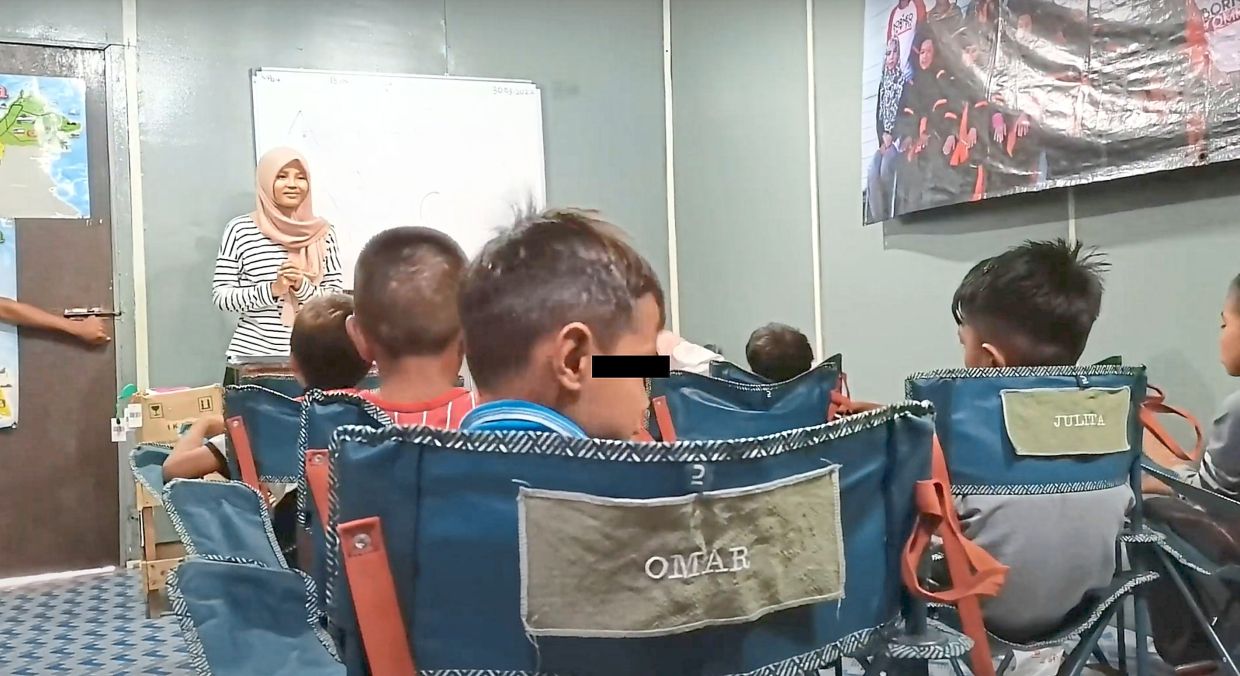
The human cost of this legal framework becomes apparent when examining the actual circumstances of these cases. The children involved grew up in Malaysia, attended Malaysian schools, formed friendships and community ties, and regard this country as their only home. Their mothers, both foreign nationals from Indonesia and the Philippines, departed when the children were very young, leaving them in the care of their Malaysian fathers. These children have no meaningful connection to their mothers' countries of origin—no family networks, no language fluency in many cases, and no practical possibility of building a life there. To force such children to seek citizenship through their absent mothers in countries where they are essentially strangers represents a fundamental disconnect between legal doctrine and lived reality.
Advocacy organisations including the Development of Human Resources for Rural Areas (DHRRA) have highlighted that Malaysia ranks among only two countries worldwide where fathers cannot automatically confer citizenship to their children in these circumstances. This places Malaysia in a notably restrictive position compared to international norms and the practices of most Commonwealth nations. The comparative rarity of Malaysia's approach underscores how far the law has drifted from contemporary understandings of justice and child welfare. Most jurisdictions have already undertaken the reform that Malaysia appears reluctant to consider—recognising that a child's legal status should not hinge on the marital choices of adults.
The principle of "the best interests of the child," enshrined in international conventions on children's rights to which Malaysia is signatory, appears to be subordinated in these cases to strict adherence to constitutional language written in different times. Child rights advocates argue persuasively that the court should have exercised discretion to consider the welfare of the specific children before it: children who are Malaysian in every meaningful sense except the legal one. Instead, the interpretation adopted by the Court of Appeal applies the law mechanically, prioritising formal compliance over substantive justice. This approach effectively punishes children for their parents' lack of legal formalisation of their relationship—a punishment that extends across the child's entire lifetime.
What makes this situation particularly acute is the spectre of statelessness. A stateless child grows into a stateless adult, facing systemic barriers that impede almost every aspect of normal life. Without citizenship, these individuals struggle to access formal education, obtain healthcare, secure legal employment, open bank accounts, acquire driving licenses, or find stable housing. They live perpetually on the margins of society, unable to fully participate in the economy or civic life, frequently trapped in cycles of poverty and vulnerability. For a child born and raised in Malaysia, being rendered stateless through no action of their own represents not merely a legal technicality but a lifetime sentence of exclusion.
The counterargument, often raised by those who defend the current constitutional framework, rests on the principle that law requires clear, bright-line rules rather than case-by-case discretion. Yet this defence conflates legal clarity with justice. Laws can be clear without being fair, and the clarity of a rule does not automatically render it just. Moreover, the law already accommodates discretion in other sensitive areas—family courts regularly exercise judicial discretion in custody and guardianship matters, carefully weighing competing interests and the welfare of children. A similar approach to citizenship determination, particularly where DNA evidence establishes paternity definitively, would not introduce unmanageable uncertainty into the system.
Parliament itself has recognised, at least partially, that citizenship laws require updating to reflect modern realities. In 2024, Malaysia amended its Constitution to permit Malaysian mothers to automatically transmit citizenship to children born abroad, recognising that previous gender-based distinctions no longer served contemporary values. This reform implicitly acknowledged that outdated constitutional provisions deserve reconsideration when they produce manifestly unjust outcomes. The same reasoning applies with even greater force to the question of children born within Malaysia's borders to Malaysian fathers—if anything, the case for reform is stronger when the child has spent their entire life in the country rather than being born overseas.
The broader context illuminates why this issue matters beyond the narrow realm of family law. Malaysia aspires to regional leadership and positions itself as a modern, progressive nation. Yet permitting children born and raised within its borders to be rendered stateless contradicts both progressive values and pragmatic national interest. A child denied citizenship becomes a drain on public services—particularly health and education—without the reciprocal benefits of formal civic participation and contribution. More fundamentally, such children represent human potential wasted through legal dysfunction. A child who cannot attend school officially, who cannot work legally, who cannot plan for the future, cannot contribute to national development or economic growth.
The issue itself is not new, though the recent cases have brought it into sharper focus. Over many years, Malaysia's legal system has grappled with various permutations of the same core problem: children ending up in legal limbo through circumstances beyond their control. Foundlings, children with undocumented births, offspring of remote indigenous communities where birth registration proves difficult—the specific facts vary, but the underlying theme recurs with depressing regularity. Each instance represents a failure to prioritise the welfare of children in the application and interpretation of law. While nationality is admittedly a sensitive topic, touching on questions of sovereignty and national identity, the answer to addressing this problem need not be radical or destabilising.
A practical reform pathway exists and has been validated by the experiences of other democracies. Parliament could amend the relevant constitutional provisions to enable judicial discretion in cases where paternity is established through DNA evidence and where the child has substantial ties to Malaysia—particularly lifelong residence and minimal connection to the mother's country. Alternatively, Parliament could enact legislation creating a streamlined naturalisation pathway specifically for children born in Malaysia to Malaysian fathers, removing the need for formal constitutional amendment if that path is deemed preferable. Several Commonwealth nations have adopted similar approaches, demonstrating that such reforms are compatible with maintaining secure citizenship standards and preventing abuse.
The fundamental question ultimately proves simple, even if the legal and constitutional complexities surrounding it are formidable: does this child belong in Malaysia? For a child born here, educated here, and rooted here emotionally and socially, the answer must be yes. The current framework forces courts and lawmakers to answer no, despite all evidence pointing to a contrary conclusion. This represents a failure of the law to serve justice—a failure all the more stark because it inflicts lifelong consequences on individuals who bear no responsibility for the circumstances that created the legal problem in the first place. Until Malaysia confronts this contradiction directly, children will continue to be sacrificed on the altar of constitutional formalism, their futures diminished by decisions made before their birth and choices made by adults whom they may scarcely know.

