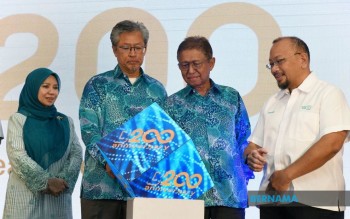
Boustead Holdings Bhd is charting an ambitious expansion path that would see the conglomerate nearly triple its revenue over the coming half-decade, anchored on a strategic pivot towards Malaysia's emerging defence sector. The company targets increasing group revenue from approximately RM12 billion to RM30 billion by 2029, representing a significant reorientation for an enterprise with deep historical roots in agriculture and commerce.
The transformation reflects a deliberate repositioning mandated by both shareholders and the Defence Ministry, aligned with the National Defence Industry Policy unveiled in January. Group managing director Datuk Dr Ahmad Sabirin Arshad outlined three pillars guiding the restructuring: defence manufacturing, property development, and commercial services. This realignment represents a fundamental departure from the company's traditional business model, though management views it as a natural evolution that builds on institutional strengths while serving national strategic interests.
Central to Boustead's defence ambitions is an ecosystem-building approach. The company intends to cultivate approximately 400 vendors within the defence industry supply chain, effectively seeding an entirely new industrial cluster. This vendor development strategy carries implications beyond Boustead itself, potentially stimulating manufacturing capabilities throughout Malaysia's industrial base and creating employment opportunities across multiple sectors and regions. By nurturing local suppliers and manufacturers, the initiative aims to reduce Malaysia's dependency on imported defence technology whilst building competitive advantages in regional security markets.
A critical success metric underpinning the strategy involves achieving at least 30 per cent local content in defence industry products by 2030. This target aligns with broader government objectives to strengthen domestic technological capabilities and reduce foreign exchange outflows on military acquisitions. The emphasis on localisation also signals commitment to developing Malaysian expertise and intellectual property in defence-related fields, potentially creating high-value employment for engineers, technicians, and manufacturing specialists.
Boustead has been entrusted with leadership of four major government defence initiatives that underscore the company's elevated strategic role. These projects span satellite development, armoured vehicle rolling chassis production, light weapons manufacturing, and Combat Management System development. Each represents significant technological complexity and offers pathways to regional export markets. Success in these flagship projects would position Malaysia as a credible supplier in Southeast Asian defence markets whilst demonstrating the viability of localised production models.
Beyond pure defence manufacturing, Boustead's mandate extends to the Batu Cantonment strategic development project, executed in partnership with the Armed Forces Fund Board. This initiative involves consolidating nine existing military installations and transforming the vacated land into a commercial hub within the Kuala Lumpur metropolitan area. Such urban redevelopment projects typically generate substantial property values and provide long-term revenue streams through rental yields and asset appreciation, complementing the volatile defence procurement cycle.
Chairman General (Retired) Tan Sri Abdul Aziz Zainal emphasised that transformation efforts prioritise delivering returns to Malaysian Armed Forces contributors and members, reflecting the quasi-public nature of Boustead's ownership structure and mandate. This stakeholder orientation distinguishes Boustead from purely commercial defence contractors and imposes governance expectations centred on long-term sustainability rather than short-term profit maximisation. The 200-year institutional continuity that Boustead celebrates represents both a brand asset and an institutional commitment to measured, responsible business practices.
Technology transfer mechanisms feature prominently in the strategy, with Boustead planning to establish strategic alliances with international defence partners. Selective partnership choices become crucial in ensuring effective knowledge transfer whilst protecting national security interests. The company must balance access to advanced technologies with maintaining operational independence and safeguarding classified information—a complex equation that requires both commercial acumen and strategic judgment.
The conglomerate intends to sustain existing operations in tourism and insurance sectors whilst leveraging these subsidiaries to support overall group expansion objectives. This diversified portfolio approach reduces vulnerability to cyclical defence spending patterns whilst providing stable cash flows to fund higher-risk defence industry development. Tourism and insurance operations also generate valuable data and customer relationships that may support broader group objectives.
For Malaysian readers and regional observers, Boustead's transformation carries significance extending beyond the company itself. Success in defence industrialisation could demonstrate that Southeast Asian nations need not remain passive consumers of foreign military technology, but can develop indigenous capabilities through targeted state investment and corporate restructuring. The model also illustrates how legacy companies with established institutional credibility can pivot towards strategic national objectives whilst maintaining commercial discipline.
The five-year timeline represents an aggressive but achievable expansion programme, contingent upon sustained government support, successful technology partnerships, and vendor ecosystem development. Challenges include building manufacturing capabilities in sectors where Malaysia lacks established expertise, maintaining quality standards competitive with international suppliers, and managing geopolitical risks affecting defence trade. Accomplishing the RM30 billion revenue target would fundamentally reshape Boustead's business composition and position the company as a strategic economic asset in Malaysia's defence industrial base.

